

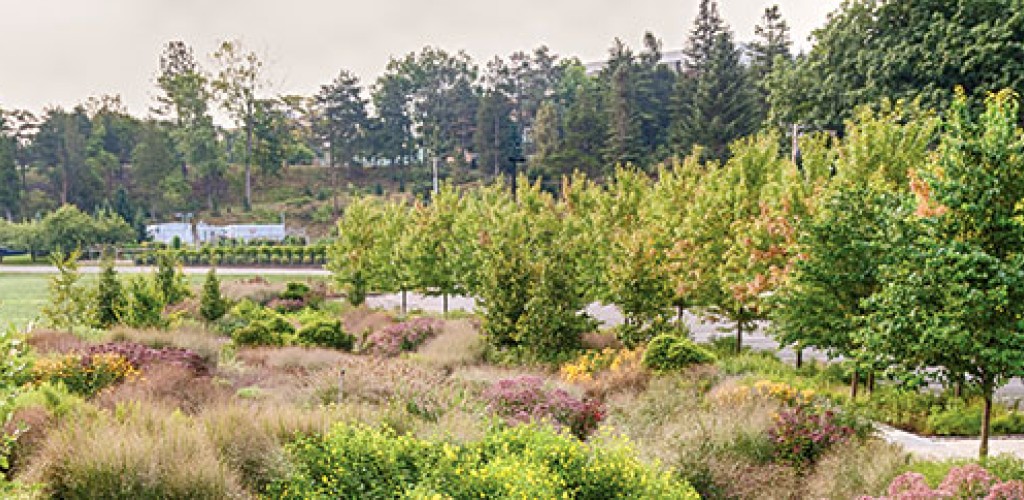
The bioswale garden at the Cornell Plantations’ Nevin Welcome Center is not just another pretty place. An analysis by the Landscape Architecture Foundation (LAF) found the bioswale, designed to mitigate the impact of storm runoff from the parking lot, eliminates an estimated 78,000 gallons of runoff per year, reducing annual storm water runoff from the site by 31 percent. The blooming biodiversity, which includes more than 50 species of drought and water tolerant plants, also reduced pollutants in parking lot drainage, concentrating heavy metals in bioswale soils and decreasing their concentrations in water flowing out. Plantations’ bioswale garden was selected as one of the LAF case studies as an example of an exemplary project with quantified environmental, economic and social benefits. “The bioswale garden has quickly become one of the premier gardens of its kind in the country,” said Christopher Dunn, the E. N. Wilds Director of Cornell Plantations. “It is inspiring other botanic gardens to create similar landscapes, as well as inspiring visitors to create similar gardens in their communities and in their own backyards.”
Keep Exploring

News
Conferences Graduate student Nishat Tasnim presented “The Condolence Clause: The Boundaries of Accountability after the San Diego Mosque Shooting” at the conference Confronting the Rising Tide: Islamophobia, White Nationalism, and the Global...

Field Note
Ananda Portela Fontoura PhD’22 is a postdoctoral associate working in the lab of Michael Van Amburgh , professor of dairy nutrition. Ananda’s research focuses on maintaining or enhancing dairy cow performance through optimizing nutrient use...

We openly share valuable knowledge.
Sign up for more insights, discoveries and solutions.
Please enter a valid email address to subscribe to the newsletter.