

Drawings by agricultural sciences major Olivia McCandless ’17
In October, the Department of Entomology celebrated the 150th anniversary of Cornell with the largest Insectapalooza to date. Meet some of the featured small but mighty creatures that have had an outsized impact on history and culture.
Boll weevil
(Anthonomus grandis)

Now controlled by integrated pest management methods that boast lower pesticide use and higher yields, the cotton boll weevil devastated the U.S. cotton industry by the 1920s. But there was a silver lining for the town of Enterprise, Ala., which honored it with a statue because it forced local farmers to transition to the more profitable peanut plant.
Xerces blue butterfly
(Glaucopsyche xerces)

The dune dwelling Xerces blue butterfly, the first American butterfly species driven to extinction by urban development, lives on as the namesake for an invertebrate conservation organization, The Xerces Society.
Rocky Mountain locust
(Melanoplus spretus)
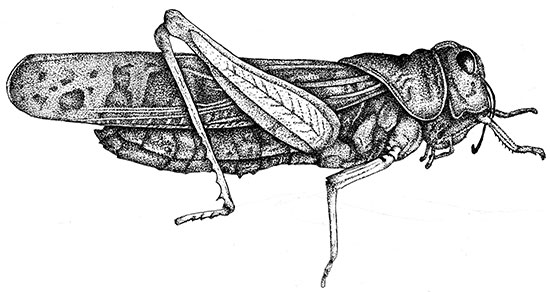
In 1875, the now-extinct Rocky Mountain locust created the largest recorded locust swarm in human history, a colossal 1,800 miles long and 110 miles wide and dense enough to block out the sun.
Red imported fire ant
(Solenopsis invicta)
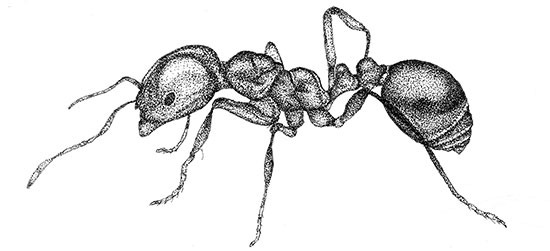
These vicious visitors from South America are invasive and insatiable, with an appetite for the eggs and young of ground-nesting birds and reptiles. Commonly known as RIFA, the red imported fire ant not only has a bite with a lingering sting, but their mound-building can also lead to plant root and crop damage that can alter ecosystems.
Grape phylloxera
(Daktulosphaira vitifoliae)
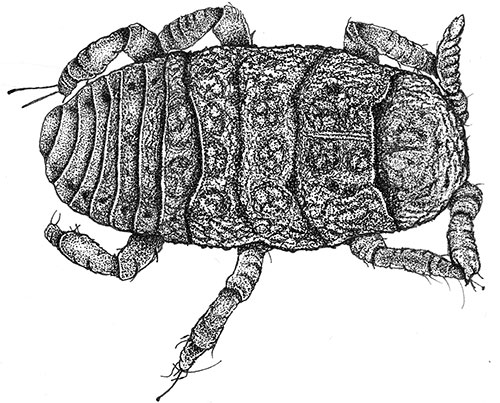
A North American soil pest ex-pat that devastated the European wine industry in the 1800s, grape phylloxera was foiled by the use of resistant rootstocks from American wild grapes, a discovery that saved the French wine industry. Cheers to that!


