

What is the best way to conserve biodiversity in Ecuador’s Andes Mountains? Start with the bears. A Cornell research team is joining efforts with local partners in Ecuador to help design a socio-ecological corridor that could help save endangered, threatened and endemic species in that country’s Andes region. The team is headed by Angela Fuller, leader of the New York Cooperative Fish and Wildlife Research Unit and assistant professor in the Department of Natural Resources.
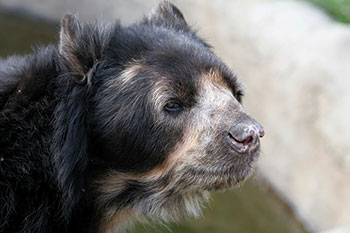
Ecuador’s mountain forests are a hotspot of rich biodiversity, but many of those species are threatened by increased deforestation and fragmentation due to activities such as agriculture and cattle ranching. In 2013, the Secretary of the Environment of the Quito Municipal District in Ecuador established an ecological corridor and conservation program for the endangered Andean bear (Tremarctos ornatus) around the northwest area of the district. The Andean bear is considered an “umbrella species,” in that it has large spatial requirements and similar habitat needs as other species of conservation concern in the region.
Fuller’s team is helping expand that ecological corridor to connect to the Cotacachi-Cayapas Ecological Reserve to the north and the Illinizas Ecological Reserve to the south. In January, they traveled to Ecuador to meet with project partners and local communities and to begin assessing the issues that will influence the configuration of the potential corridor, such as biodiversity, sustainability, economic stability of local communities and social acceptability.


