

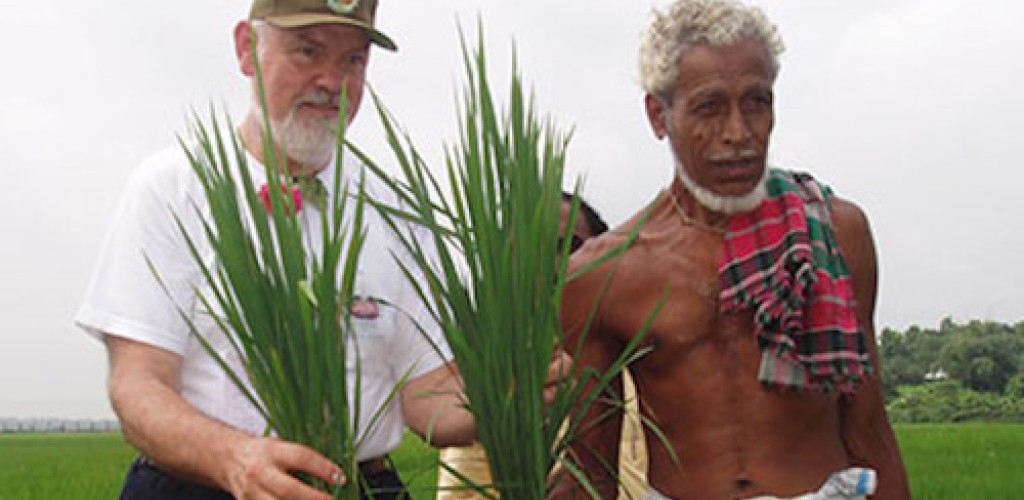
The System of Rice Intensification (SRI), an agro-ecological method of growing rice that enhances crop yields and is resilient to the adverse effects of climate change, has been awarded the international Olam Prize for Innovation in Food Security. SRI is being recognized for its impact on the availability, affordability, accessibility and adequacy of food.
Norman Uphoff, professor emeritus of government and former director of the Cornell International Institute for Food, Agriculture and Development (CIIFAD), who has been working with SRI for over 20 years, accepted the prize during the third Global Science Conference on Climate Smart Agriculture March 16 in Montpellier, France. The Olam Prize provides $50,000 to support further SRI research.
“The main factors that explain the impacts of SRI management are the development of larger, more effective root systems and the promotion of greater abundance and diversity of beneficial soil organisms, which are factors outside the Green Revolution paradigm,” says Uphoff. He noted that SRI concepts and methodologies are being extended to crops such as wheat, millet and sugarcane under the broader System of Crop Intensification.
Read the full story here.


