

Around the world, people continually come together to rebuild and restore local environments affected by crisis or disaster. In New Orleans after Katrina, in New York after Sandy, in Soweto after apartheid and elsewhere, people unite to restore nature, renew communities and heal themselves.
In their new book, “Civic Ecology” (The MIT Press) Natural Resources Professor Marianne Krasny and Keith Tidball, senior extension associate in Natural Resources, come together to tell the stories of this emerging grassroots environmental stewardship. They also offer an interdisciplinary framework for understanding and studying civic ecology as a growing international phenomenon.
“More and more we are realizing that negative news about the environment does not necessarily spur people to action. ‘Civic Ecology’ takes a different approach,” said Krasny, who also directs Cornell’s Civic Ecology Lab. “Using examples ranging from restoration of Marvin Gaye Park in Washington DC, to refugee community gardens in Sacramento and Nature Cleaners in Iran, Keith and I apply our 10 years of collaborative scholarship to understanding why and how people restore nature and revitalize neighborhoods during troubled times.”
In the book, Krasny and Tidball draw on research in social capital, social learning, governance and other social and ecological sciences to investigate how people, practices and communities interact. Along the way, they chronicle local environmental stewards who have undertaken such tasks as beautifying blocks in the Bronx, clearing trash from the Iranian countryside, and working with traumatized veterans to conserve nature and recreate community. Krasny and Tidball argue that humans’ innate love of nature and attachment to place compel them to restore nature and places that are threatened, destroyed or lost. At the same time, they find, nature and community exert a healing and restorative power on their stewards.
“It’s not just happenstance that people turn to their relationship with the rest of nature in challenging times or in crisis, there is something profound and complex going on,” said Tidball. “These occasions when we look in the rearview mirror and realize we left something important behind, our ecological identities, hold clues to how we can adapt to and enhance our collective resilience in the face of climate change and other related shocks.
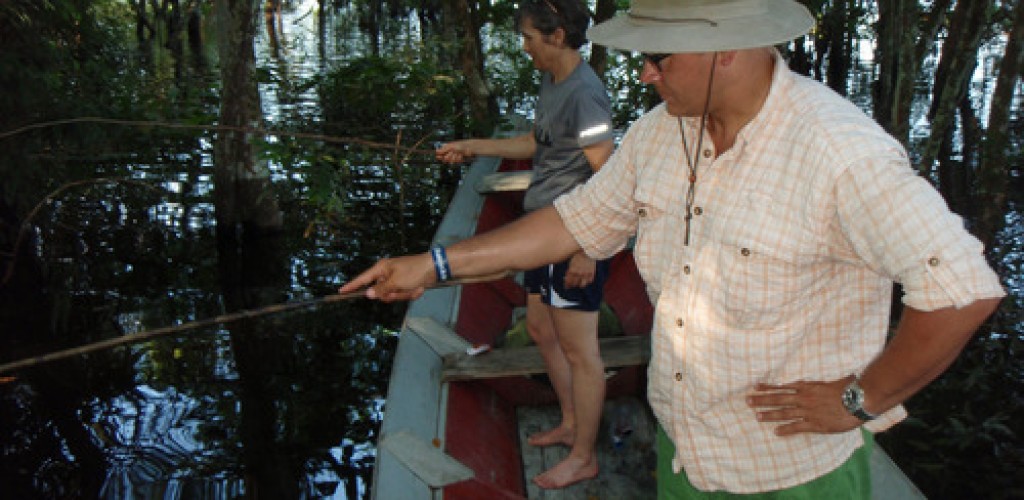
“Marianne and I have traveled the world together exploring civic ecology,” he added, “and together we have discovered something we feel is vital in the truest sense.”
WANT MORE: Marianne Krasny and Keith Tidball are teaching an edX-hosted MOOC based on their research and this book starting April 10. For more information or to register, head to the edX website.


