By John Carberry
If you’re in Albany today and cruising throughthe first floor of the Legislative Office Building from now until 3 p.m.,you’ll find yourself surrounded by some of the leading research from some of the brightest minds in this or any state. That’s because today the LOB hosts the State University of New York’s annual graduate research poster program, this year dubbed “Graduate Research: Making a Difference in New York Partnering with SUNY and CUNY.”
Of course, as an academic partner with SUNY through our contract colleges, Cornell is well represented in those hallowed halls. In addition to Michelle Delco, a Ph.D. candidate from our Cornell stablemate, the College of Veterinary Medicine, two CALS doctoral candidates will be showing policymakers and visitors their world-class work.
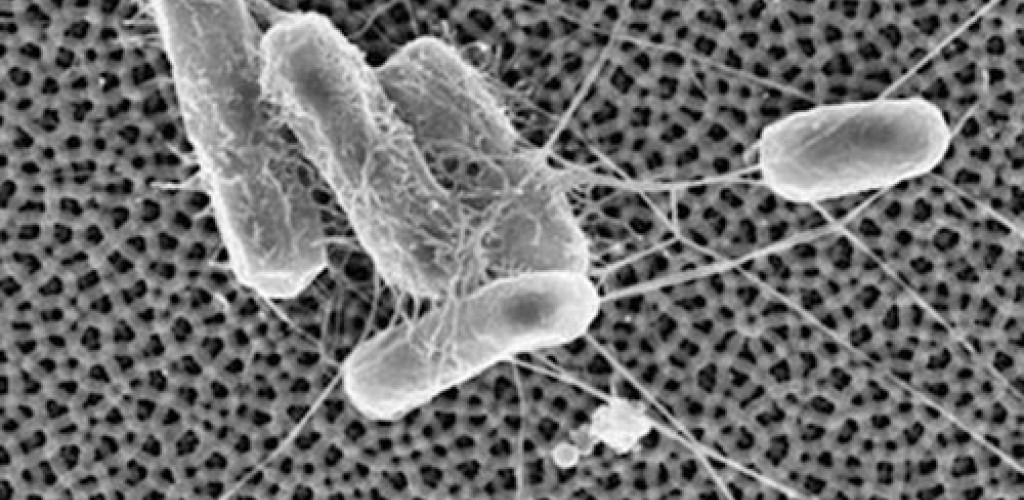
Yifan Chen is a Ph.D. candidate in the Departmentof Food Science based in Ithaca. His work, done with Associate Professor Carmen Moraru, focuses on the development of a predictive mathematical model to explain the bacteria-repellent effect of a nano-engineered surface being pioneered by Moraru’s team and colleagues at Rensselaer Polytechnic Institute.
The research, which made headlines around the world earlier this year, uses nanoporous anodized aluminum oxide to prevent bacteria from attaching and biofilm from forming on surfaces – groundbreaking science with tremendous potential for food safety and beyond. Chen’s continuing analysis into how this anti-bacterial “force barrier” works could help his team further strengthen and refine the effect; meaning surfaces in medical settings, in the water treatment industry and even in commerical shipping might benefit.
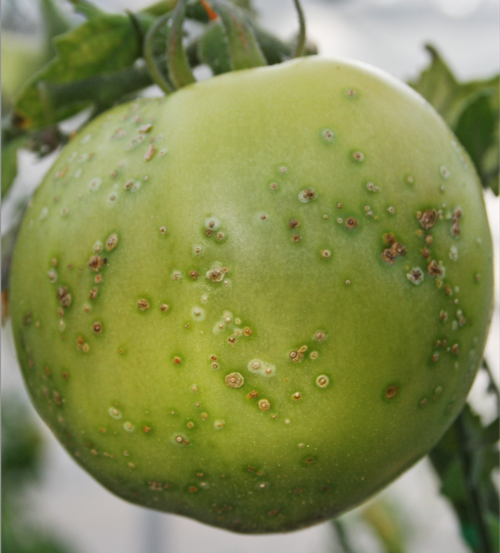
Matt Tancos is a Ph.D. candidate in Plant Pathology based at Cornell’s New York State Agricultural Experiment Station in Geneva. Working in the lab of Professor Christine Smart, Matt is finding new ways to battle a bacterial canker that’s an economically devastating seed-borne pathogen inflicting damage throughout New York and all major tomato-producing regions.
Using advanced genetic tools to analyze the movement of this bacterium – both microscopically and geographically – Matt’s work is helping to characterize population diversity, virulence and modes of infection. This will help better understand how this tomato canker is attacking plants, and if it is surviving in New York over the winter. That information will let tomato growers – from home gardeners to commercial operations – develop better disease management strategies.
Want to learn more? Then stop by their poster presentations at the LOB this afternoon and they’ll be happy to explain it all.
Again, the graduate research poster program takes place today (Feb. 11, 2015) on the first floor of the LOB. The official “open” time is from 12:30 to 1 p.m. but posters will be on display from 11 a.m. to 3 p.m.