As the largest Ebola epidemic in history continues to ravage West Africa – leaving more than 8,000 dead in 2014 according to the U.S. Centers for Disease Control and Prevention – international efforts remain underway to prevent further spread of the disease.
One College of Agriculture and Life Sciences alumna, Karlyn Beer ’06, has been at the front lines, aiding the effort through her work as an Epidemic Intelligence Service officer with the CDC’s Waterborne Disease Prevention Branch.
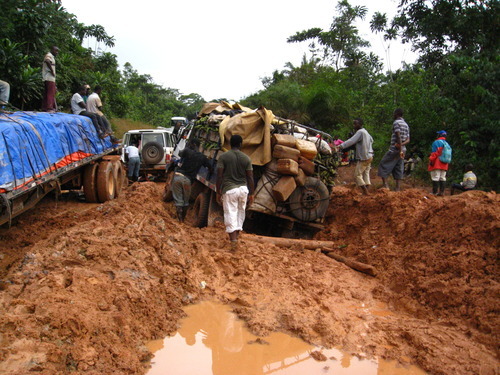
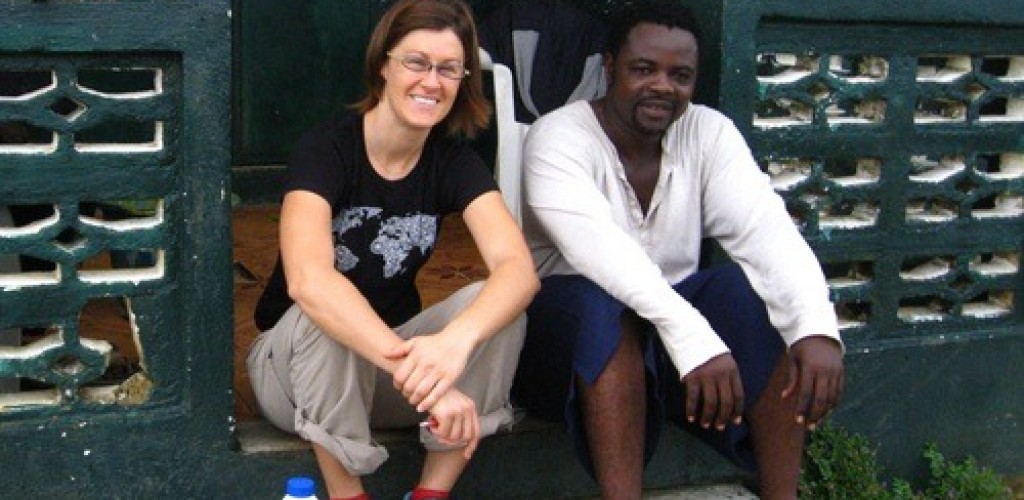
In September, Beer traveled to Liberia, where she spent a month surveying the preparedness of public health officials in that nation’s Maryland County. While the epidemic’s epicenter was the coastal capital city Monrovia, instances of Ebola were reported in remote regions of the country not easily reachable due to unreliable infrastructure, such as poorly maintained roads.
“Epidemics are challenging, but in Liberia it was especially logistically challenging,” Beer said. “The important thing when you’re out there is being flexible. You’ve got to be ready for the unexpected.”
Once she arrived in Maryland County, Beer began discussions with the county’s health team about their protocols for handling Ebola cases. She said safely caring for Ebola patients and preventing further transmission proved to be extremely complex.
“Let’s say you’re a health official and you intercept a car carrying someone who is sick; what do you tell them? Where should they go?” she said. “Do you have an ambulance that you can transport them in that can then be sanitized with chlorine? Is there a clinic with capacity to isolate the person from other people?”
Beer said other on-the-ground challenges include making sure there are nurses and health care workers who are trained, paid, properly equipped and available to look after patients in isolation. The logistical challenges didn’t stop with patient care, she added. If the person dies, a team of people prepared to safely bury the victim is needed – an effort that is at times complicated if a community deems the burial inconsistent with traditional values.
“It’s a lot,” she said, “but these are just a few of the questions I asked to assess the needs in this county.”
In addition, Beer measured public knowledge and attitudes about Ebola, and supplemented her surveys with outreach activities such as “contact tracing,” the process of keeping track of friends and family members who have come into direct contact with someone infected with the disease.
During her visit, Beer witnessed the local county health team handle its first reported case of Ebola.
“I watched this unfold for this team for the first time,” she said. “And I was just constantly struck by their bravery and the commitment to doing what was needed in a situation where there were almost no resources.”
After returning to the United States, Beer started aggregating the results of her surveys. That data will help Liberian officials and others better prepare for combating Ebola outbreaks.
“We’re working side by side with Liberia, and getting information to them quickly,” Beer said. “I was only there for a month, and have been working on analyzing our data, meanwhile my colleagues in Maryland County work around the clock. They can’t just leave. Since September, they’ve had very few new cases and the situation in Liberia has improved. So I think that’s a huge testament to all the colleagues out there.”
Working with EIS – a two-year training program that helps physicians, scientists, veterinarians and nurses interested in applied epidemiology gain service experience and on-the-job learning – Beer is also working on domestic waterborne projects such as studying Vibrio bacteria and giardia infections. Beer, who lives in Atlanta, entered the program in June 2014 after attending the University of Washington, where she earned her master’s degree in epidemiology and a Ph.D. in molecular and cellular biology.
But her interest in fighting diseases, she said, can be traced back to her time at Cornell. As an honors undergraduate researcher in Dean Kathryn J. Boor’s Food Safety Lab, Beer investigated Listeria monocytogenes virulence and gene regulation. Beer credits that experience, as well as a semester studying abroad in South Africa, with encouraging her to take her research beyond the lab and out into the world.
“Cornell really gave me an incredibly comprehensive understanding of microbiology and inspired me to pursue it in grad school, but it also reminded me that you have to stay in touch with the people whose lives and diseases you’re studying,” she said. “It’s important to have that kind of a breadth in your approach. Cornell really fostered that for me.”
“And even bigger than that was mentorship,” Beer added. “Kathryn was a fantastic mentor. She really loves science and she made me love it too. And science is hard. You don’t leave work every day with a fuzzy feeling like you’ve done something good for the world. But I think she was such a great role model for seeing the amazing things that you are doing, even if every single day doesn’t feel like a success.”
David Nutt is a writer for the College of Agriculture and Life Sciences.