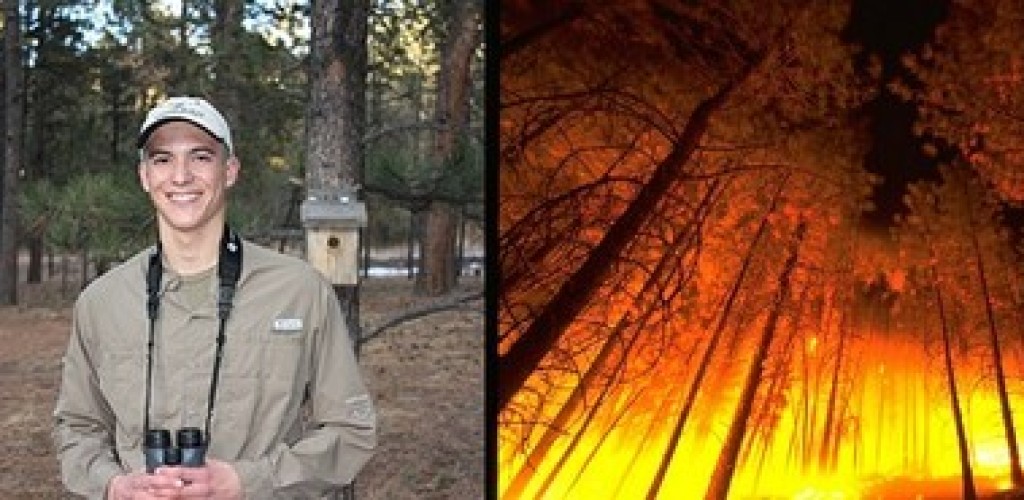
When a wildfire broke out in the forest near Alec Wyatt’s Colorado home in June 2013, the 15-year-old was nearly as concerned about bird homes as his own. As reported in the latest newsletter from Lab of O citizen science project NestWatch, the young birder detailed the harrowing experience in a 150-page book he wrote.
“Just as the numerous eggs inside the nest boxes are preparing to hatch, disaster strikes the Black Forest. A destructive wildfire is ravaging the woods, destroying large swaths of habitat and homes. Ignited early in the afternoon of June 11, an uncontrollable wildfire is raging toward my nest box trail. I was forced to evacuate my home as a massive smoke plume engulfed my beloved woods. The fire continues to grow, and I feel helpless as I watch my forest burn. I fear many things from this fire, but utmost is my fear for the 63 eggs on my nest box trail so close to hatching. As I write now, I watch from a hotel window helicopters and planes dumping slurry and water into the hazy smoke plume. The entire city smells like smoke. I fear now that my efforts to provide the birds of Colorado safe places to raise their young were ended in only a few days of destruction. I do not know if the nest boxes still stand.”
The story has a happy ending for the birds. When Alec was allowed to return to the evacuated area 15 days later, he discovered 47 healthy baby birds, growing rapidly within the smoky nest boxes.
“All 36 boxes survived the blaze, even though some sustained damage. I could not believe my eyes as I discovered box after box unharmed, even though the land beneath them and around them was charred. In many cases, healthy nestlings were being raised in boxes scorched by flames. That means the parent birds tended their nests even as the fire burned underneath their eggs.”
Alec came to the Lab of Ornithology for the 2014 Young Birder’s Event held in July. He had earned a coveted seat among 16 of the most promising young ornithologists around the world. Earlier this year, he took home the American Birding Association’s 2014 Young Birder of the Year award. He is now working with NestWatch to analyze his data on nesting success on the trail before, during, and after the Black Forest wildfire.