Back

Discover CALS

See how our current work and research is bringing new thinking and new solutions to some of today's biggest challenges.

Share

Via the Cornell Horticulture blog

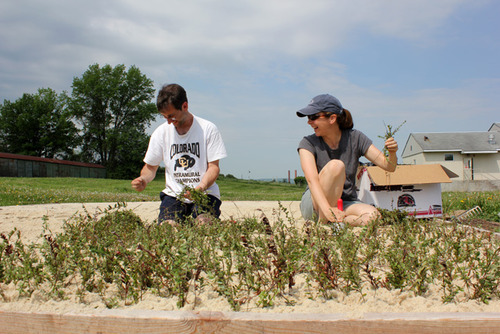
Two people plant cranberries outside
Michael Brown and Justine Vanden Heuvel planting cranberries.

On a sunny Tuesday, associate professor of horticulture Justine Vanden Heuvel and research support specialist Michael Brown got a good start on planting a new cranberry bed, the first at Cornell Orchards. (The inaugural class of Cornell Orchards interns continued planting on Friday.)

The 35- by 25-foot wood-framed raised bed features layer of drain tile in gravel, followed by a thick layer of compost topped off by a layer of sand. Later, Vanden Heuvel will install drip irrigation to water the plants.

Vanden Heuvel is no stranger to cranberry research. That was her specialty in her previous position at the University of Massachusetts Amherst Cranberry Research Station.

The bed is planted to a single variety (Stevens) that Vanden Heuvel will use to study bud hardiness and answer other questions about basic cranberry physiology. “Compared to grapes — where we know so much about how the plants work — we know next-to-nothing about cranberries,” she says. “I’m looking forward to shedding a little more light on this crop.”

Keep Exploring

Several red 'Crimson Beauty" raspberries hang from green leaves and stems.

Report

Relevance Raspberry and strawberry production in the United States is concentrated in California and Florida, where climate variability and rising costs challenge long-term sustainability. Demand for locally grown fruit is increasing, creating...
  • Cornell Cooperative Extension
Charles Midega (left) and Roy Odawa display the Kontiki kiln they modified to make biochar from human feces. Credit: Rebecca Nelson

News

Cornell researchers and Kenyan partners have developed a fertilizer made from human excreta. The product improves soil health and food production, while preventing pollution in informal settlements and the aquatic environment.

  • Ashley School of Global Development and the Environment
  • Global Development Section
  • Agriculture