

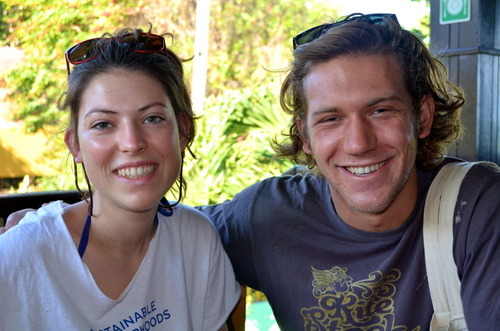
Guest Post from Christian Shaw ’14 and Céline Jennison ‘14*
“Having both grown up enjoying water sports, we feel a responsibility to work towards protecting our playground for generations to come. Along with a group of three other friends who are athletes and devoted conservationists like us, we will travel to Bermuda for a ten-day, muscle-powered, stand-up paddle expedition to be launched on June 8, World Oceans Day. This expedition – named Plastic Tides – is dedicated to raising awareness about coastal plastic pollution. As part of our mission, we will collect scientific data for the marine microplastics project sponsored by Adventurers and Scientists for Conservation. We also ultimately hope to inspire other passionate watermen and women to get out there and stand up for the environment!
Plastic Tides was conceived in the fall of 2012 at a National Geographic Young Explorers workshop at Cornell University. The workshop really opened our eyes to what was possible, and that afternoon the ideas began to flow. Bermuda’s location in the Sargasso Sea and North Atlantic Trash Gyre makes it the perfect place for documenting breathtaking natural beauty alongside the ever-growing presence of coastal plastic pollution.
The expedition will include seaweed documentation in collaboration with the Bermuda Institute of Ocean Science (BIOS), as well as local school visits."

Check out the Plastic Tides website, or follow the effort on Twitter, Facebook and Instagram to learn more and find out how you can become involved in saving our precious coastal waters from pollution.
And as part of their fundraising campaign for camera equipment and backcountry living gear for the expedition, Christian and Céline have organized a friendly stand-up paddle race and BBQ on Cayuga Lake on May 18th that is open to all. Ithacans and Cornellians are invited to join the fun! You can register here.
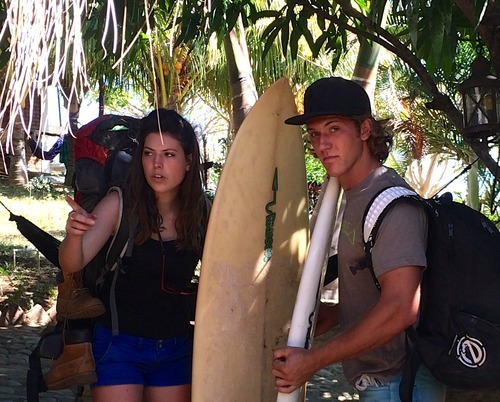
*About Christian & Céline:
Christian Shaw ‘14 is a CALS Interdisciplinary Studies graduate. He’s also a professional kiteboarder and avid waterman from Ithaca, NY. He recently graduated from Cornell where he studied sustainability and business. While at Cornell, he pursued his passion for watersports and founded the SUP, Surf, and Kiteboarding clubs on campus. His lifelong goal is to combine watersports with environmental education and awareness in pursuit of a sustainable future. Christian is the team leader of the Plastic Tides project.
Céline Jennison ’14 is a Plant Science major whose passion for plants is truly engrained within her. At the age of ten she developed an immune deficiency and an herbalist restored her balance within a year, opening her eyes to the power of plants. As a windsurfer and Sorbonne University intern, her passion for terrestrial flora now encompasses marine flora, namely seaweed. Celine has been actively engaged on campus. She founded the undergraduate windsurfing club, is president of the Cornell Permaculture Club (creating the Trillium permaculture garden), and serves as student director of the CALS Alumni Association.


