Elephants don’t only roam the savannahs - they also inhabit rainforests, where there are difficult to study because of the dense habitat. Scientists with the Elephant Listening Project, based at the Lab of Ornithology, have come up with some creative ways to do so, however, including thermal cameras and microphones in trees. So far, the project has recorded more than 300,000 hours of audio, picking up both the familiar trumpeting sounds and the less well-known deep rumblings that elephants use to communicate over long distances, helping researchers understand the animals’ complex social structures. Field biologist Andrea Turkalo and project director Peter Wrege have also cataloged more than 4,000 individual elephants in the Central African Republic. Wrege was recently in New York City to share some of their findings.
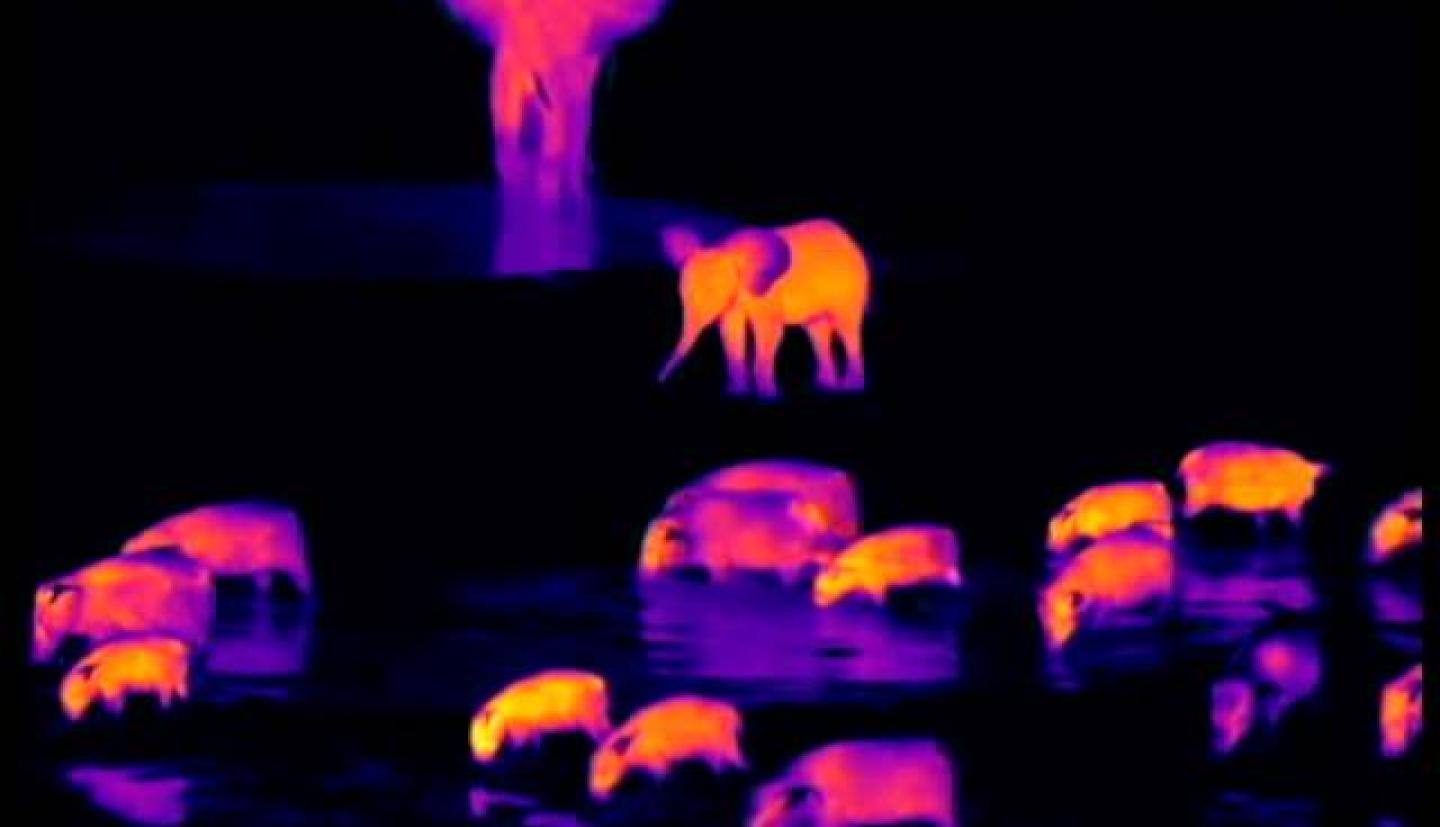
These thermal images show the antics of a baby elephant who can hear a drift of pigs moving nearby, but cannot see them in the dark - smells and sounds are his only clue. Just as when we were kids, he alternately psyches himself up, then wimps himself out and runs back to mom for reassurance.Check out more videos on the ELP’s YouTube channel.
You can also aid conservation efforts by “adopting” an elephant.