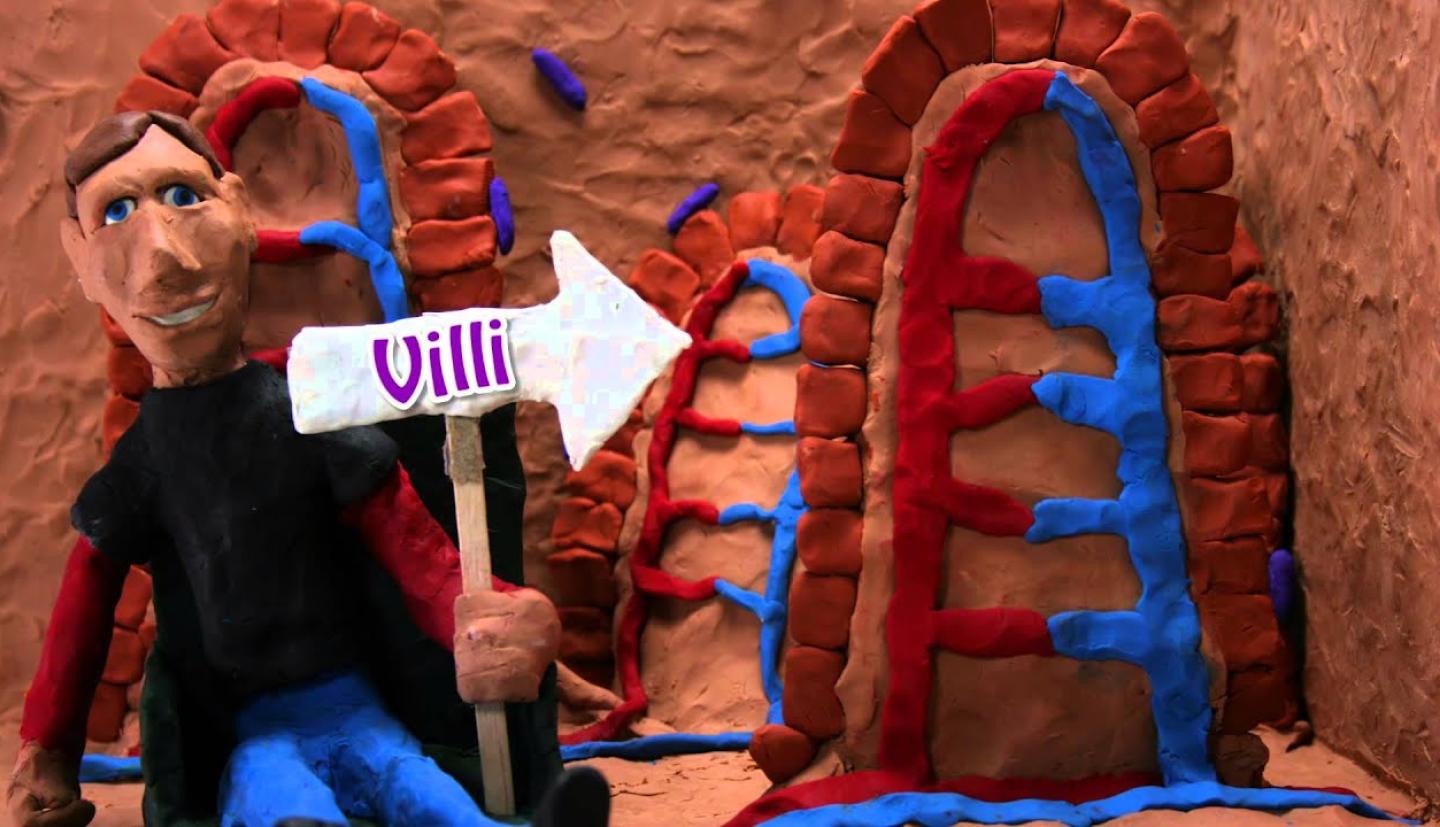
How do you explain complicated science to the general public? In a word: Claymation.
Cait Costello and Caitlin Feather, two post-docs in the laboratory of John March, associate professor of biological and environmental engineering, turned to the time-honored animation technique that brought Gumby to the world to illustrate their work developing bacteria that can “communicate” with cells in the upper intestine, coaxing them to produce insulin the way pancreatic cells do. Inspired by a video competition organized by the National Institutes of Health (NIH) to promote the research it funds, the pair created the clay models themselves and worked with Cornell videographer Dina Banning to bring them to life. John Romag, a database administrator for Cornell Information Technology, provided the voiceover narration.
All fun aside, this research is a potential game changer for the nearly 350 million diabetics worldwide. The goal is to shift the center of glucose metabolism in the human body to the intestine from the pancreas, which is damaged in diabetics. If successful, their approach could enable sufferers of the disease to simply ingest the bacteria, resulting in the restoration of proper glucose metabolism. This would remove the need for regular insulin injections and potentially alleviate the many debilitating side effects of the disease.
Their research also involves the creation of synthetic intestines to study how bacteria communicate with upper intestinal cells.
The winners of the NIH competition will be chosen by the public via the most YouTube likes, so make sure to show your Big Red allegiance and click here to “like” the video!