

Those concerned about the sustainability of their seafood have a handy new resource, developed with the help of Patrick J. Sullivan, associate professor of quantitative population and community dynamics in the Department of Natural Resources. The National Research Council has released an interactive chart that lets users see which fish species in the U.S. are being overfished and which are being fished sustainably. They also released a report that indicates many depleted fish populations are showing signs of recovery thanks to concerted federal efforts to reduce fish harvesting.
Sullivan was co-chair of a national committee that reviewed the status of 55 fish stocks and the efficacy of federal policies to conserve them. It also provided recommendations for further action, including management strategies for fishery managers to reduce and accommodate environmental variability and uncertainties of rebuilding. For example, when rebuilding is going slower than expected, fishery managers sometimes impose stricter fishing limits in an effort to meet that deadline. If these managers could instead keep fishing at a reduced but constant level for a longer period of time, they could rebuild fish stocks while allowing higher harvest levels, alleviating some of the socio-economic impacts on the fishing industry and coastal communities.
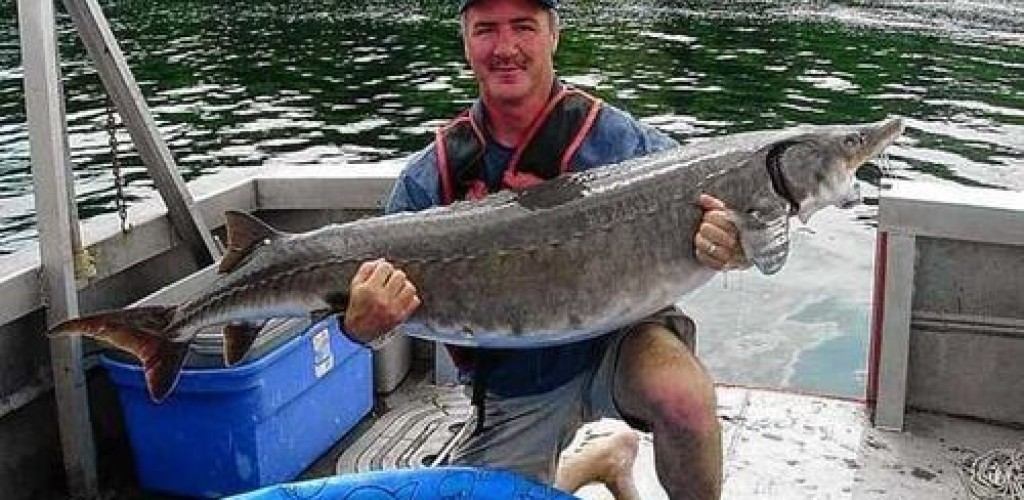
And there was good news recently out of Cornell’s Shackleton Point Biological Field Station on Oneida Lake. Researchers captured a wild juvenile sturgeon, a species that state conservationists have actively sought to restore. The two-year-old sturgeon was just over 19 inches long and weighed one pound, and its capture indicates successful reproduction by fish stocked as six to ten-inch fingerlings–more than 8,000 were stocked into Oneida Lake between 1995 and 2004.
“This is a truly significant event,” said Joe Martens, commissioner of the New York State Department of Environmental Conservation. “It is a great example of how, with good science and great partnerships, we can restore a species that nearly disappeared from our state.”
Lake sturgeon can grow up to seven feet in length and weigh more than 300 pounds. Once abundant throughout the Great Lakes, St. Lawrence River and Lake Champlain, overfishing and the impacts of dams and dredging nearly drove them to local extinction by the turn of the 20th century. Sturgeon harvesting, primarily for caviar, peaked in 1885, and scientists estimate that lake sturgeon populations in the Great Lakes area are at about one percent of their pre-1850 numbers. It was listed as a New York State threatened species in 1983.


