

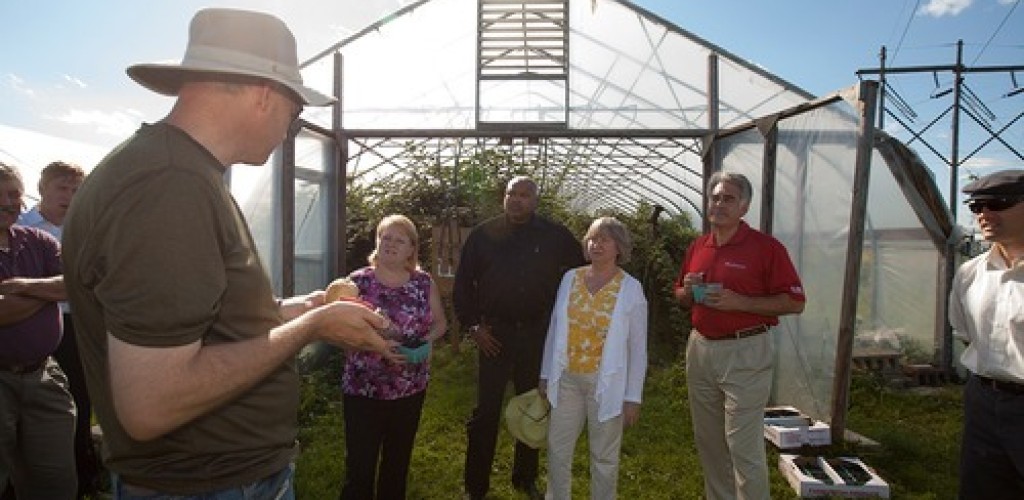
On Sept. 4, New York State Assembly members Barbara Lifton (D-125), Samuel Roberts (D-128), Al Stirpe (D-127) and Addie Russell (D-116) were welcomed to CALS for a special sustainable agriculture research tour. After taking in Stocking Hall highlights and meeting with Agricultural Sciences majors, the group traveled to Freeville, where experiments in organic farming systems, tomato and squash breeding, and the Cornell Small Farms Program were showcased at the Homer C. Thompson Vegetable Research Farm. At the East Ithaca Farm, home to the Department of Horticulture’s hoophouse/high tunnel research, the legislators were introduced to the profitable potential of growing crops under the protection of high tunnels, including raspberry harvests in November, easier control of late blight on tomatoes, and a blossoming cut-flower industry. And just to make sure they’d think about CALS research all the way home, everyone left with blackberries and bouquets for the road!
Keep Exploring

News
Conferences Graduate student Nishat Tasnim presented “The Condolence Clause: The Boundaries of Accountability after the San Diego Mosque Shooting” at the conference Confronting the Rising Tide: Islamophobia, White Nationalism, and the Global...
Field Note
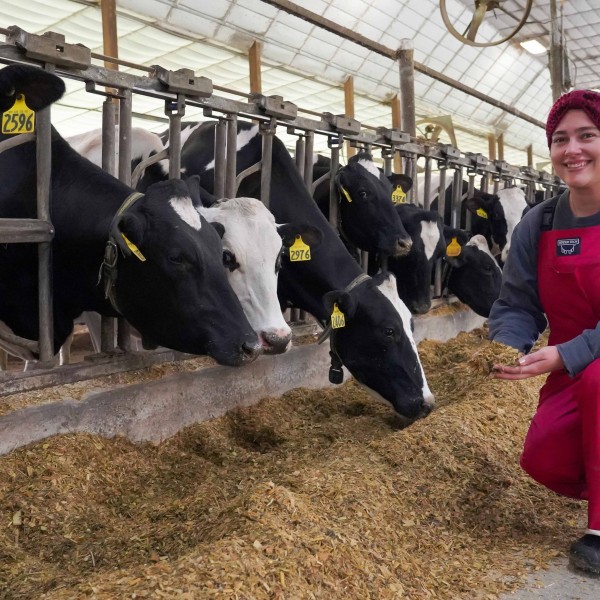
Ananda Portela Fontoura PhD’22 is a postdoctoral associate working in the lab of Michael Van Amburgh , professor of dairy nutrition. Ananda’s research focuses on maintaining or enhancing dairy cow performance through optimizing nutrient use...

We openly share valuable knowledge.
Sign up for more insights, discoveries and solutions.
Please enter a valid email address to subscribe to the newsletter.