

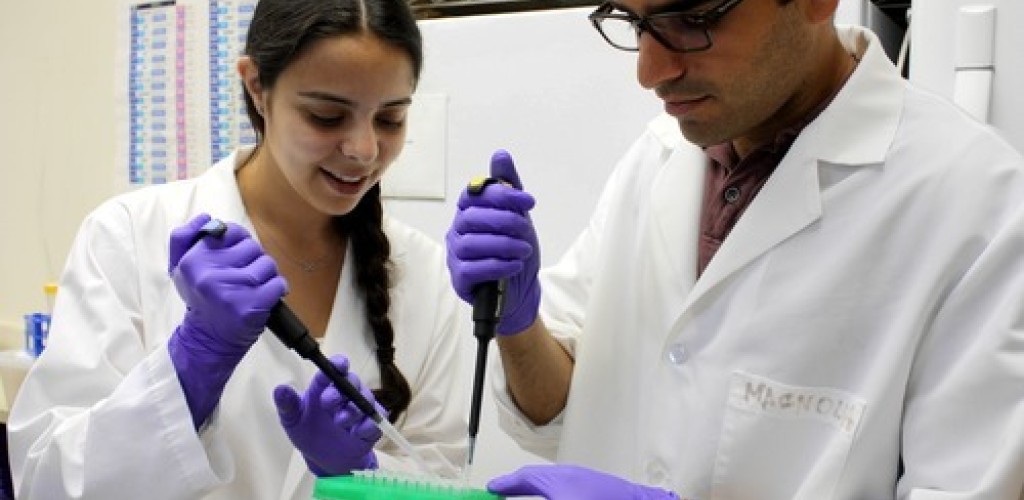
Instead of spending her summer swimming, working, or hanging out with friends, 16-year-old Julia Deutsch was busy learning how to enhance iron availability in foods and improve nutrition in developing countries.
Deutsch, a rising junior at Byram Hills High School, left her home in Armonk, New York to spend four weeks in Ithaca working alongside her mentor Elad Tako, a courtesy assistant professor of food science and research physiologist with the USDA-ARS, Robert W. Holley Center for Agriculture and Health, and CALS undergrad Spenser Reed ’14, profiled here in a special online only issue of periodiCALS.
Tako’s work, in collaboration with USDA researcher Ray Glahn, examines “biofortification,” which involves enhancing naturally-occurring nutrients in traditional crops in developing countries, specifically iron and zinc.
As part of her project, Deutsch studied the effects of prebiotics on iron status in vivo, using the broiler chicken embryo as a model and the in ovo feeding technique, which involves administering a nutritional solution into the amniotic fluid.


