

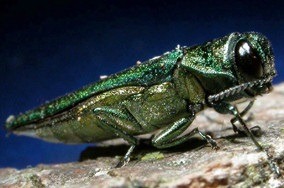
The new scourge of North American forests is proving a sweet treat for some birds. Scientists scouring data from the Lab of Ornithology’s citizen science project, Project FeederWatch, have discovered that four species of native insectivorous birds – three woodpecker species and the white-breasted nuthatch (Sitta Canadensis) – are taking advantage of infestations of the invasive emerald ash borer, which has been eating its way through hundreds of millions of ash trees in 13 states since its appearance in Detroit in 2002.
There is little that can be done to stop the pest, and the woodpeckers may be the ash trees’ best hope, eating an average of 44 percent of the borer larvae at a site. Unfortunately, the insects have numbers on their side. “Woodpeckers can’t quite eat enough to keep up with them,” said Walter Koenig, a senior researcher at the Cornell Lab of Ornithology. “Even if woodpeckers are eating 40, 50 percent of their young, that’s still an awful lot of emerald ash borers that are getting out there.”
Find out what is being done on campus to prepare for a possible invasion and what homeowners should do if the insect is spotted within 10 miles of their home.


