

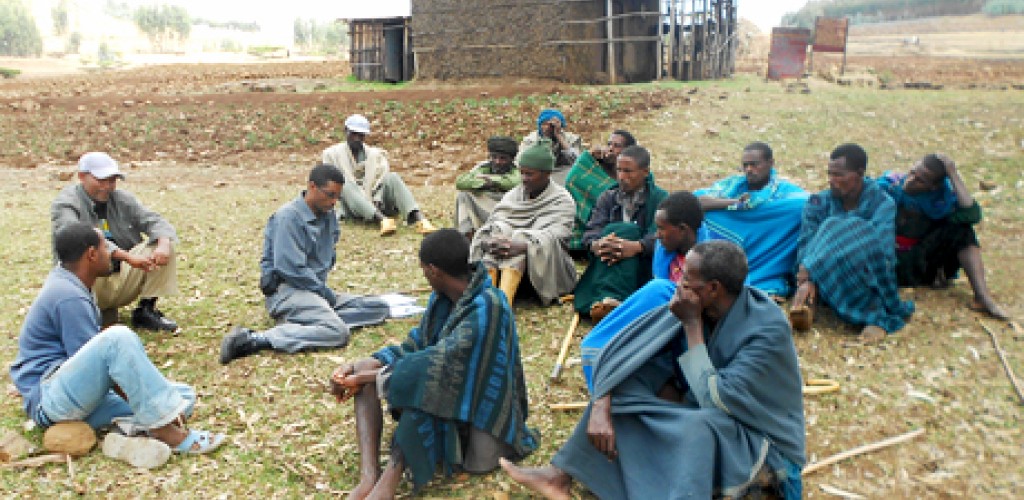
Semagn-Asredie Kolech sees a lot of potential in the potato. The doctoral candidate in the field of horticulture shuttles between Ethiopia and Ithaca to examine and research efficient agricultural practices in the shadow of climate change, and he believes the tuber is a good strategy crop for global warming. It has a short growing season, it offers higher yields, it’s less susceptible to hail damage, and you can grow 40 tons per hectare, compared to the 10 ton yield commonly captured from wheat and corn. Five other faculty members – David Wolfe, horticulture; Donald Halseth, horticulture; Walter DeJong, plant breeding and genetics; Fouad Makki, development sociology; and Tammo Steenhuis, biological and environmental engineering - will travel with Kolech to Ethiopia this summer to meet with potential government and nongovernmental collaborators as part of a project funded by the Atkinson Center for a Sustainable Future and the CARE-Cornell Impact through Innovation Fund.
Keep Exploring

News
Conferences Graduate student Nishat Tasnim presented “The Condolence Clause: The Boundaries of Accountability after the San Diego Mosque Shooting” at the conference Confronting the Rising Tide: Islamophobia, White Nationalism, and the Global...

Field Note
Ananda Portela Fontoura PhD’22 is a postdoctoral associate working in the lab of Michael Van Amburgh , professor of dairy nutrition. Ananda’s research focuses on maintaining or enhancing dairy cow performance through optimizing nutrient use...

We openly share valuable knowledge.
Sign up for more insights, discoveries and solutions.
Please enter a valid email address to subscribe to the newsletter.