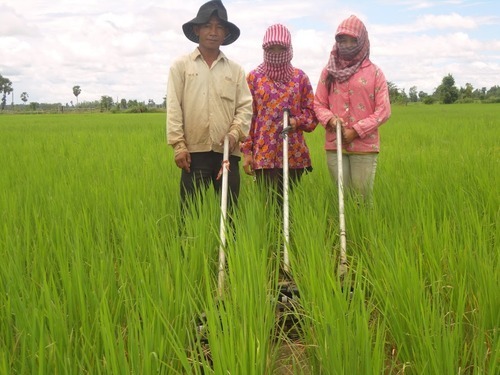
How can a farmer increase yields while decreasing negative environmental impacts? For many, the answer has been the system of rice intensification (SRI), an interrelated set of farming principles that rely on fewer seeds, less water and a partial or complete shift from inorganic fertilizers to organic manures and compost. Cornell hosts the SRI International Network and Resources Center (SRI-Rice), and former director of Cornell International Institute for Food, Agriculture and Development Norman Uphoff was recently featured in an article about the practice.“There is no secret and no magic with SRI. Its results are and must be explainable with solid and scientifically validated knowledge,“ he said. "From what we know so far, SRI management practices succeed in large part because they promote better growth and health of plant roots, and increase the abundance, diversity and activity of beneficial soil organisms.” Cornell SRI-Rice program director Erika Styger also shared one amazing success story in war-torn Mali in this Chronicle piece.