The line between land and water is, as Dilip da Cunha writes, an act of creation and one of the first acts of design.
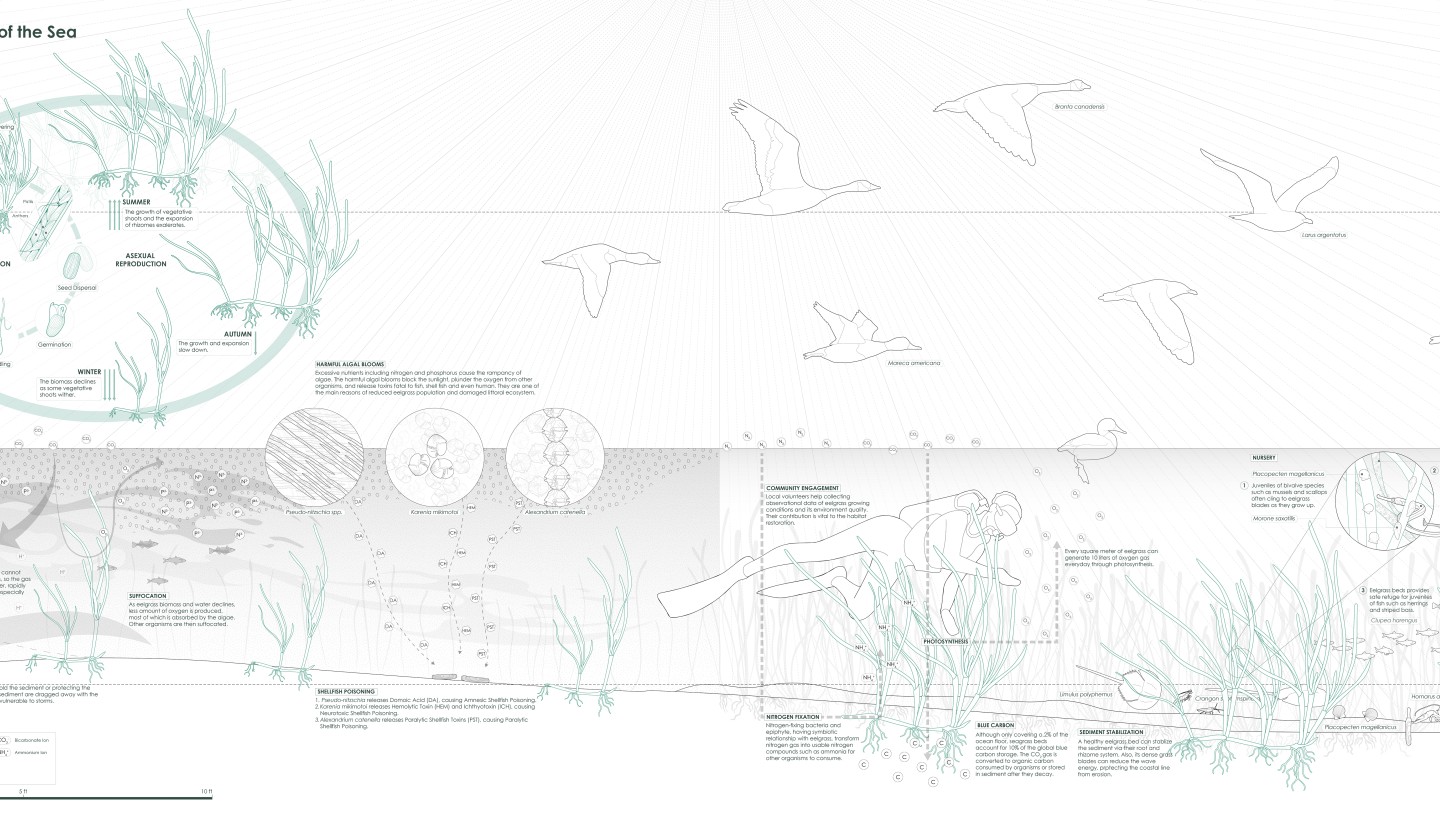
But on coasts such as Casco Bay, the shore is less a line than a zone of constant change, a gradient from salt to fresh and intertidal to upland that will be remade drastically as seas warm and rise. Too often the response to this uncertain future is to draw the line harder still, armoring the coast with monofunctional infrastructure that offers a false sense of safety while cutting communities off from the shorelines they value. This studio waded into the thickened and shifting littoral zone of Portland and South Portland, Maine of Casco Bay, asking how the coast might be designed as a living infrastructure that buffers rather than armors, and that grows with the communities who tend it.
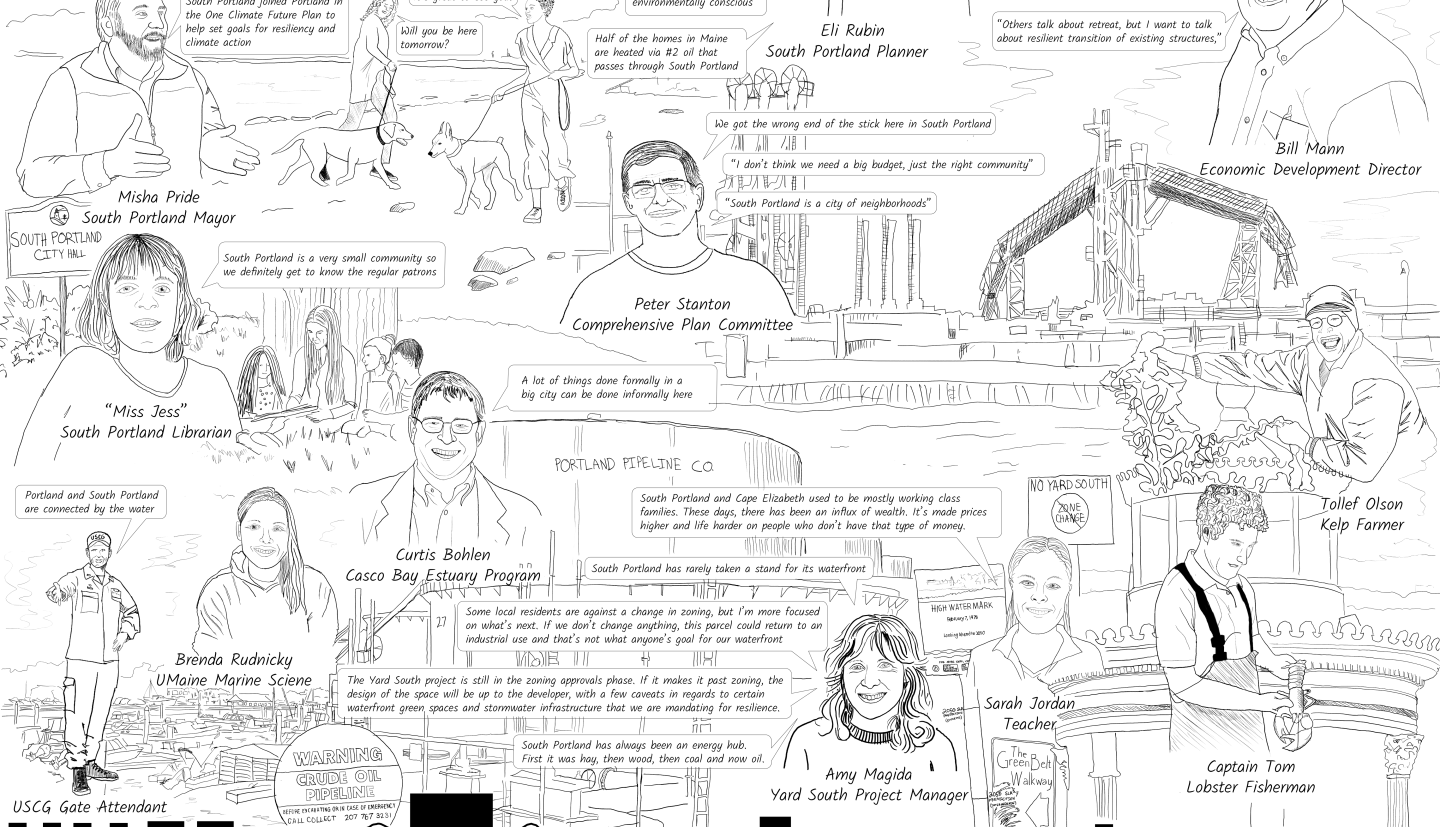
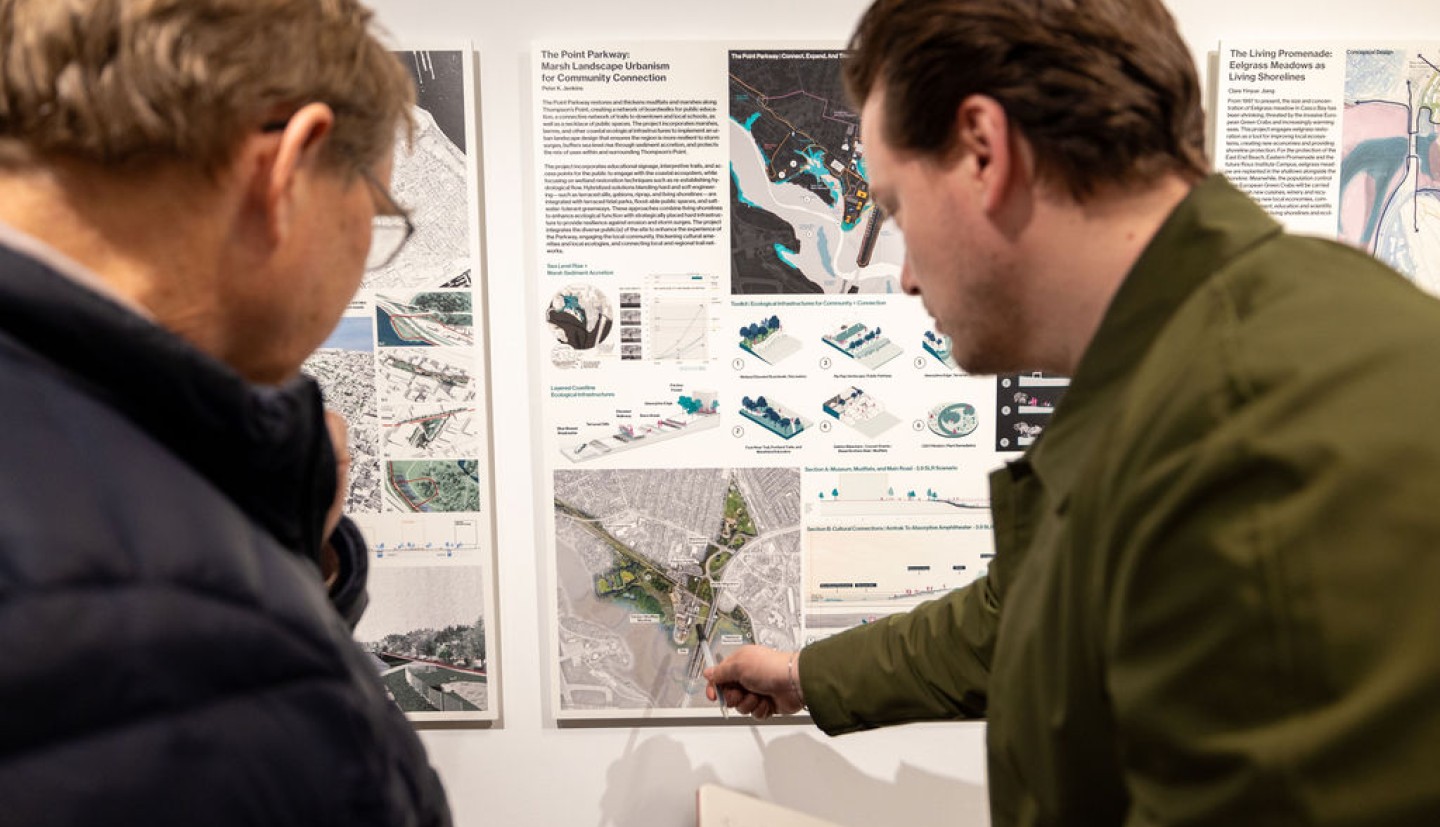
Starting from the premise that Casco Bay must be engaged as a commons in transition — as a shared resource like its fisheries — students explored how thickening the littoral zone might store carbon, filter water, buffer storms, and support new aquacultures across the layered edges of the bay. As part of the Envision Resilience Challenge, the studio worked in parallel with peer studios from Harvard, Yale, and the University of Virginia, among others, with work later exhibited in the community through exhibitions at the Portland and South Portland libraries and SPACE Gallery. The work gathered here imagines shorelines for Portland and South Portland that are, in the words of the cities' own One Climate Future plan, more equitable, regenerative, and resilient.