Managing Flystrike (Myiasis) in Sheep
Livestock IPM Fact Sheet
Fleece or wool worms are blow fly larvae (Diptera: Calliphoridae) that infest sheep (myiasis or “flystrike”), causing severe animal welfare and economic losses. Maggots feed on skin and wool, leading to wounds, infection, and death if untreated. Good hygiene, monitoring, and prompt treatment are critical.
In this fact sheet
- Identifying a blow fly larvae infestation
- Life cycle of blow fly
- Symptoms of flystrike
- IPM tactics to manage fly populations
- Livestock treatment for flystrike
- Chemical management resources
Fleece or wool maggots belong to the Diptera order and the Calliphoridae family. Several species can infest sheep, causing myiasis (also known as “flystrike”), with the primary concerns being the black blow fly (Phormia regina) and the green bottle fly (Lucilia sericata, formerly known as Lucilia cuprina). This is a severe pest causing significant economic losses to sheep flocks. This is also an animal welfare issue and requires immediate attention when discovered. Worldwide, 1-3% of flocks are affected by wool worms. Once a sheep is infected, about 5% die. Other flies, such as the secondary screwworm (Cochliomyia macellaria), can also infest sheep. Infection occurs when animals get wet with warmer weather.
Identifying a blow fly larvae infestation
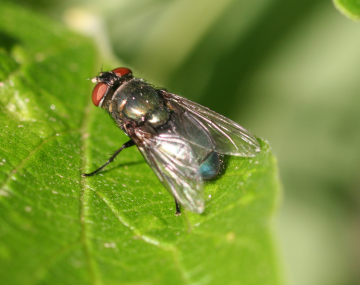
- Adult flies vary slightly in appearance but are typically metallic green and about 0.39 inches (10 millimeters) long
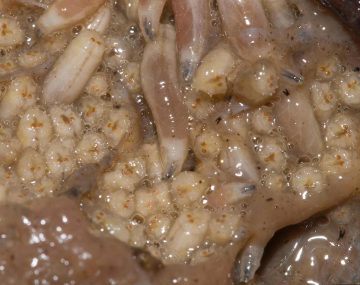
- Eggs are cream to white and only 0.04 inches (1 millimeter) long
- Maggots are cream to white, legless, and range from 0.08 inches (2 millimeters) to 0.67 inches (17 millimeters), progressing through three larval instars.
- Maggots will be within the moist-soiled wool next to the skin
- Pupae, found in the soil, are reddish-brown.
Figure 2. Black blow fly
Figure 3. Blow fly larvae
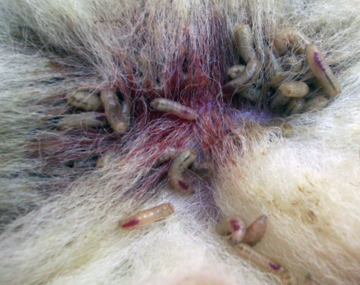
Figure 4. Fleece worms (fly strike) on a sheep.

Life cycle of blow fly
Flies primarily target dead animals or carrion but will lay eggs on moist or soiled wool on sheep, often near the rear area. The life cycle includes the following steps:
- Eggs hatch into maggots
- Maggots progress through three instars while feeding on necrotic tissue
- Pupae drop off the sheep or goats and pupate in the soil
- Adults emerge after pupation.
At 70 F (21.1 C), the black blow fly and green bottle fly take about 130–140 hours to reach adulthood, while the secondary screwworm takes longer, depending on temperature. Female flies can lay up to 200 eggs at one time.
Symptoms of flystrike
The flies feed on dead or necrotic tissue near the wool fibers, causing skin irritation, redness, and dislodgement of fibers. Maggots can burrow into the tissue, leading to severe damage, infection, and potentially death. This causes direct harm to the sheep, creating an open wound as well as making the wool and meat unmarketable. There are differences in the genotypes and breeds of sheep. Strong-wooled animals are at higher risk of infestation with fly strikes than fine-wool sheep. Signs of damage include the following symptoms:
- Severe discomfort or restlessness in sheep
- Black to greenish discoloration from wound discharge
- Loose or missing patches of wool
- Presence of maggots and sores under discolored or dirty wool
- Presence of maggots near the skin under the wool.
IPM tactics to manage fly populations
- Hygiene: Keep sheep dry and clean to discourage egg-laying.
- Tail docking: Prevents fiber matting, reducing fly attraction.
- Shearing: Consider shearing twice a year to minimize suitable habitats if the problem occurs often.
- Monitoring: Regularly inspect sheep for maggots to detect infestations early.
Livestock treatment for flystrike
- Shearing: Remove wool from affected areas.
- Maggot removal: Physically remove all maggots.
- Insecticide application: Treat the affected area with an appropriate insecticide and dress the wound.
By implementing these measures, sheep producers can mitigate the risks associated with fleece or wool worms, reducing economic losses and improving animal welfare.
Chemical management resources
Please visit VetPestX, a searchable database of control products to find appropriate chemicals based on the pest, treatment site, and desired formulation.
Note that this is a national list of products and some of these may not be registered in New York State. It is the responsibility of the producer to make sure it is legal to use in New York State.
Any time you use a pesticide, you must read and follow the label directions and comply with all applicable laws and regulations related to pesticide use. Also be sure that any pesticide used is approved for use in your country and state/province.
Authors
Ken Wise
Associate Director, Agricultural IPM, Dairy/Livestock IPM Coordinator, Cornell Integrated Pest ManagementHannah Tolz
Extension Support Specialist, Cornell Integrated Pest Management
Published: July 2026
Updated: July 2026
- Anderson M, Kaufman PE. 2011. Common Green Bottle Fly or Sheep Blow Fly Lucilia sericata (Meigen) (Insecta: Diptera: Calliphoridae). EDIS. 2011(12). doi:10.32473/edis-in903-2011.
- Byrd JH, Butler JF. 1996. Effects of Temperature on Cochliomyia macellaria (Diptera: Calliphoridae) Development. Journal of Medical Entomology. 33(6):901–905. doi:10.1093/jmedent/33.6.901.
- lachaus2 [at] uwm.edu. 2022 Mar 23. Black Blow fly. Field Station. [accessed 2026 July 17]. https://uwm.edu/field-station/bug-of-the-week/black-blow-fly/.
- Preventing And Treating Flystrike In Sheep. [accessed 2026 July 17]. https://www.northvets.co.nz/wp-content/uploads/2018/02/Preventing-and-treating-flystrike-in-sheep.pdf.
- Wool Maggot Sheep. 2026. VeterinaryEntomology. [accessed 2026 July 17]. https://www.veterinaryentomology.org/pests/wool-maggot-sheep.
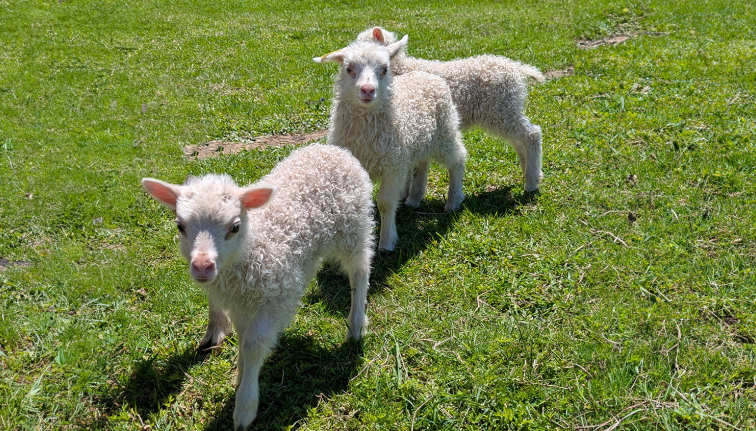
- Figure 1. Healthy Lambs—Photo by Ken Wise, Cornell IPM
- Figure 2. Black Blow Fly—Photo by Whitney Cranshaw, Colorado State University, Bugwood.org
- Figure 3. Blow Fly Larvae—Photo by Susan Ellis, Bugwood.org
- Figure 4. Fleece worms (fly strike) on a sheep—Photo by Richard Walls (University of Bristol)
Extension Support Specialist
Cornell Integrated Pest Management
Hudson Valley Research Laboratory
- (914) 659-0529
- htt24 [at] cornell.edu