

This event is supported by the CALS Office for Diversity and Inclusion and is part of the CALS Dean’s Inclusive Excellence Seminar Series, which highlights academic excellence through inclusive science and creates a platform for extended discussions on how our science can and should be transformative in leading to best practices and policies that support social, economic, environmental and climate justice.
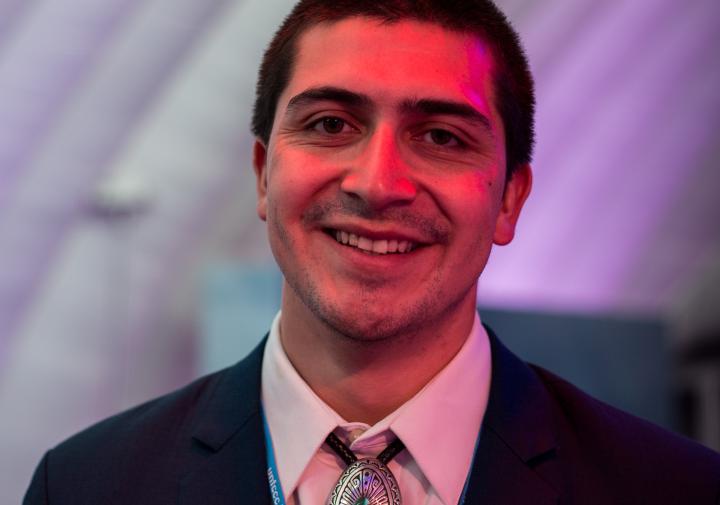
The CALS Dean’s Inclusive Excellence Seminar Series and the Department of Biological and Environmental Engineering present: A conversation with Michael Charles, Ph.D., The Ohio State University at Newark
Talk abstract
In academia, we often pursue answers, expertise, and novelty in silos, building exclusive knowledge held on to until publication. It is common to narrow focus within subject or departmental boundaries, approaching the world's issues with expertise, yet also with a reductionist perspective. In the search for sustainability, it is important that our solutions do not shift issues outside the system boundary and create unintended consequences. In an effort to adopt a holistic approach, this work explicitly includes ecosystems into sustainable engineering, demonstrating how optimization frameworks can expand to include nature and its services. Further, it conducts case studies that include health impacts of local communities as design objectives, showing how shifts in stakeholder values can impact results.
While formally trained in an engineering background, Dr. Charles also works in research that connects land grant institutions with the dispossession of Native Americans in the United States. We identify opportunities for institutions founded on overlapping cessions to collaborate in outreach efforts toward current Tribal Nations whose ancestors were displaced. Connecting this history to sustainability, we overlap national datasets on food insecurity and agricultural production with the maps of cession land and current federally recognized tribal land. This comparison allows us to explore the impacts of dispossession on community food production. While we will discuss research in both these areas, this work is based in context around being a citizen of the Navajo Nation and a member of the International Indigenous Peoples Forum on Climate Change.
This talk will aim to show the powerful potential of conducting inclusive and collaborative research with Indigenous communities as we move forward in the pursuit of justice in the face of climate change.
Michael Charles Bio
Dr. Charles earned his B.S. from Cornell University, his Ph.D. in Chemical and Biomolecular Engineering at The Ohio State University and is a current postdoctoral researcher at the Newark Earthworks Center. His areas of expertise are in sustainable engineering and design along with community engagement, specifically with Indigenous peoples. He is a citizen of the Navajo Nation and serves as an active member of the International Indigenous Peoples Forum on Climate Change. His postdoctoral work centers around land grant universities and their connection to the displacement of Native Americans, associated impacts on food sovereignty, and the experiences of today’s “urban Indians” of Ohio. The dream for Dr. Charles is to conduct research in relationship with his Indigenous relatives, learning from each other to practice a more sustainable future.
Date & Time
January 31, 2022
11:00 am - 12:30 pm
Location
More information about this event.
Contact Information
Nicole Albright
- nja35 [at] cornell.edu
Speaker
Michael Charles, Ph.D.
Departments
Biological and Environmental Engineering
Office of Access and Community Empowerment
Related Events
Conference
Seminar

We openly share valuable knowledge.
Sign up for more insights, discoveries and solutions.