

Seminar in Critical Development Studies: Sam Law
Abstract
From plantation cotton to cattle ranching to the oil landman, Texas has been figured as a frontier through successive regimes of capital accumulation. Land and natural resources are transformed into profit and the enabling legal arrangements find their ideological justification in a cowboy ethos of rugged individual freedom (Turner 2025). Today, with over 474 GW of proposed data centers (ERCOT 2026), strategies of techno-capitalist accumulation are remaking Texas as a hyperscale frontier. This frontier -- produced by an unholy alliance of politically connected ranchers, land speculators, Big Tech, and fossil fuel interests -- transforms land, power, and water into speculative assets, promising to industrialize rural Central Texas for the new fossil-compute economy.
Drawing on recent ethnographic work with anti-data center organizers, public comments, and public records requests, I follow Palomino Alpha, a proposed 942-acre, 480-megawatt data center in rural Central Texas. The case reveals land speculation as an underexplored driver of data center development: speculators profit not by building anything but by assembling a bundle of legal entitlements -- county tax abatements, a gas-generation right, a water contract -- that turns rural land into an investable asset (Birch and Muniesa 2020; Kollar 2026). I then trace the community's resistance to the project's water demand, fought out before the elected board of a public water district: a former member-owned rural water supply corporation and a remnant of cooperative rural infrastructure -- heir, if a forgotten one, to Texas's populist and socialist traditions of rural cooperation (Green 1978) -- that has outlasted decades of neoliberal deregulation. Following the struggle over the half-million-gallon-a-day water contract, I argue that a different relation to land emerges, one that contests the hyperscale frontier: a positive vision of freedom in which land and water are the basis of a flourishing rural livelihood rather than commodities to be sold.
About the speaker
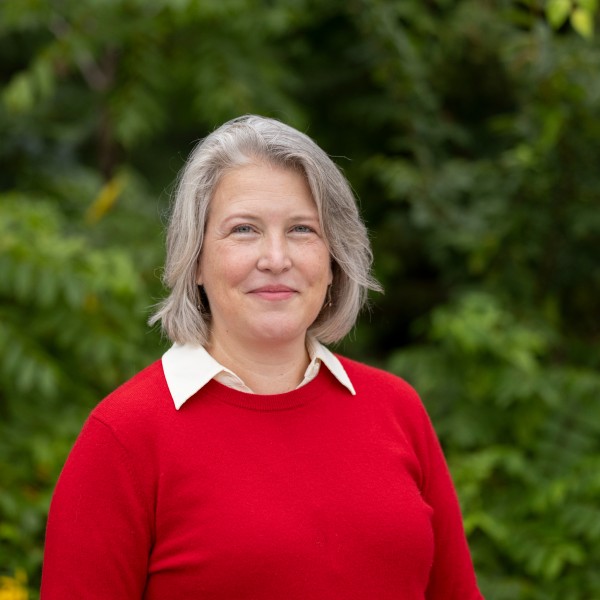
Sam Law is a researcher, organizer, and writer. He currently is a research affiliate at the University of Texas of Austin, where he also received his PhD studying social mobilization. He is currently conducting a long-term research exploring the impacts of the data center industry on rural livelihoods in Central Texas, the effects of this massive new demand for power and water, and the communities organizing in response. Over the past year, he has worked with community organizations opposing data center projects in Hays, Guadalupe, and Caldwell Counties. He also works as the manager of communications at FracTracker Alliance, where he communicates the harms of the oil and gas industry and conducts research on the data center industry's links to fossil fuels.
About the series
The Critical Development Studies Seminar Series is a graduate student-led effort that aims to provide space for junior scholars to share innovative research and discuss emergent debates within critical development studies.
Invited speakers cover a range of geographical areas, disciplinary backgrounds, and research topics. Examples of potential topics include agroecology and food justice issues, state-building, land and labor, extractivist politics, the gendered and racial dynamics of ongoing capitalist development, and the political ecological histories of the global development project. The target audience for the series is graduate students and faculty interested in critical development studies both within the Cornell community as well as external scholars.
Seminar organizers for 2026-27 are Josefina Rodriguez Pletikosic, Diyang Lin, Rachel Bezner Kerr, Aaron Benanav, and Mariah Doyle-Stephenson.
Date & Time
October 16, 2026
12:00 pm - 1:30 pm
More information about this event.
Contact Information
Mariah Doyle-Stephenson
- md2237 [at] cornell.edu
Speaker
Sam Law, FracTracker Alliance // University of Texas at Austin
- sam.law [at] utexas.edu
Departments
Global Development Section
Natural Resources and the Environment Section
Polson Institute for Global Development
Related Events
Conference
Seminar

We openly share valuable knowledge.
Sign up for more insights, discoveries and solutions.