Roles and responsibilities
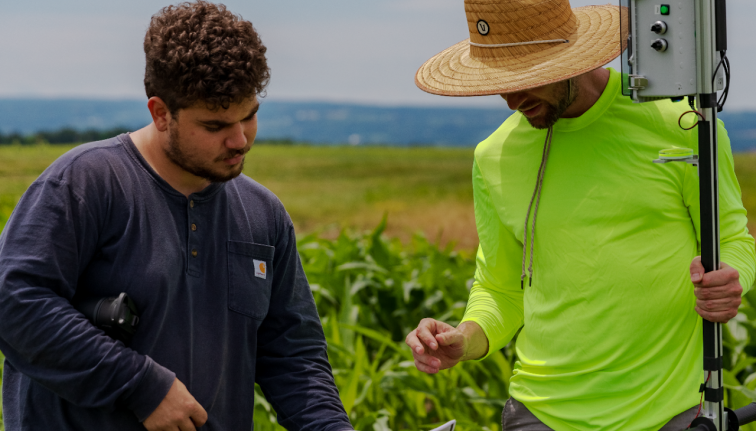
The student intern will be expected to participate in field work throughout the season. This will include soil samples, biomass harvest, and the use of proximal sensors and precision GPS. Students should be comfortable using basic tools (e.g. shovels, pruners) as well as more sophisticated ones (e.g. spectrometer, soil sensors) in the field. The student will also assist in processing data and generating figures for the reports which will be given to the growers. If the student is available early enough, they will have the opportunity to join the interviews with the farmers where the team gathers information to support the experiments.
Qualifications and previous coursework
This opportunity is available to non-graduating students in Cornell University's College of Agriculture and Life Sciences.
- Coursework in field crop systems and soil science are beneficial
- Some programming experience would also be helpful
Learning outcomes
The student intern will gain experience in field scouting and sample collection with a variety of tools, such as spectrometers, soil moisture sensors, and soil EC meters. The student will also learn how to use several digital tools to provide additional context to the collected data, including remotes sensing imagery, GIS software, and machine learning models. The student will have the opportunity to participate in the entire process, from sample plan all the way to completed report.