The safety and well-being of our community is our highest priority. We know the recent news and allegations are deeply concerning, and we are committed to a safe environment for all. Learn how Cornell is addressing sexual violence.

Alert Close

The farm environment, as well as the climate, impact outcomes both day-to-day and on a longer timespan. CAST is testing and utilizing environmental and weather-related data-driven tools that improve farm sustainability through climate-smart practices.
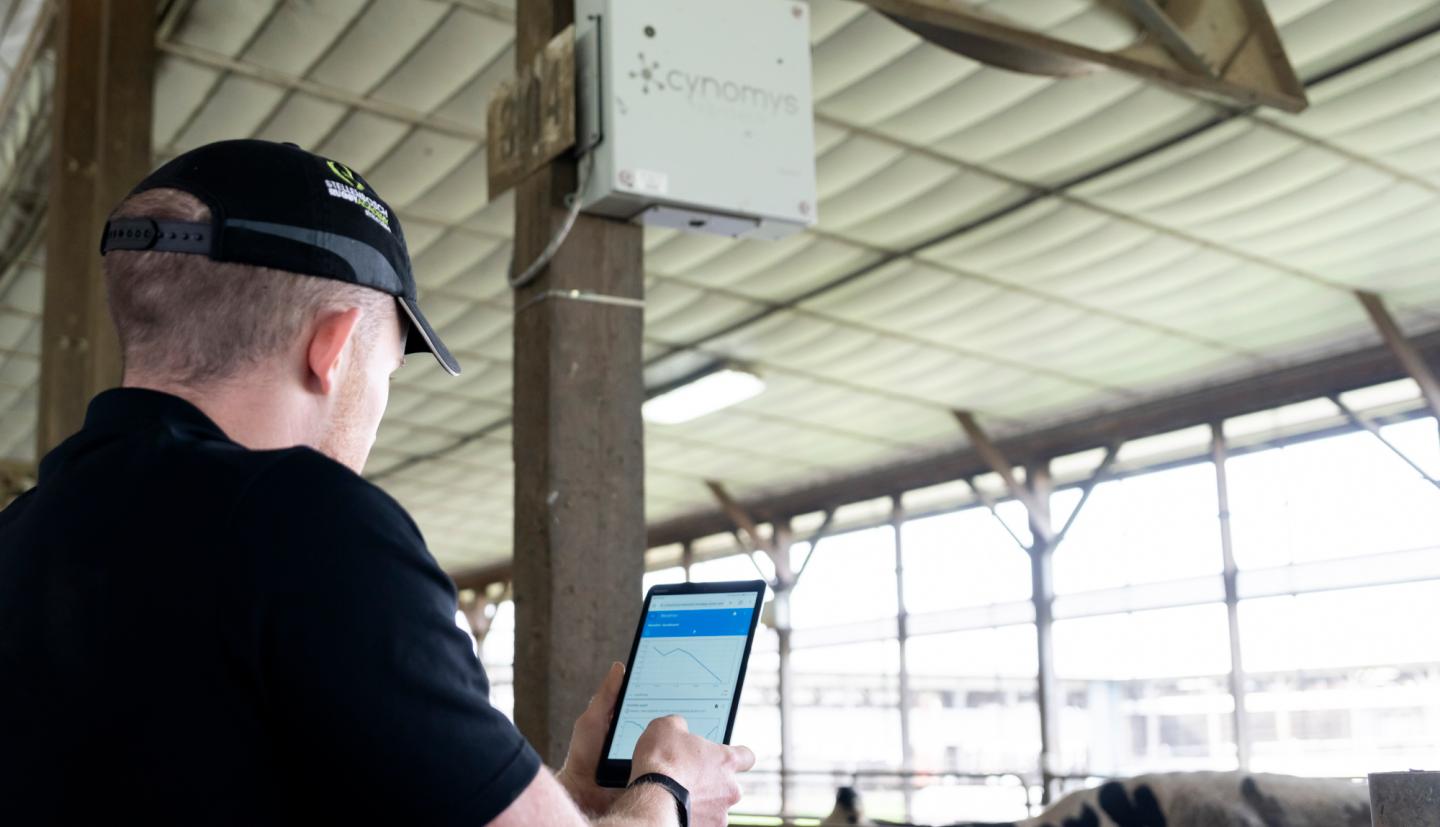
Cynomys Livestock System

Constant environmental monitoring that helps prevent cow heat stress and improves barn air quality.

Environmental conditions have a big impact on livestock health. For dairy cows, aspects such as barn temperature, ammonia concentration in the air and humidity levels can impact milk production as well as contribute to respiratory problems.

Cynomys Livestock Systems allows herd managers to track these environmental concerns, and more. They can then intervene quickly when needed to achieve and maintain optimal herd productivity and wellbeing. 

At CAST, we use Cynomys Livestock System to monitor barn conditions for the health of the herd. 

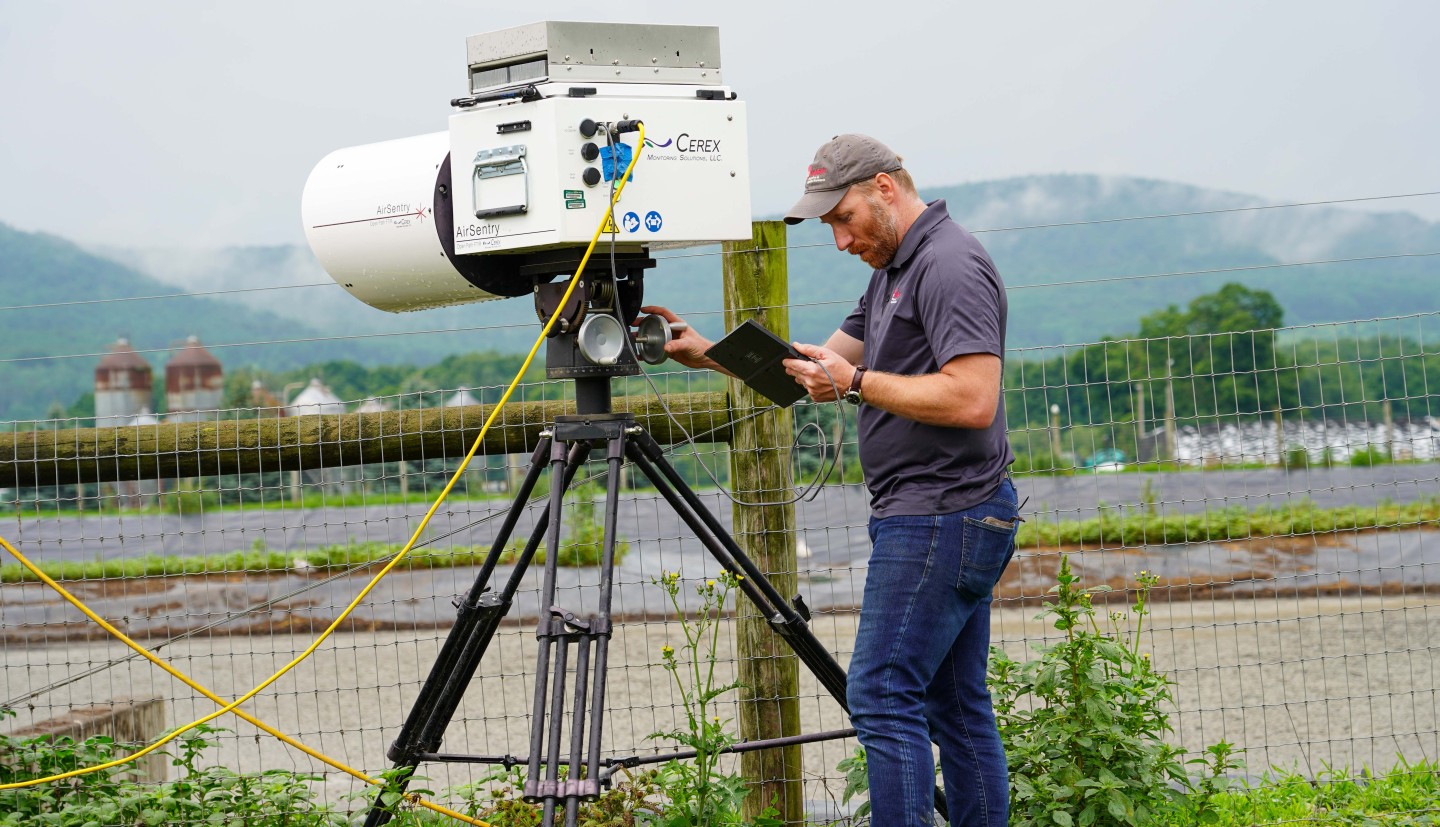
Open Path-Fourier Transform Infrared Spectrometers

Monitoring manure emissions that can impact animal and environmental health.

Manure emissions are generated by dairy and other livestock farming. Gases like ammonia and methane released by manure systems can have unintended impacts on air quality and global warming. 

To help farmers understand these emissions and strategies to reduce them, we use open-Path Fourier Transform Infrared (OP-FTIR) spectrometers to monitor gas emissions from manure storage and other farm facilities at our main CAST farm. OP-FTIRs send out an infrared light beam of known intensity aimed across the manure storage to a gold-mirrored retroreflector, which bounces the light back. Since ammonia, methane and many other gases absorb infrared light in specific wavelengths, we can detect how much of these gases are present by comparing the light sent out to the light that returns. We then pair this with on-site wind data to determine manure storage off-gassing. 

At CAST we have two different sets of OP-FTIR and retroreflectors. One set targets each manure storage cell. These allow us to continuously monitor emissions from these systems and compare how different conditions, management and treatments can be used to mitigate the off-gassing.