Built for Teaching, Research & Cow Comfort 

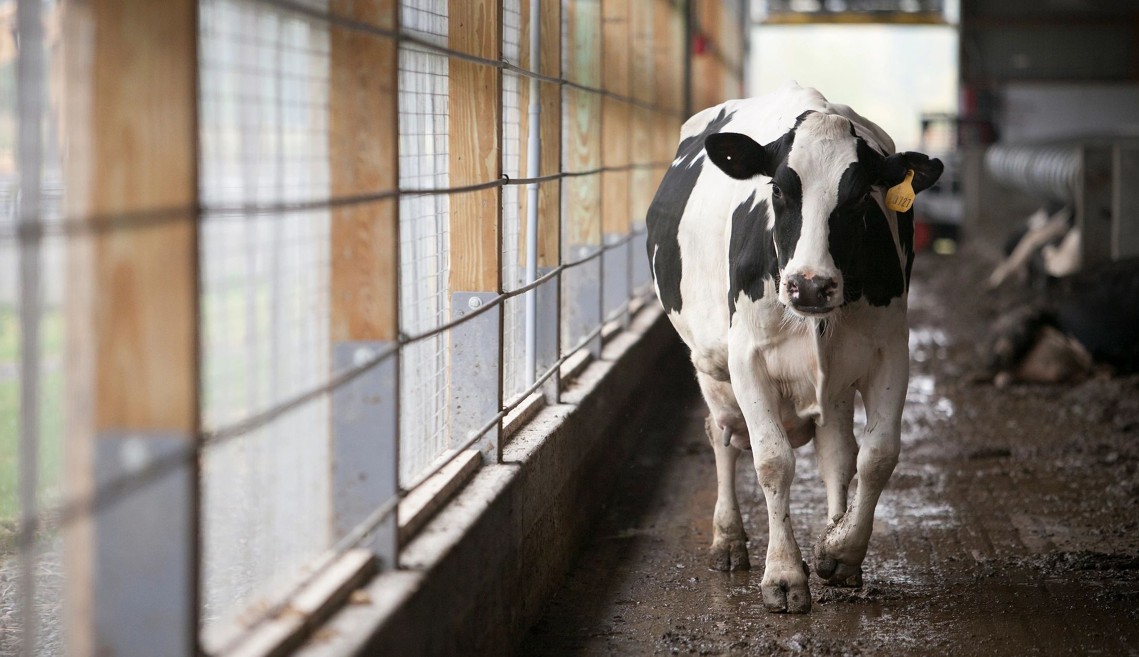
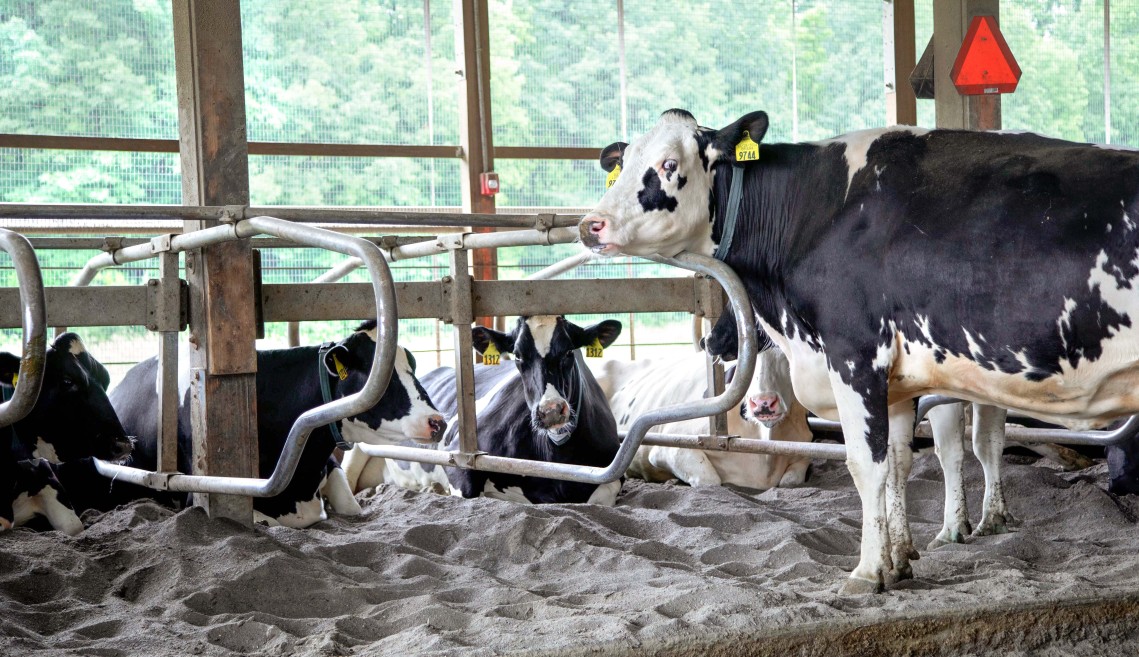
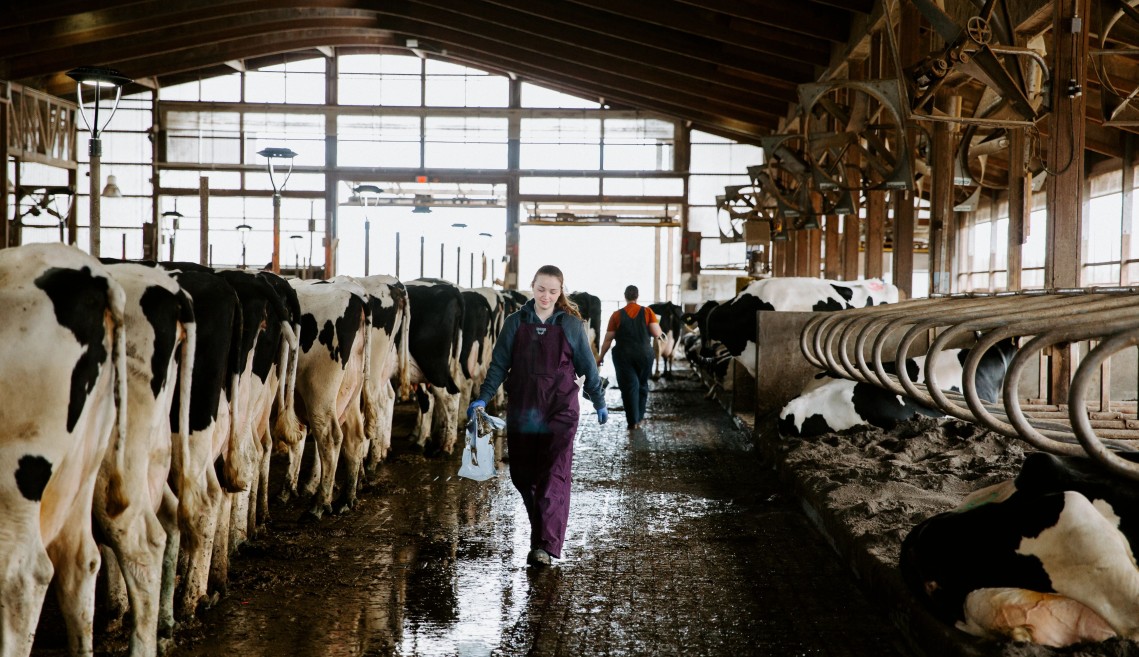
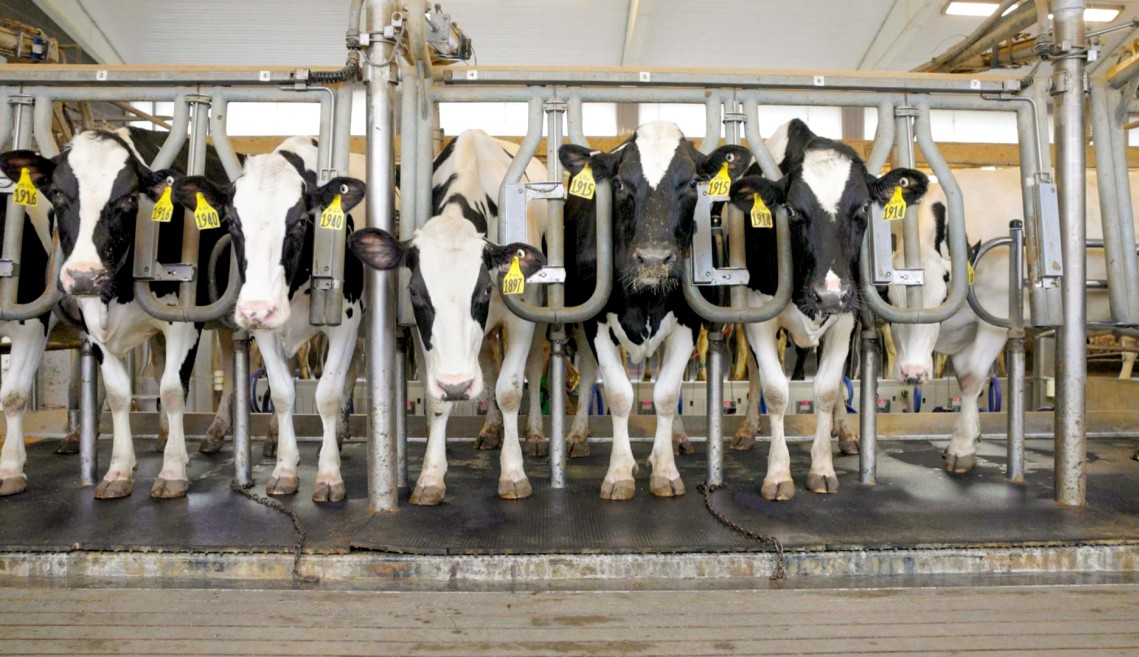
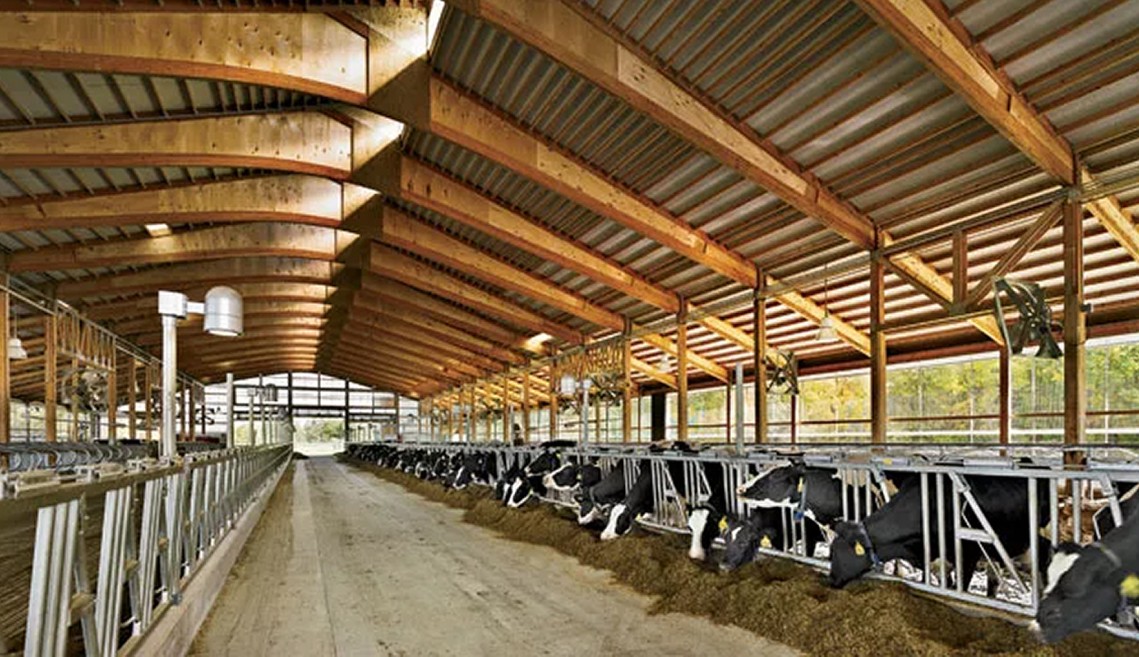
Built in 2012, the Teaching Dairy Barn is situated on Cornell's Ithaca campus near the veterinary college. The barn houses around 175 dairy cows, the average size of a New York dairy farm. They live in a freestall pen, with constant access to nutritionally-balanced food. This facility does not have land for feed production.
175

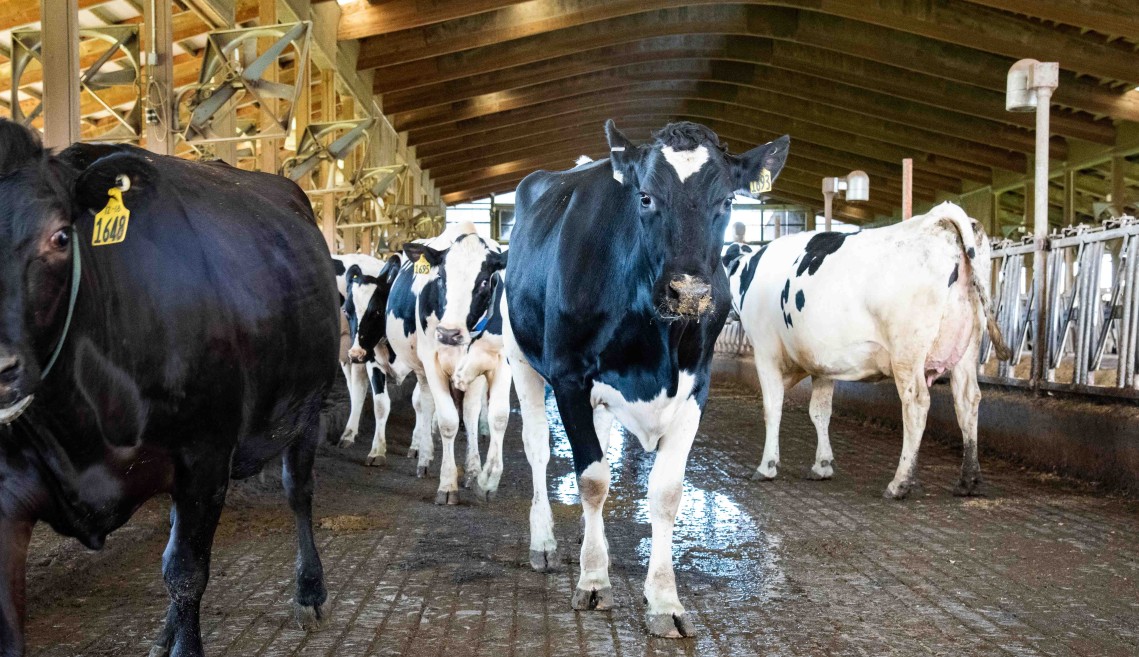
Holstein and Holstein-Jersey crossbred cows (milking and dry)

182

stalls in freestall barn

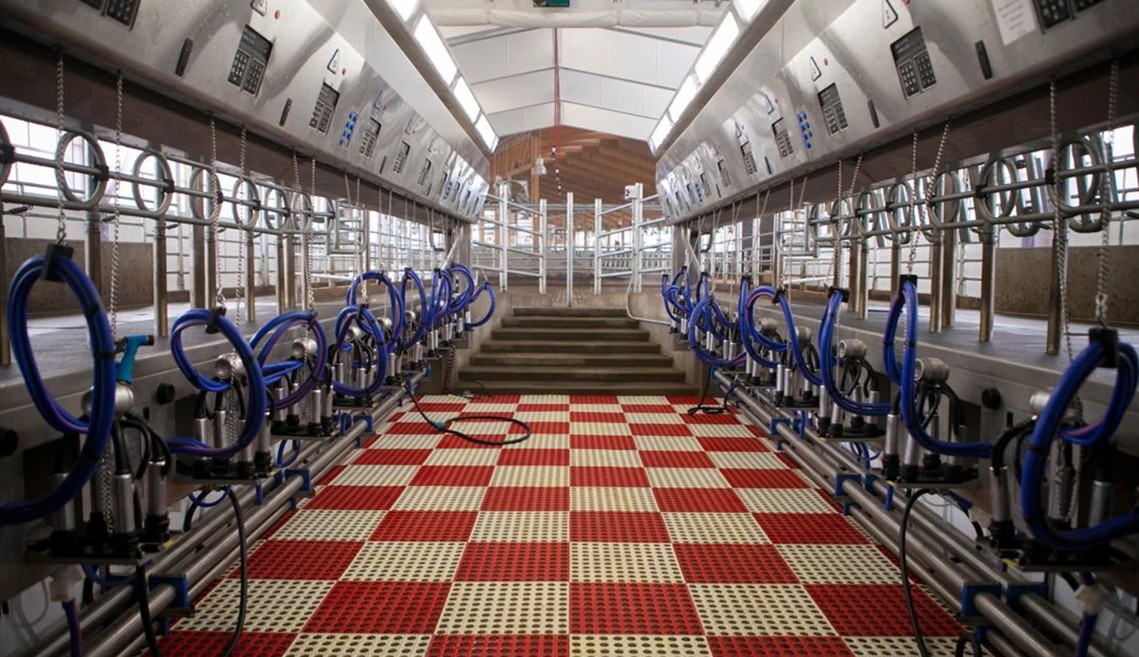
double-10

parallel milking parlor

Animals

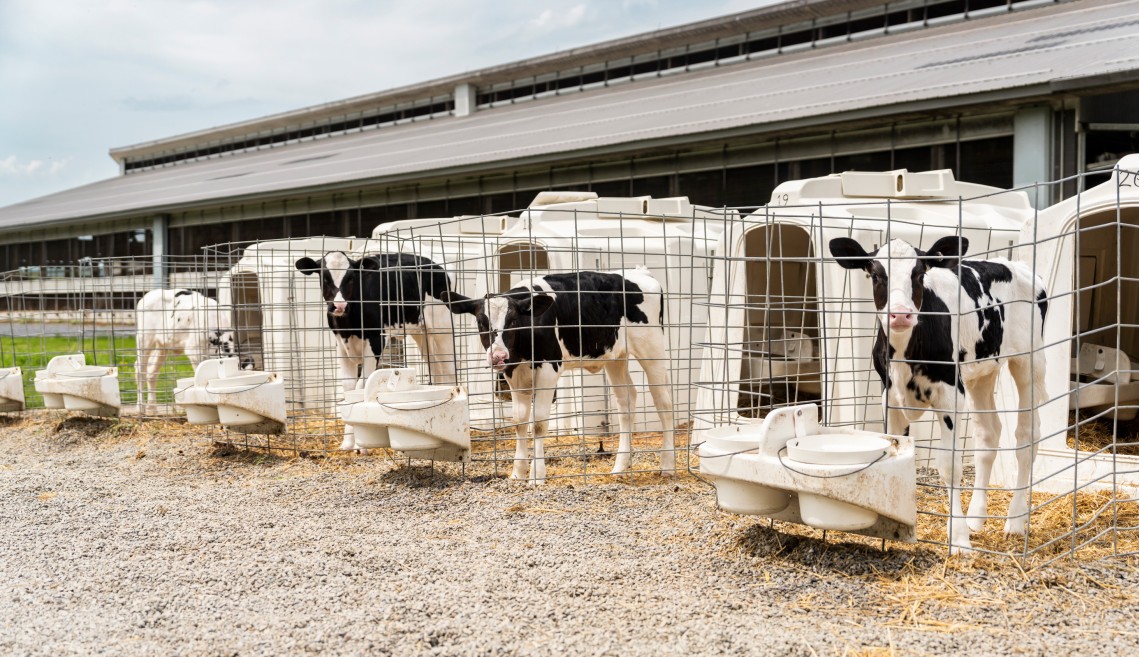
The adult herd consists of approximately 175 (milking and dry) Holstein and Holstein-Jersey cross cattle. The herd currently averages about 100 pounds energy-corrected milk per day. Dairy replacement heifers are raised on-site for five months in individual hutches and small group pens, then custom raised off-site until 21-days pre-partum.

Cows are managed using advanced technologies and management practices similar to those used at the Cornell University Rumenant Center (CURC). Some examples include: 

  • Genomic testing  of all females at the facility with a commercially available genomic test (Geneseek, Neogen corporation)
  • Use of dairy herd management software (DairyComp305)
  • Artificial insemination (conventional Holstein, sexed-sorted Holstein, and beef semen) after automated detection of estrus and synchronization of ovulation
  • Transrectal ultrasonography for pregnancy testing
  • Selective dry cow therapy based on somatic cell counts and clinical history algorithms
  • Milk culture-based antimicrobial treatment for clinical mastiti,
  • Total mixed ration feeding based on formulation with the Cornell Net Carbohydrate and Protein System (CNCPS) software

Animal Housing

The facilities consist of:

  • A four-row freestall barn arrangement typical of commercial dairy farms that includes 182 stalls
  • A double 10 parallel milking parlor from DeLaval with MM27BC milk meters
  • Deep-bedded stalls with recycled sand
  • Evaporative cooling via fans and sprinklers for the cows’ comfort.
  • McLanahan sand separation system and a FAN screw press for separation of manure solids


In addition, there is a special needs barn, which provides access to the following:

  • Appleton Steel hoof trimming chute
  • Stocks for surgical or reproductive procedures
  • 8 tie stalls where individual-cow intakes can be measured


The barn and grounds are also noteworthy for a number of sustainable features, including:

  • A state-of-the-art system that separates manure from sand bedding material, providing clean bedding for the cows and creating muck used to generate electricity and heat
  • Leadership in Energy and Environmental Design (LEED) certification by the U.S. Green Building Council in recognition of the barn’s energy efficiency
  • Building orientation that promotes natural ventilation
  • Constructed wetlands in the area surrounding the building to control stormwater collection and filtration