New York State Tick Blitz: Understanding expanding range of tick disease vectors impacting human and animal health

Project Overview

New York State Tick Blitz: 
Understanding expanding range of tick disease vectors impacting human and animal health

This project expanded tick surveillance in New York beyond deer ticks by engaging community volunteers in a four-year “Tick Blitz.” Nearly 3,000 ticks were collected across 15+ counties, significantly improving understanding of the distribution of multiple species, including invasive and emerging ticks. Testing revealed that Lyme disease remained the most common pathogen statewide, while anaplasmosis risk was consistent across regions and Powassan virus rates were notably higher in Northern and Western New York.

The project produced region-specific risk data that can guide targeted public health messaging and prevention strategies. By training hundreds of volunteers and transitioning to a “train-the-trainer” model, it also created a scalable, community-driven surveillance system, strengthening long-term capacity to monitor and reduce tick-borne disease risk.

Ticks play a growing role in pathogen transmission to humans and animals in New York. Over the past decade, most public health monitoring of ticks has focused on blacklegged ticks – commonly known as deer ticks – due to their importance as a vector for Lyme and other diseases. However, other tick species that impact human and animal health are also present in New York, and their distribution is not well understood. Knowing the distribution of these ticks is a critical component of understanding human and animal risk, developing local education and messaging materials, and targeting control and prevention methods. 

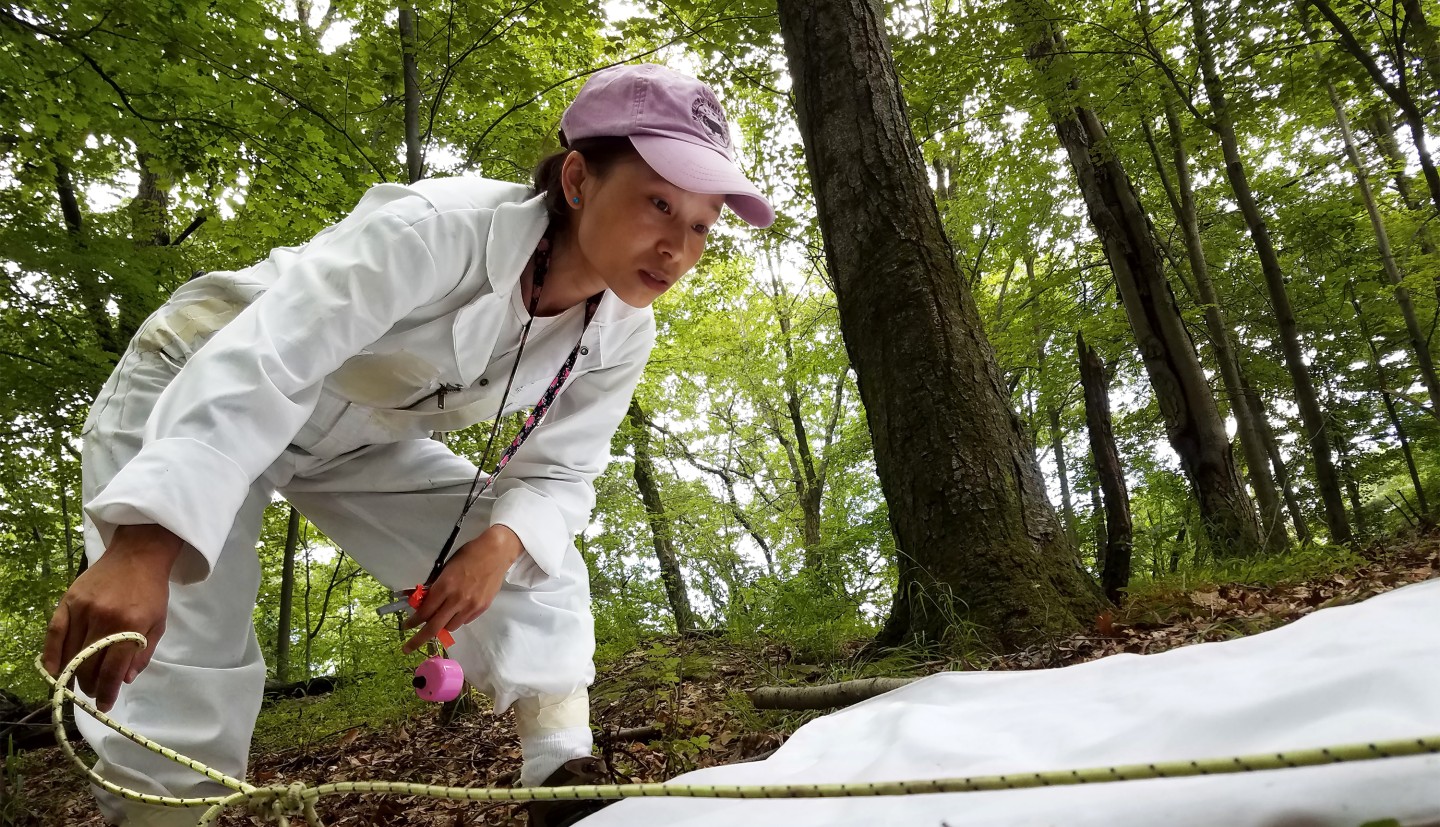
We established a community science surveillance project called a “Tick Blitz.” This four-year project engaged hundreds of volunteers across New York to address critical gaps in tick surveillance and public health education. From 2021 to 2024, we recruited and trained volunteers through Cornell Cooperative Extension networks to collect and identify ticks, with a particular focus on invasive and range-expanding species such as the Asian Longhorned tick and the Lone Star tick. Over the course of the program, volunteers collected a total of 2,994 ticks across more than 15 counties, providing invaluable data on tick distribution that would have been impossible for a small research team to gather alone. 

The Impacts

Throughout the course of the program, we trained participants to successfully identify blacklegged ticks, lone star ticks, and each of their habitats. We also pooled and tested ticks for pathogens – including the pathogens that cause Lyme disease, babesiosis, anaplasmosis, and Powassan virus – to determine infection risk regionally. The pathogen that causes Lyme disease was the most commonly identified across all years and locations. We found that rates for the agent causing anaplasmosis were similar in Northern and Western New York, as compared with downstate counties. However, Powassan virus infection rates were nearly double in Northern and Western NY compared with downstate. In our final year, the Tick Blitz program shifted from direct data collection to a “train-the-trainer” model. Our goal was to empower other organizations to utilize the Tick Blitz approach in their own regions. We partnered with Tompkins Cortland Community College, the Nature Conservancy Land Trust, the Tennessee Department of Health, and Westchester County, NY in that effort.

Our program developed publicly available resources and trained hundreds of volunteers in tick sampling and personal protection strategies, empowering volunteers to protect themselves, their families, and their communities from tick-borne diseases. 

Laura Harrington headshot

Principal Investigator

Project Details

  • Funding Source: Hatch
  • Statement Year: 2025
  • Status: Completed Project
  • Topics: Vector-borne diseases, ticks, public health, community engagement