Back

Discover CALS

See how our current work and research is bringing new thinking and new solutions to some of today's biggest challenges.

Search for News & Stories
News
When Norman Borlaug first came to India in 1963, millions of Indians lived from “ship to mouth,” surviving on boatloads of wheat imported from the United States. In the 50 years since, India went from producing less than 10 million tonnes of...

News

Recent media reports have generated concern among some New Yorkers that acid whey, a byproduct of yogurt and other dairy processing, presents a hazard to human health and the environment. But for Andrew Novakovic, E. V. Baker Professor of...

Red apples hang from an apple tree

News

Apple growers across New York are breathing a sigh of relief this spring after 2012’s unseasonably early thaw and harsh spring frosts devastated apples trees throughout the state and caused a 40% drop in production for the year. But although the...
A group of people sit on the ground

News

Semagn-Asredie Kolech sees a lot of potential in the potato. The doctoral candidate in the field of horticulture shuttles between Ethiopia and Ithaca to examine and research efficient agricultural practices in the shadow of climate change, and...

News

Rayna Bell, ecology and evolutionary biology Ph.D. candidate and National Geographic Young Explorer, was recently on the hunt in the jungles of the African island nation of São Tomé and Príncipe for the elusive tadpoles of Leptopelis palmatus...

A man wears a straw hat and stands in an orchard

News

Before he became a world-renowned expert in pomology and viticulture, he was a taxi driver in New York City, a trolley coach conductor in San Francisco, and a Neruda translator exploring Latin America from the back of a motorcycle, all of his...

News

It boasts thriving organic farming communities, a regional reputation for wine and a dairy industry that claims the highest average milk production per cow in the world. No, it’s not New York state, but Israel, where 15 students recently traveled for an intensive one-week trip.

  • Food Science

News

Have you ever wondered why the grass along Tower Road looked so miserable even though it runs alongside the Plant Sciences building? A group of students from the “Grassing the Urban Eden” class (HORT 4931) recently re-sod ded the side of the...

News

Three Cornell faculty members–all from CALS–were recently elected to the American Academy of Arts and Sciences: Kenneth Kemphues, professor of genetics and chair of the Department of Molecular Biology and Genetics; John Lis, the Barbara...

News

With more than a billion active accounts worldwide, it can be easy to forget that some people don’t use Facebook. In fact, “non-use” of the social networking site is fairly common, according to new research by communication post-doc Eric P.S...

News

Did you know the New York State Agricultural Experiment Station has the world’s largest collection of apple varieties? It’s a pomological Noah’s Ark, with 2,500 varieties hailing from as far away as Kazakhstan, where apples first originated. The...

A green apple on the left, a sliced red apple cross-section in the middle, and a red apple on the right

News

Want to make sure your little one eats his apple? Try slicing it! Results from a pilot study conducted by the Food and Brand Lab in eight elementary schools show that apple sales jumped by an average of 61 percent when the fruit was sliced. The...

News

When it comes to climate change, a rose may not be a rose by any other name, after all. According to recent research by Jonathon Schuldt ’04, assistant professor of communication, the terms “global warming” and “climate change” have very...

News

How can a farmer increase yields while decreasing negative environmental impacts? For many, the answer has been the system of rice intensification (SRI), an interrelated set of farming principles that rely on fewer seeds, less water and a...

News

According to CALS professor of crop and soil sciences Bill Cox, warming climatic conditions in the North Country of New York have made the region more viable for soybean cultivation. As he explains, “It’s no longer too cool to produce soybeans...

News

Jerome K. Pasto, BS ’38 MS ’46 PhD ’50 (97), of State College, Penn., died on March 17. The former Cornell extension specialist also worked with the Soil Conservation Service of the U.S. Department of Agriculture and spent much of his career at...

News

Most insects we encounter on a daily basis are not pests. As the Cornell Garden-Based Learning blog points out, most are harmless or beneficial. In fact, out of the 800,000-1,000,000 species of insects that have been described so far, less than...

News

Walter H. Gutenmann ‘59 (80) of Buchanan, Mich., died on March 25. The research chemist worked at Cornell’s Toxic Chemicals Laboratory for more than 40 years. He was an avid gardener, fruit grower and beekeeper, known among his former...

News

Do you automatically equate “organic” with healthy? If so, you are not alone. According to a new study by the Food and Brand Lab, published in the journal Food Quality and Preference, people generally consider organic food healthier, better...

News

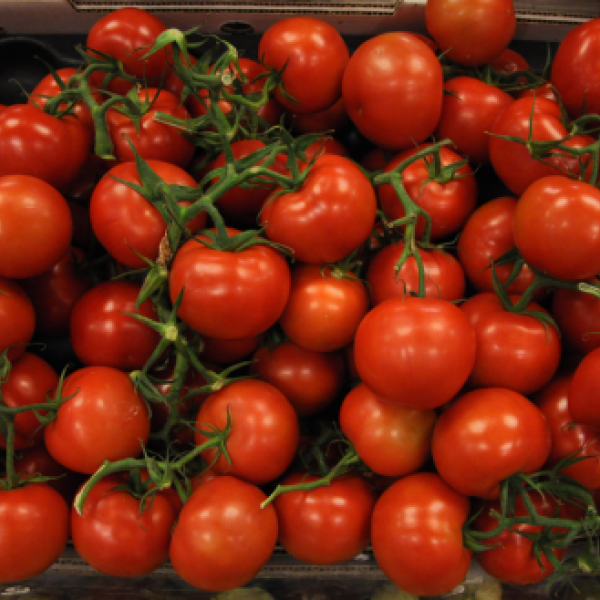
In the battle against thrips, Cornell breeder Martha Mutschler-Chu has developed a new weapon: a tomato that packs a powerful one-two punch to deter the pests and counter the killer viruses they transmit. The “dual resistant” insect and virus...