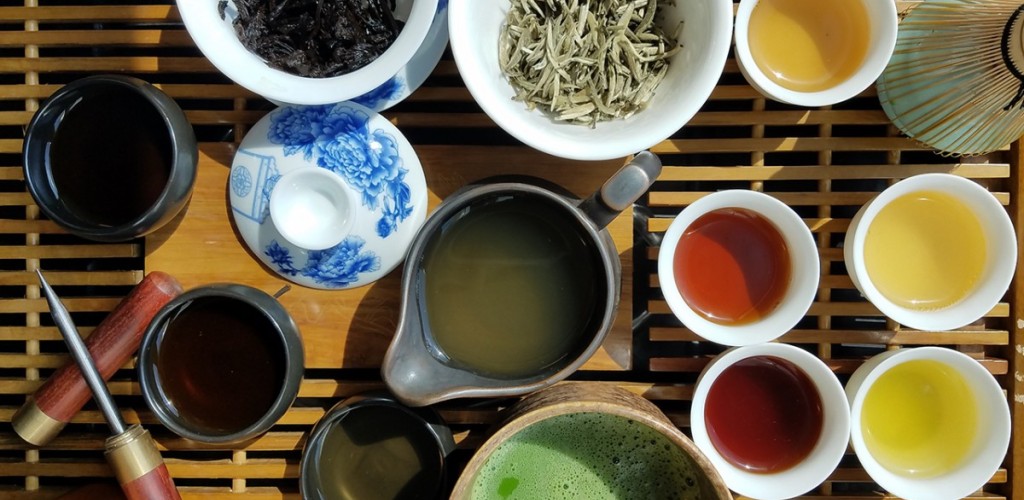
Here’s to sipping a cupful of health: Green tea steeped in bottled water has a more bitter taste, but it has more antioxidants than tea brewed using tap water, according to new Cornell food science research published Jan. 3 in Nutrients.
In tests conducted at Cornell’s Sensory Evaluation Center, consumers liked green tea brewed using tap water more than using bottled water, because it produced a sweeter taste. “But, when steeped in bottled water, the green tea contained about double the amount of the antioxidant epigallocatechin gallate (ECCG) – which makes it more bitter than tea brewed with tap water,” said Robin Dando, Cornell associate professor of food science.
“If you’re drinking green tea for its health properties, you should be using bottled water,” Dando said. “If you’re drinking tea for taste, tap water is better.”
A panel of more than 100 consumers could not taste the difference between black tea brewed with either tap or bottled water.
“The average consumer for black tea isn’t able to tell the difference. Whether it was tap water or bottled water, the taste differences are too subtle,” said Melanie Franks, MPS ’18, the study’s lead author. Franks is a tea specialist who once taught chefs at the International Culinary Institute (formerly known as the French Culinary Institute, founded by the late Julia Child).
Dando believes the normal, everyday minerals in tap water – such as calcium, iron, magnesium, sodium and copper – are the products that result in lower levels of EGCG in green tea.
“Bottled water – where calcium or magnesium have been filtered out and where the iron concentration is brought down a notch – is able to extract the EGCG more efficiently,” said Dando. “With purer water, you get more health benefits out of the tea.”
In addition to Franks and Dando, co-authors of the study, “The Influence of Water Composition on Flavor and Nutrient Extraction in Green and Black Tea,” were Peter Lawrence, Cornell research support specialist; and Alireza Abbaspourrad, Cornell’s Yongkeun Joh Assistant Professor of Food Chemistry and Ingredient Technology. Cornell funded the research.