Empire Farm Days, the largest outdoor agricultural trade show in the Northeastern U.S., focused on soil health as experts from across New York traveled to the annual event in Seneca Falls to deliver three days of talks and demonstrations Aug. 7-9. Programs emphasized the importance of maintaining healthy soils in sustaining viable farms and the natural environment.
“The emphasis on soil health continues to be a relevant topic for attendees at Empire Farm Days, agriculture in New York, the country and, for that matter, the world,” said Paul Salon ’77, Ph.D. ’96, northeast region soil health specialist with the Natural Resources Conservation Service (NRCS), who organized the events with the New York State Soil Health Work Group.
Attendees convened at the Soil Health Center to meet with soil and natural resource specialists and farmers who have extensive experience with reduced tillage and cover cropping. They also learned about the latest research and practices that enhance soil health and gained knowledge to improve the performance of soils on their farms.
Featured speakers included Harold M. van Es, a 30-year professor of soil science at Cornell, who touched on the physical, chemical and biological aspects of soil; and Michael E. Hunter, who spoke about his work with weed management strategies as a field crops specialist with Cornell Cooperative Extension.
Panels of farmers discussed challenges they have overcome in establishing soil health management practices on their farms, and shared lessons they have learned in balancing nutrient and herbicide needs with cover crops and reduced tillage strategies to build organic matter in their soils.
Greeted by an array of demonstrations and educational materials just outside the Soil Health Center, visitors had the opportunity to learn about soil health and its far-reaching impacts. Soil and Water Conservation, U.S. Department of Agriculture and Cornell personnel answered questions and demonstrated firsthand scientific principles behind soil health, and the impact that management has on the way soil is affected by rainfall events.
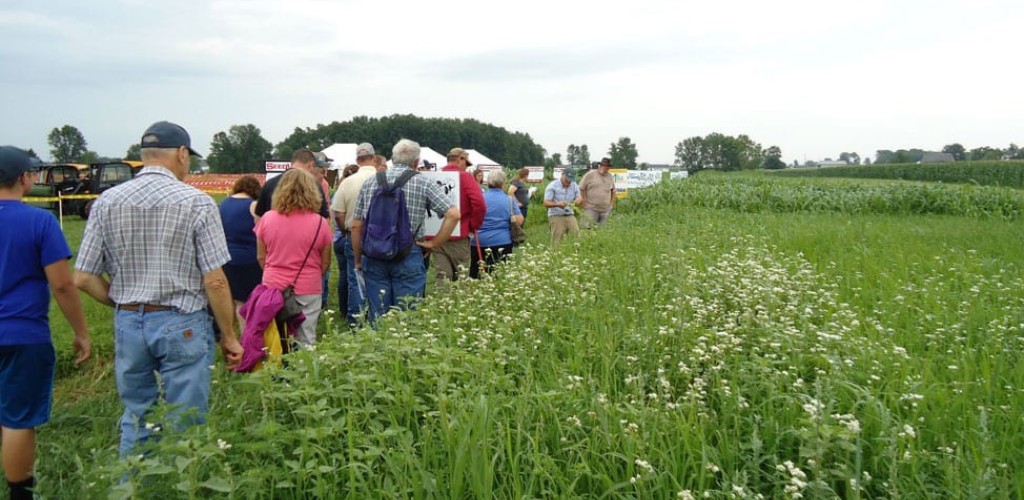
Tours of a nearby trial planting of many cover crop varieties and mixes gave participants the chance to learn about species of cover crops and how they can be used to address specific crop production challenges, such as breaking up compaction or reducing pest populations.