Academic focus: Forest restoration ecology, natural resource management, environmental economics
Research summary: My research examines how biophysical and socioeconomic factors shape forest restoration and management outcomes. I combine field ecology, climate science, spatial modeling and socioeconomic analysis to identify strategies that can support resilient forests while also meeting community needs. My work spans tropical and temperature systems and ranges from studying individual tree growth to evaluating landscape-scale restoration outcomes. Across projects, I am especially interested in linking ecological processes with the human decisions, incentives and institutions that influence the future of forests.
What do you like to do when you’re not working?
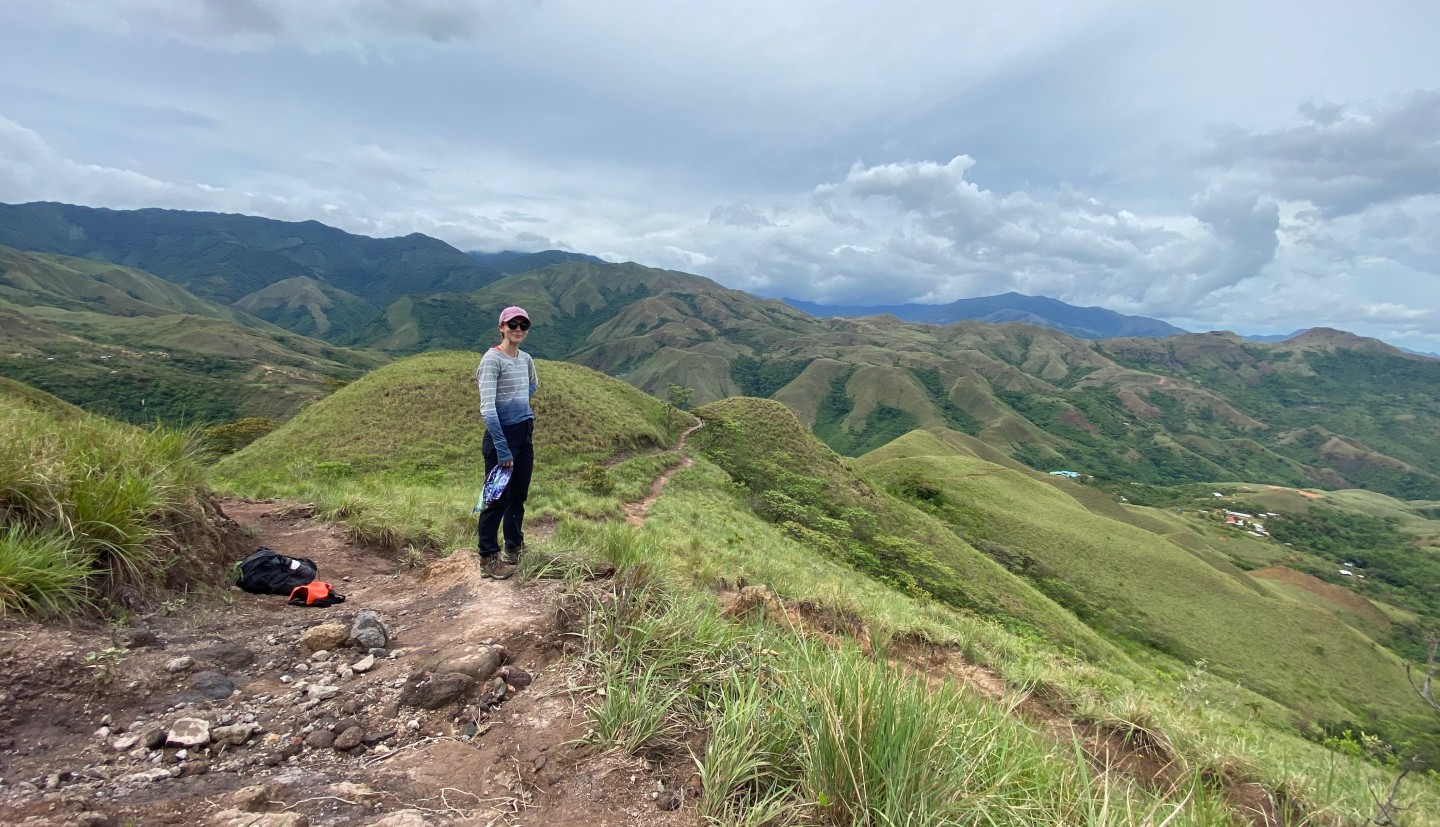
I love exploring new places – preferably on foot! You’ll often find me running or hiking a new trail. My 12-year-old dog, Canela, has mostly retired from those adventures, but she still joins me for plenty of leisurely strolls. When the weather keeps me indoors, I’m usually reading a good book or knitting with renewed intensity now that I’ve moved to a colder climate!
What brought you to Cornell CALS?
I was drawn to CALS by its support for research that is both theoretically grounded and applied to real-world challenges. I was also excited by the opportunity to be part of the new Ashley School of Global Development and the Environment. Because my work sits at the intersection of forest ecology, climate science and socioeconomic systems, the school feels like a natural fit and offers exciting opportunities for collaboration across fields.
Why did you feel inspired to pursue a career in this field?
As a child, I spent years trying (and repeatedly failing!) to transplant a tree from New York to Connecticut. At the time, I could not understand why a tree would grow well in one place and not another, but the experience sparked an early curiosity about trees and forests. When I later studied these questions in school, I initially focused on the biophysical factors that shape forests but soon realized that socioeconomic conditions are equally important in determining how forests are managed and restored. I was drawn to the complexity of that interdisciplinary work and to a career that would let me keep asking questions while spending plenty of time outdoors.