Back

Discover CALS

See how our current work and research is bringing new thinking and new solutions to some of today's biggest challenges.

Share
  • Animal Science
  • Agriculture
  • Field Crops
What sparked your interest in agriculture?

In high school, we did an environmental science program and there was a section on agriculture. As a part of this, we all had to participate in the World Food Prize, where we picked a country experiencing food insecurity, wrote a paper about it and proposed solutions. After that, I was hooked. 

From there, I was interested in education and helping mitigate food insecurity, so I started out at Cornell majoring in agricultural science with a concentration in education. 

Tell us a little bit about what you were working on when you started with the Nutrient Management Spear Program (NMSP).

I started working with NMSP in October of 2022 as a freshman, looking to merge my interests in agriculture and education. I worked with PhD student Agustin Olivo on his project, helping him implement the high school nutrient mass balance (NMB) curriculum. The curriculum is based on NMSP’s whole-farm nutrient mass balance program, which is meant to help farmers compare nutrients coming onto the farm through things like feed and fertilizer purchases, to nutrients leaving the farm through milk, crops, and manure. We hoped this would help inspire high schoolers to pursue careers in sustainable agriculture. 

I helped assemble curriculum binders for high school teachers, and later I assisted with organizing and analyzing the data. I worked with Agustin through the spring semester of 2023.
That sounds like a great place to start. How did your position evolve after that?

Early in my undergraduate career, I was really trying to figure out what part of agriculture I was interested in. I wanted to get some more technical experience in the lab and I was taking soil science at the time so I thought, why not work with soil? 

When I returned to Cornell in August of 2023, I started working alongside PhD student Gurpreet Kaur looking at soil health as a part of the Value of Manure project. I’ve always been interested in both agriculture and biology, so I felt like it would be a good fit.

You kept working with Gurpreet Kaur for the rest of your undergraduate career. What were your day-to-day soil health research tasks?

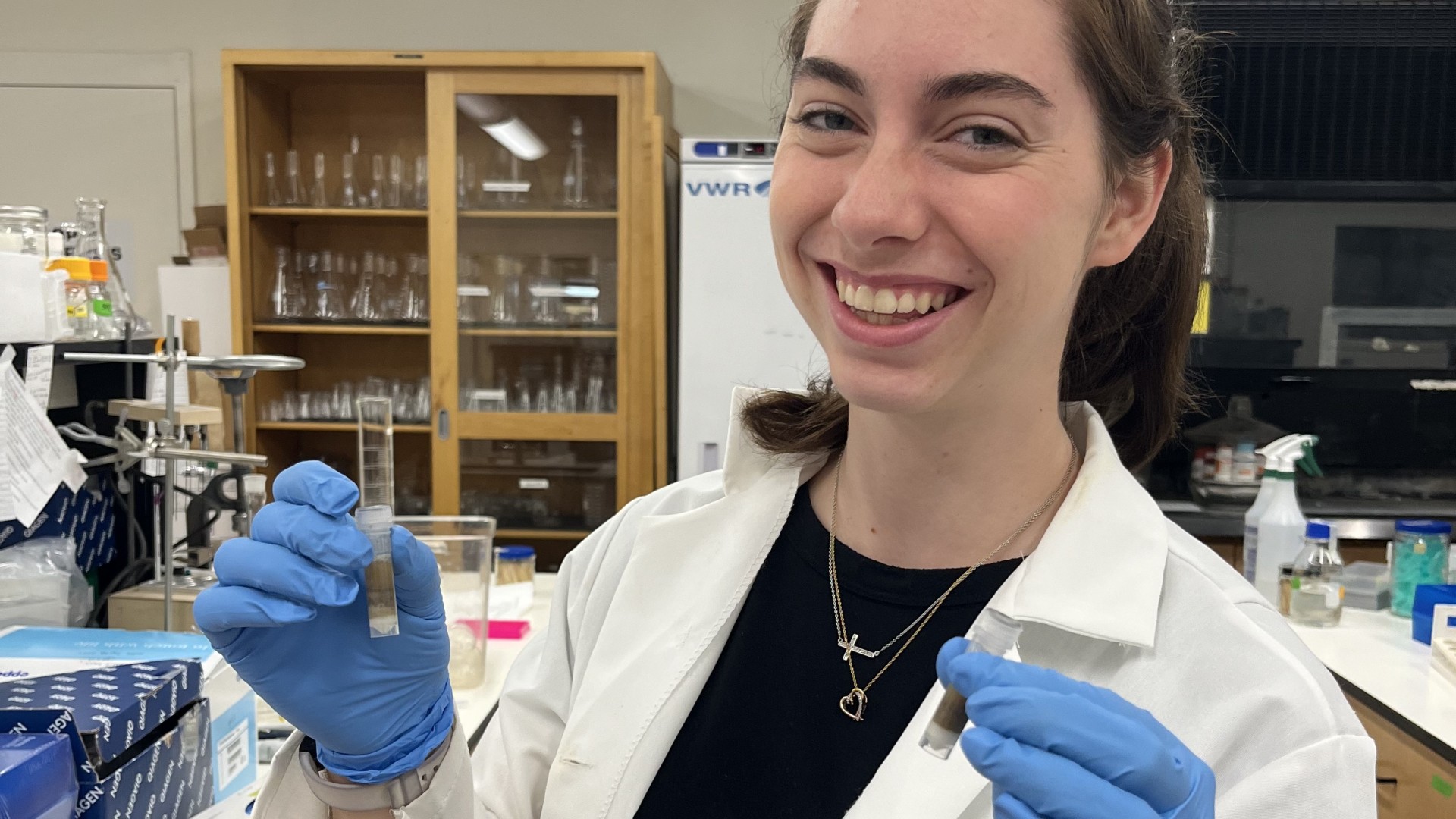
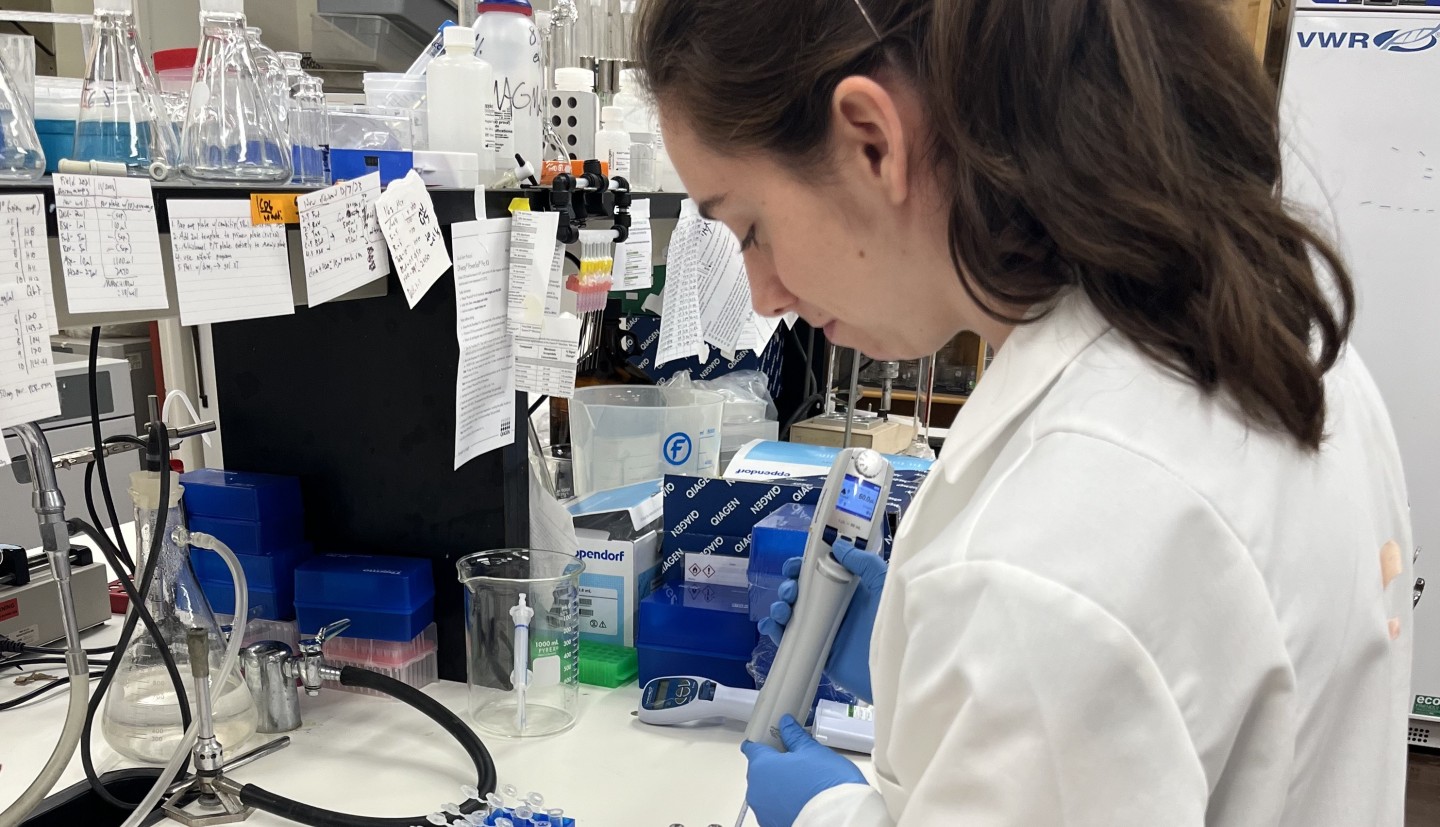
I was able to do a lot of different things in the lab, and my responsibilities grew throughout the years, which was nice because it helped me grow as well. Day-to-day, I got to collect soil samples, process and analyze those samples– hundreds of samples– and do DNA extractions. I also got to use the microBIOMETER, which is a device that can be used to test for microbial biomass and fungal to bacterial ratios.

What were some notable experiences that built your skills outside of the lab?

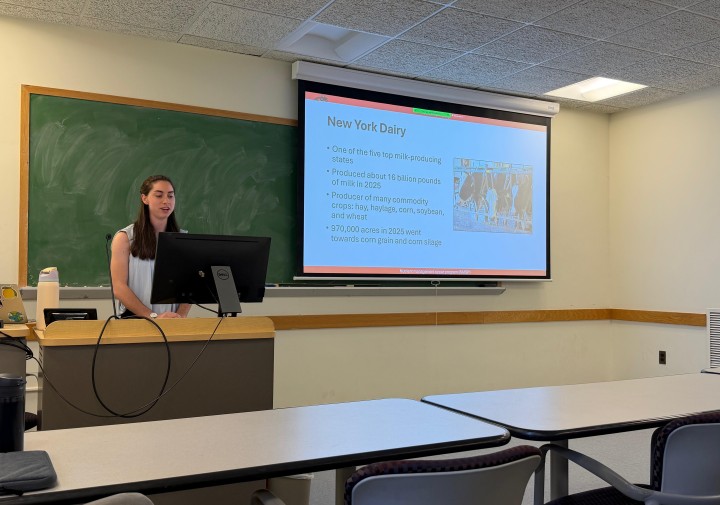
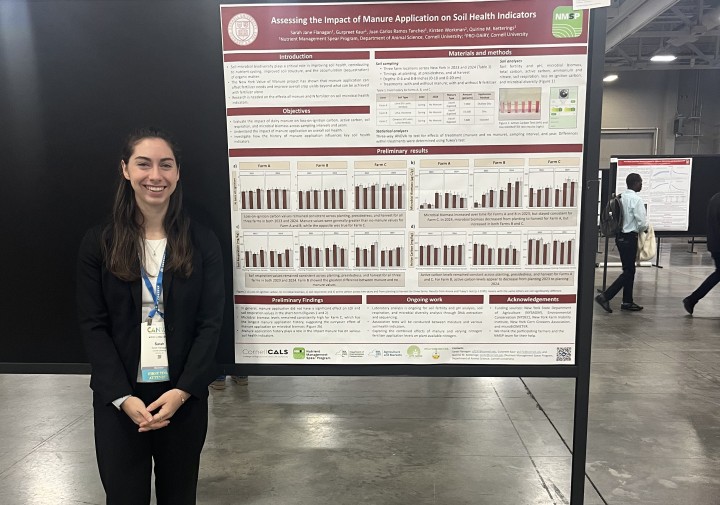
I had a lot of opportunities to present my work, verbally and in writing. I wrote a fact sheet about active carbon, presented at the Aurora Farm Field Day, the Agricultural In-Service training, the Animal Science poster session, and at the CANVAS conference, where I won the 2025 Academic Undergraduate Scholarship award. 

I also wrote an honors’ thesis about my soil health research. I chose to do an honors’ thesis because I knew that I was going to go to graduate school and I figured the thesis would be a good experience that would help me practice with writing, collecting and analyzing data– pretty much a micro-graduate school experience.

Tell us a little more about your honors’ thesis.

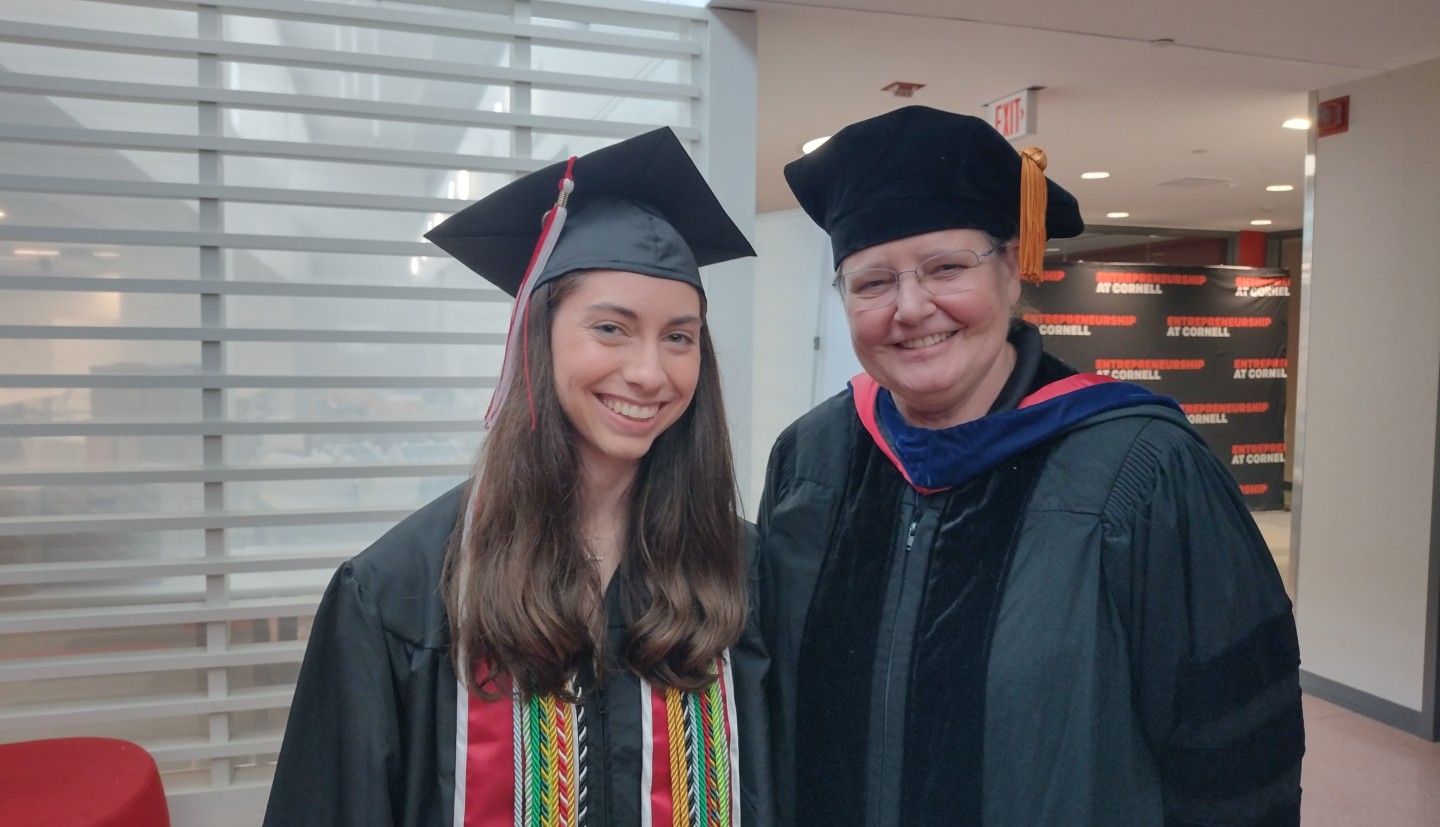
We evaluated the impact of manure application on corn yields, plant levels of nitrogen, and soil health indicators. We also looked at how different environmental factors like precipitation and manure application history affect soil health. I defended my thesis this spring, and I feel like that really rounded out my experience here.

After all of that hard work, where are you going next?

I’m starting my PhD this fall at Penn State. I’m excited to join the Agricultural and Environmental Plant Science program, where I’ll be working with Dr. Erin Connolly and Dr. Maria De Lima Brossi.

Everything that I did as a part of my research at Cornell really prepared me to pursue my PhD. I’m incredibly grateful to the team for making the office feel like a second home and supporting my learning.

Madeline Hanscom is the communications assistant for Cornell CALS’ Nutrient Management Spear Program (NMSP).

Keep Exploring

group of people standing outside Atkinson building

News

Cornell Atkinson hosted its first executive education program – the Resilient Futures Leadership Program: Financing Sustainable Agriculture – with partner Field to Market. The successful program will be offered twice more over the next two years...

  • Cornell Atkinson
  • Agriculture
  • Food
A team of Cornell students work on a prototype of their weed-killing robot

News

A team of Cornell students bested the competition with their invention: an autonomous robot that kills weeds with electricity.

  • Agriculture Sciences Major
  • Biological and Environmental Engineering
  • Agriculture