Back

Discover CALS

See how our current work and research is bringing new thinking and new solutions to some of today's biggest challenges.

Share
  • Dairy Fellows Program
  • Animal Science
  • Agriculture
  • Animals
  • Dairy
The Study Trip to the Central Valley of California (ANSC 1250), a 10-day field trip to California’s Central Valley, gave Harley Wolfanger and her fellow students a crash-course in modern agriculture, California style. The trip is the second part of a multi-semester class sequence that begins with Applied Dairy and Food Production (ANSC 1249) in the fall. This sequence was designed for students interested in learning about animal agriculture and food systems.

by Harley Wolfanger '28

Where does our food really come from? That question followed our group throughout our agricultural expedition to California this past January. I decided to embark on this trip because I wanted to understand how the concepts we examined in the Applied Dairy and Food Production course last fall relate to operating on an industrial scale. 

It was exciting, and overwhelming, to witness operations that function far beyond the scale of anything I had seen before. From feed manufacturing and dairy production specialty crops to processing facilities and agritourism, this trip offered a look at the wide scope of innovation and resilience that define California agriculture. It also gave me insight into the complexity of modern agriculture and revealed how interconnected and large-scale agricultural systems truly are.  At the same time, we also got a chance to network with many Cornell Dairy Fellows alumni who shared with us their knowledge and experiences.

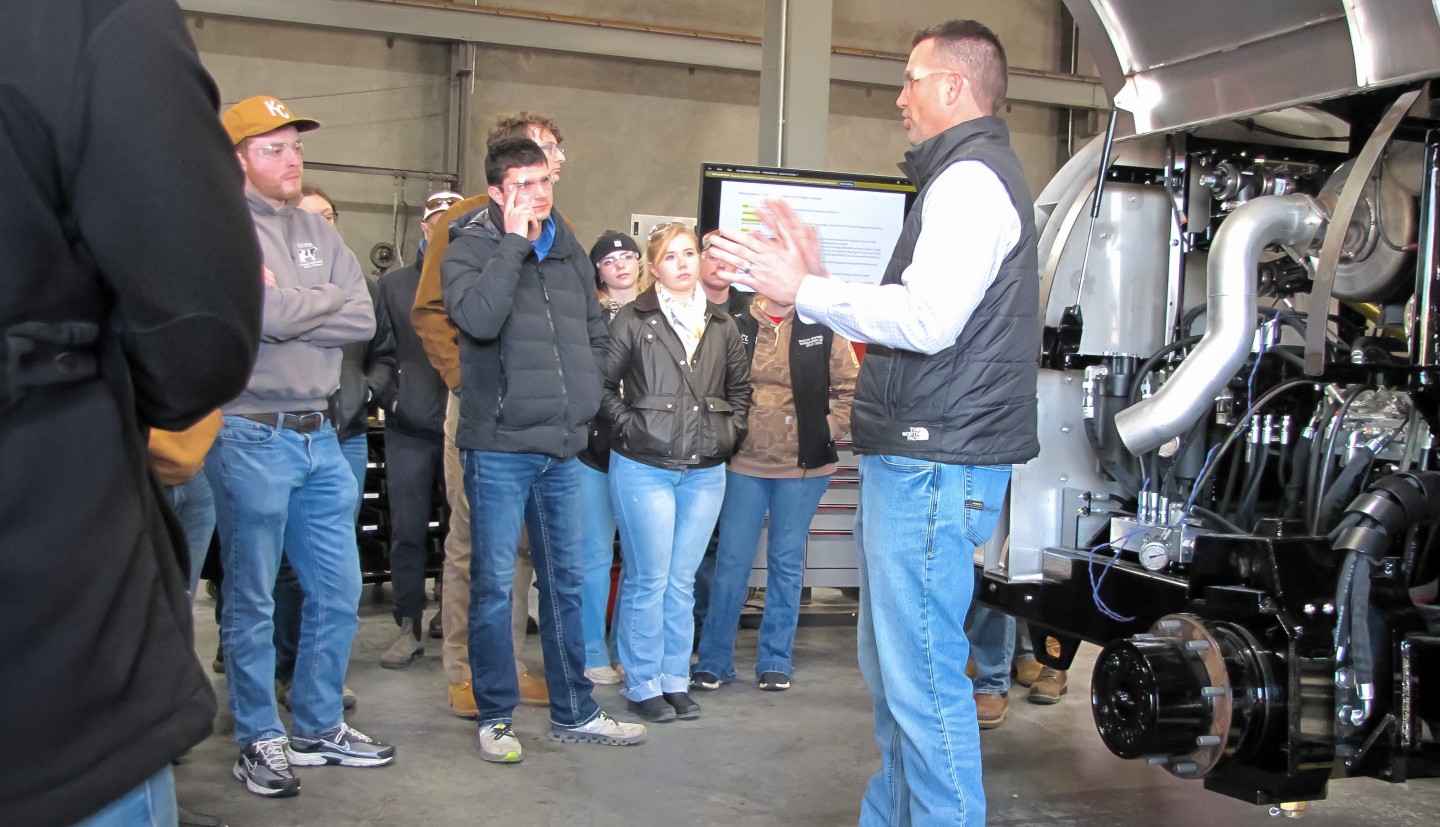
Our stop at Westman Feed Mill was the first of many trip highlights. The largest feed mill in the country, Westman ships nearly 5 million tons of feed annually from its 33-acre site and employs around 600 people. The company stands out for its role as a recycler, utilizing byproducts such as almond hulls. 

The visit to Westman showed me the sheer scale and coordination required to support modern dairy production. Standing above the mill floor, watching ingredients move through contraptions with such precision, I began to understand feed not just as “grain in a truck,” but as a carefully formulated product that exists at the center of all dairy and livestock production systems. 

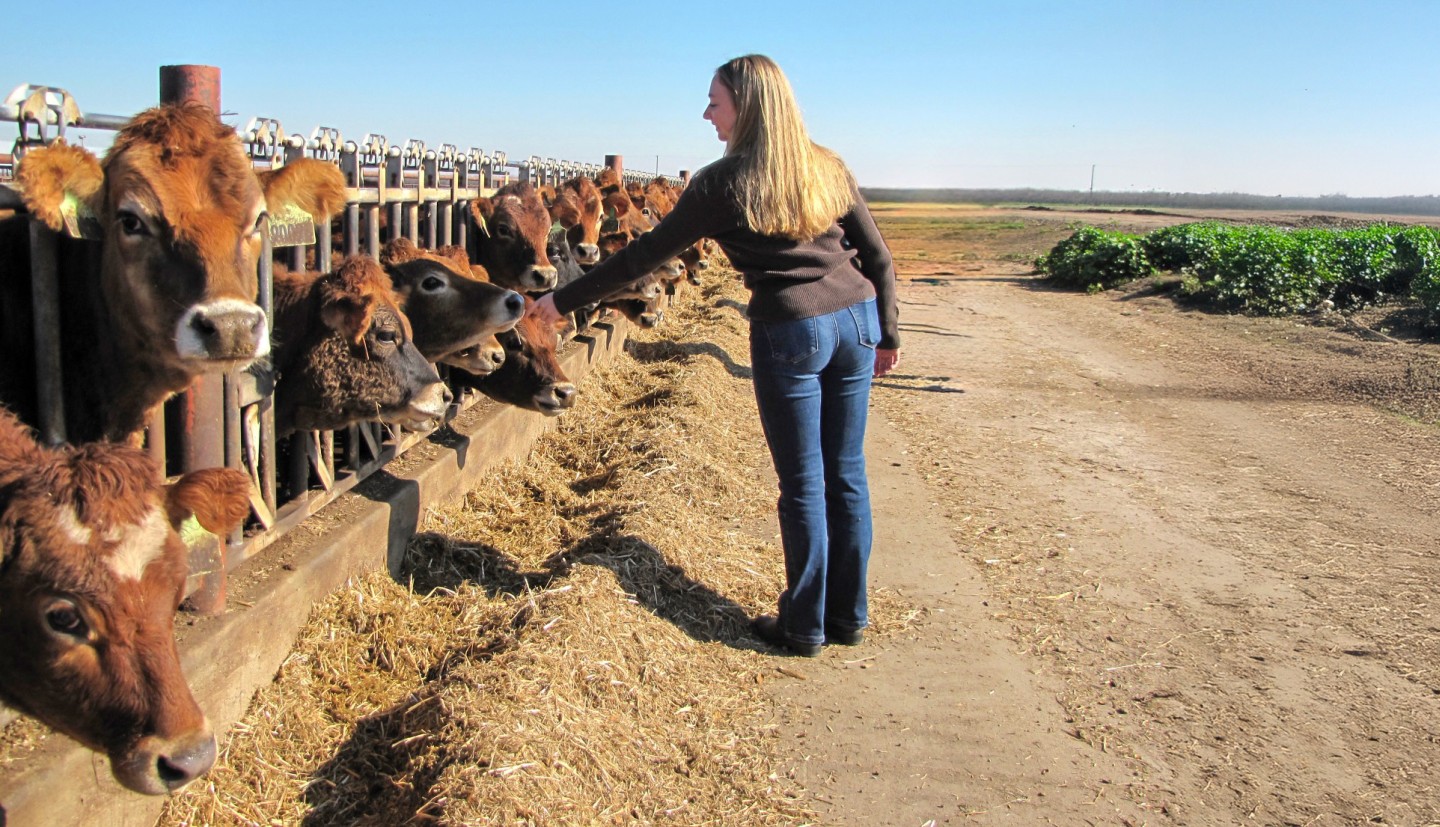
We then visited Harris Ranch, an integrated beef operation focused on producing prime-grade beef for the California restaurant market. A significant percentage of their herds are beef-on-dairy cattle. Seeing this ranch up close, I understood that efficiency, organization and quality are the result of constant oversight and disciplined management, not simply the size of the facility. 

At Campos Brothers, the world’s largest almond processor, we learned about the collaborative nature of the almond industry; described as “co-petitors, not competitors.” Despite challenges surrounding water availability and state regulations, the operation continues to thrive. Their message was clear: success comes from persistence, even when conditions are difficult.    

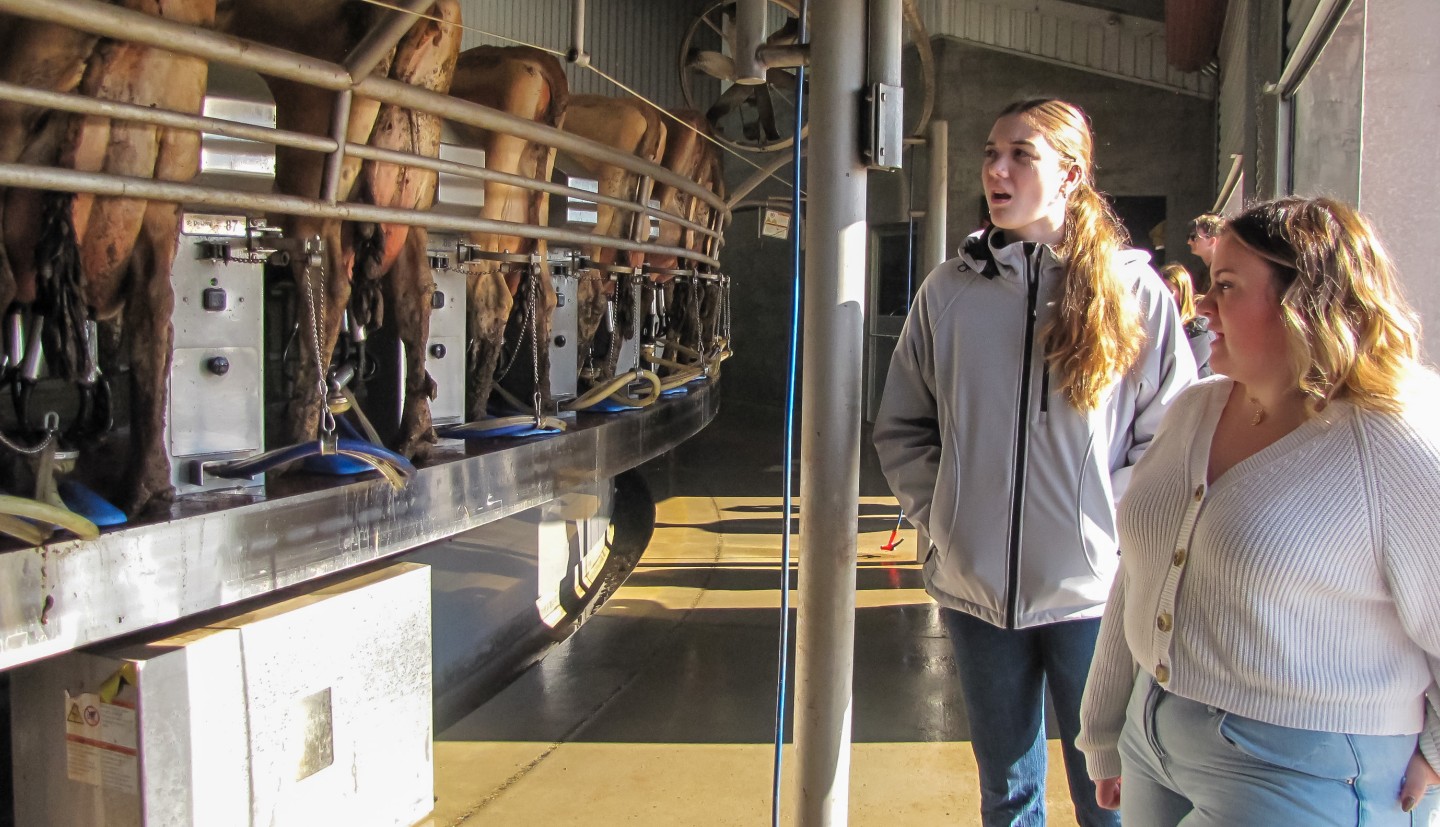
Dairy production was the central theme throughout our trip, and as someone who grew up on a small dairy farm, this portion felt especially meaningful to me. At Rancho Teresita Dairy, a predominantly Jersey operation, we learned how expansion and genetics go hand in hand. The dairy milks 5,200 cows across two sites. Other dairy highlights included River Ranch Dairy, which demonstrated innovative water-saving feed systems, and Legacy Ranch, a third-generation family operation that advocates Jersey herds as a more sustainable option in a water-limited region.

The advanced technology used on these farms made me realize how strategic and data-driven modern herd management has become. It pushed me to think about how I could apply those kinds of innovations in my own future within the industry. The constant emphasis on water use stood out. I knew water was a challenge in Western agriculture, but I had never fully understood how deeply it influences daily tasks. The focus on sustainability made me view dairy production not just as a tradition to be upheld, but as an industry that must consistently adapt. 

The advanced technology used on these farms made me realize how strategic and data-driven modern herd management has become. It pushed me to think about how I could apply those kinds of innovations in my own future within the industry.

Processing and value-added agriculture were also key themes of the trip. We had the opportunity to visit Hilmar Cheese, a facility that produces over 1 million pounds of cheese per day and utilizes advanced water reclamation and biogas systems to enhance efficiency. At Rosa Brothers Milk Company, we learned how vertical integration supports the production of super-premium ice cream with exceptionally high butterfat. Visits to Fiscalini Cheese Company and California Dairy Farms further highlighted how management, employee retention and sustainability contribute to success.    

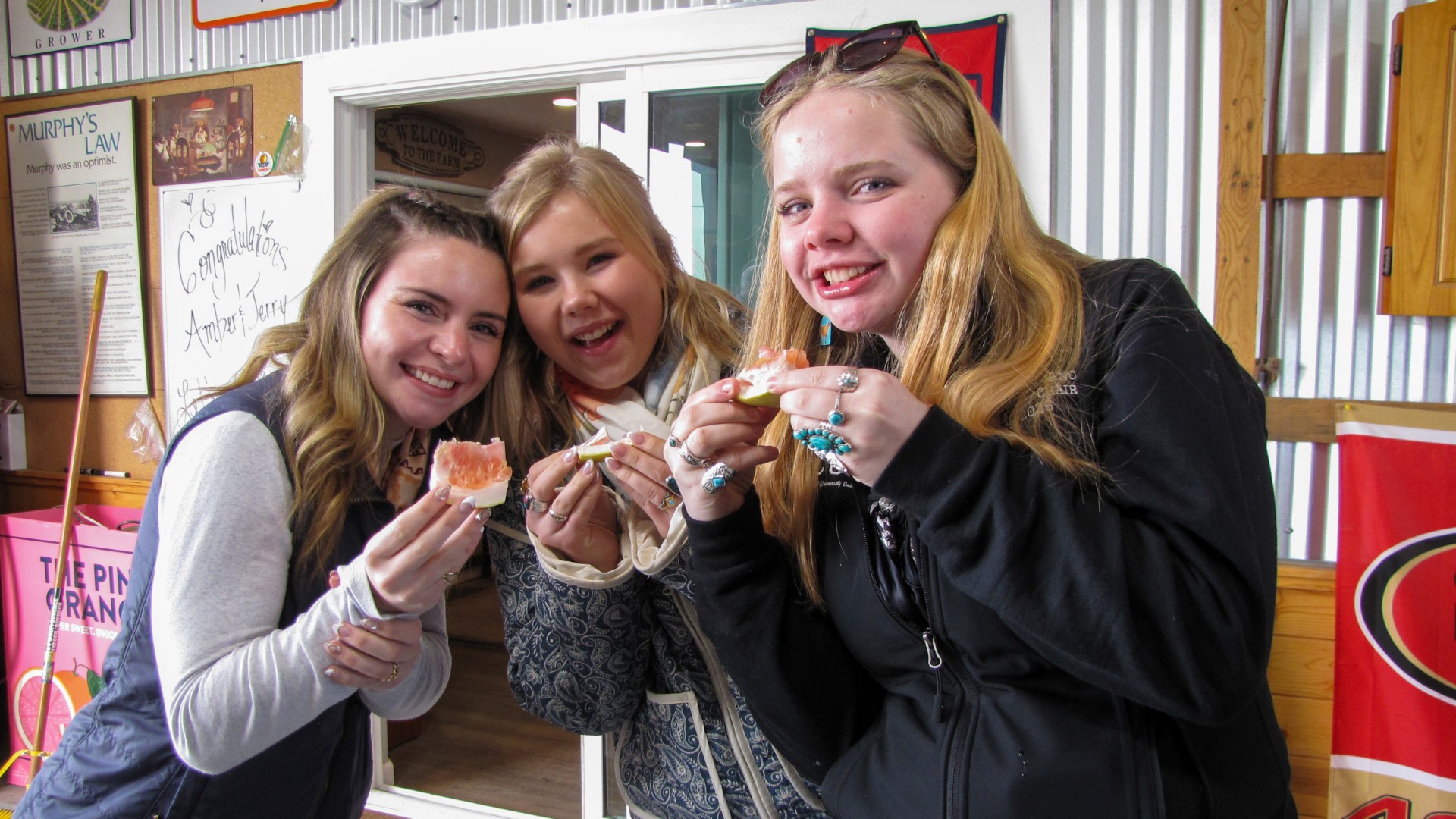
Beyond animal agriculture, stops at J.G. Boswell Company, Wonderful Pistachios and Atkinson Acres citrus farm illustrated the diversity of California farming. The trip concluded with agritourism experiences at Pebble Beach and Carmel Valley Ranch, reinforcing agriculture’s connection to land stewardship and public engagement. 

Taking this trip gave me a deeper understanding of how major agricultural companies operate not only as producers, but as complex systems shaped by history and innovation. Before the trip, I saw agriculture mostly from the hands-on perspective I gained growing up on a small farm, focused on the day-to-day care of livestock and crops. I hadn’t realized how much efficiency, planning and sustainability drive the success of large-scale operations. 

As we made our way through the Central Valley and coastal regions, I was deeply humbled by the dedication of the people who work tirelessly to bring food to our tables. Seeing how every decision, from resource management to herd planning, affects the operation made me realize that modern agriculture relies as much on strategy and foresight as it does on traditional farming skills. 

Witnessing the dedication and innovation required to run these operations inspired me to think bigger about my own role. As a young woman entering this field, I have the opportunity to contribute, learn and help shape the future of an industry I care so deeply about. 

Harley Wolfanger ’28 is an undergraduate student majoring in Animal Science.

Keep Exploring

a group of young people stand together in front of a building

News

The New York State 4-H Livestock Ambassador Program recently offered an immersive, multi-day educational experience for youth participants, providing hands-on exposure to New York’s diverse livestock industries. The program began with a visit to...
  • Animal Science
  • Animals
Cropland map

News

The new, high-resolution maps calculate global emissions from croplands by region, crop and source – enabling hyper-local mitigation.

  • Ashley School of Global Development and the Environment
  • Global Development Section
  • Agriculture