

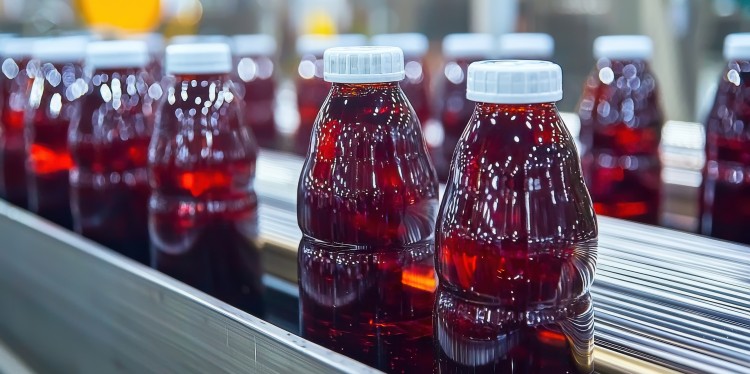
When a bottle of juice says “not from concentrate,” it generally means that it contains more nutrients and tastes better than juice from concentrate. Conventional concentrating processes require heat that destroys nutritious molecules like vitamin C and antioxidants and can alter flavor. Juice that is not from concentrate, however, is more costly and less environmentally friendly due to its high volume of water.
To address this, a new study by Cornell scientists has demonstrated that combining reverse and forward osmosis filtration technologies at room temperature can produce highly concentrated cranberry juice while preserving heat-sensitive nutrients and bioactive compounds. Discovered by Mark Emile Punzalan, extension support specialist at the Cornell Food Venture Center office in Saratoga County, Carmen Moraru, professor of food processing and engineering in Cornell’s College of Agriculture and Life Sciences (CALS), and Olga Padilla-Zakour, Seneca Foods Foundation professor and director of the Cornell Food Venture Center, the technique represents a significant advancement over traditional thermal evaporation methods used to concentrate juice in the food industry.
Reverse osmosis uses pressure to push water through a semi-permeable membrane while blocking larger dissolved substances, effectively concentrating the juice. Forward osmosis works differently, using a concentrated draw solution to naturally pull water across the membrane through osmotic pressure—no external pressure needed. Both processes can operate at room temperature or even at lower temperatures, avoiding the nutrient damage caused by heat.
“These technologies were initially developed and mostly used for removing salt from water and for treating waste liquid streams,” Moraru said, “but now are also being commercialized for food products.”
“The maple industry is using reverse osmosis to concentrate maple sap by removing much of the water before they do thermal evaporation through heating,” Punzalan further added. “We used reverse osmosis at the beginning, because it's more efficient than forward osmosis in concentrating juices at low solids content, while forward osmosis works better at higher solids content.”
Not only is the concentrate more environmentally friendly, but the process can also be cost-efficient as well.
“It's beneficial because reducing the volume decreases the transportation and storage costs. Let's say you have a juice produced from tropical fruits, and you want to sell it in the United States—that would entail a lot of shipping and storage costs unless you concentrate it,” said Punzalan.
Overall, the equipment used for this new process isn't more expensive, but the conversion would require facilities to replace the heat-based concentrators they currently use. But just like with thermal evaporators, the reverse and forward osmosis methods could be used on other juices. The team is currently working on applying this technology to other fruit juices, such as Concord grape and strawberry.
“Based on our studies, the quality of our cranberry juice concentrate is as good as the original juice, offering viable alternatives to the juice industry,” Padilla-Zakour said.
This work was funded by the USDA grant, “A novel reverse and forward osmosis combination process for the nonthermal concentration of high quality juices and beverages.”
CHRISTINA SZALINSKI is a freelance writer for the College of Agriculture and Life Sciences.


