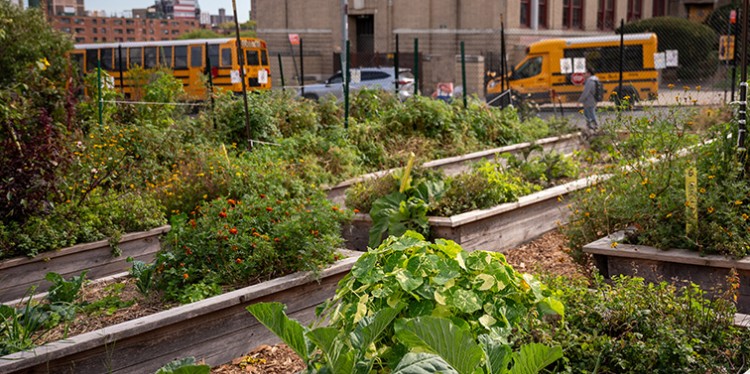
The Urban Agriculture and Civic Engagement Project focused on helping urban agriculture educators reflect on youth development and civic engagement through urban agriculture education in New York City and other urban areas. We reached a broad audience of urban agriculture educators through interactive webinars, notably the “Civic Engagement through Urban Agriculture Education.”
Each year, through national and international conferences, we involved several NYC urban agriculture educators in analyzing their programs from the standpoint of social impacts, and sharing their experiences through presentations and exchanging ideas with other educators. By the results of this extension program, such as produced YouTube videos, educators in Upstate NY and educators elsewhere in the US were informed about the possibility of using urban agriculture to advance urban food systems, youth empowerment, and urban sustainability. Relationships between Cornell University and multiple urban agriculture education programs in NYC were developed which can lead to future extension programs and mutual learning.
Results
As a result of the Urban Agriculture and Civic Engagement Project, extension educators and leaders from organizations like New York Sun Works, Green Bronx Machine, Teens for Food Justice, City Parks Foundation, and GrowNYC, gained a deeper understanding of their educational goals and community impacts, enhancing their effectiveness in addressing the sustainability of urban communities and food justice.
Secondly, by learning to link their programs with broader questions of urban sustainability and climate change, staff are better able to make more informed decisions and drive positive change within their communities. Additionally, the project increases awareness among educators about the value of urban agriculture education, providing them with valuable resources and materials for professional development. Finally, for Cornell University staff, including extension staff, the project serves as a tool for considering how to better support agricultural education in urban communities, leading to systemic change and improved outcomes beyond direct improvements in food production.
Public Value Statement
When the Urban Agriculture and Civic Engagement project connects with educators and leaders from key organizations, such as New York Sun Works, Green Bronx Machine, Teens For Food Justice, City Parks Foundation, and GrowNYC to reflect on their educational goals and community impacts, particularly in underserved communities, educators, students, and organizations are empowered to collaborate and support agriculture education in urban environments.
By enhancing civic engagement and linking urban agriculture programs with broader questions of sustainability and climate change, these projects help empower students and communities to address pressing social and environmental challenges. The Urban Agriculture and Civic Engagement project also contributes to the ongoing efforts of Cornell University to support agricultural education in urban communities, driving systemic change and social outcomes beyond direct improvements in food production.