Back

Discover CALS

See how our current work and research is bringing new thinking and new solutions to some of today's biggest challenges.

Bridging education and real-world experience in agriculture

Share
  • Cornell Cooperative Extension
  • PRO-DAIRY
  • Animal Science
In 2022 Cornell CALS PRO-DAIRY initiated a new student internship program through the Dairy Advancement Program with support from the New York State Department of Environmental Conservation (DEC) and the Environmental Protection Fund. Paid internship opportunities are offered in Environmental Planning, Dairy Environmental Systems and Agricultural Engineering. These internships have become an invaluable stepping-stone for students to explore careers in agriculture and environmental engineering.

Through the internship program students have discovered unexpected career paths, gained hands-on experience in their fields of study, received job offers, networked professionally and invigorated interest in their field of study. The internships build a pipeline of skilled workers to address the need for technical service providers to support a growing dairy industry in NY. Since its inception the program has placed 17 interns with private planning firms, engineering firms and PRO-DAIRY’s Dairy Environmental Systems program.

“We need these smart, young minds to come in and fill the need that all this new regulation and demand is requiring,” said John Hornberger, NYS DEC.

For the environmental planning internship, interns worked with an Agricultural Environmental Management (AEM) certified planner to support agronomic production and environmental stewardship of farms in New York, while learning about the process, skills and knowledge needed in an environmental planning role. For the Dairy Environmental Systems (DES) engineering internship, interns gained applied experience working with an engineer and contributing to environmental stewardship of dairy farms in New York while learning about the process, skills and knowledge needed in the field of agricultural engineering. For the agricultural engineering internship, interns assisted an engineer with development and implementation of projects, including construction inspections and as-built surveys, and gained experience in survey and data collection, CAD drawing and drafting reports.

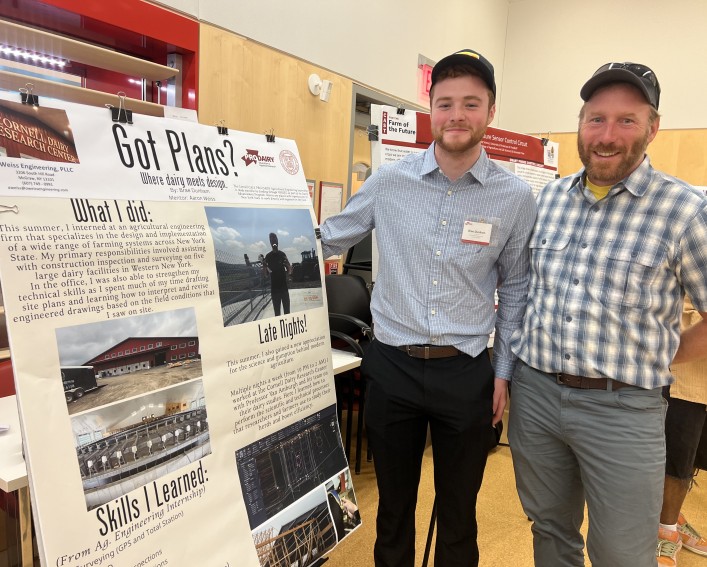
“My staff and I have been extremely happy with the interns we have worked with. They are punctual, eager to learn and quick to learn,” said Aaron Weiss, A. Weiss Engineering. “They get a huge range of experience, from surveying, AutoCAD, stormwater plan and construction inspections, design on smaller projects, and helped fill out permit documents. I host them as an investment for future hiring.”
Real-world applications and responsibility

One of the most significant benefits of these internships is the level of responsibility and practical experience interns receive. Rather than merely observing, interns manage projects from start to finish - from designing agricultural practices to overseeing construction and collecting vital environmental data.

"All these interns are out in the field working on cool projects and are often given a lot more responsibility than a normal internship," said Kirsten Workman, PRO-DAIRY nutrient management specialist who helps coordinate the internships. "They get to interact with farmers, the real person who's going to use their work, and that makes it more meaningful."

Interns learn how to communicate their project results and how to interface with farmers. They also learn teamwork and together with interns from the Cornell Nutrient Management SPEAR Program travel to visit farms, planning firms and to tour Chobani. 

"One of my personal goals is to help these folks launch themselves into the industry, and to build the skills necessary to support the broader industry. We need more bright people working as ag engineers in the state,” said Jason Oliver, PRO-DAIRY Dairy Environmental Systems engineer and internship mentor.

2025 Interns

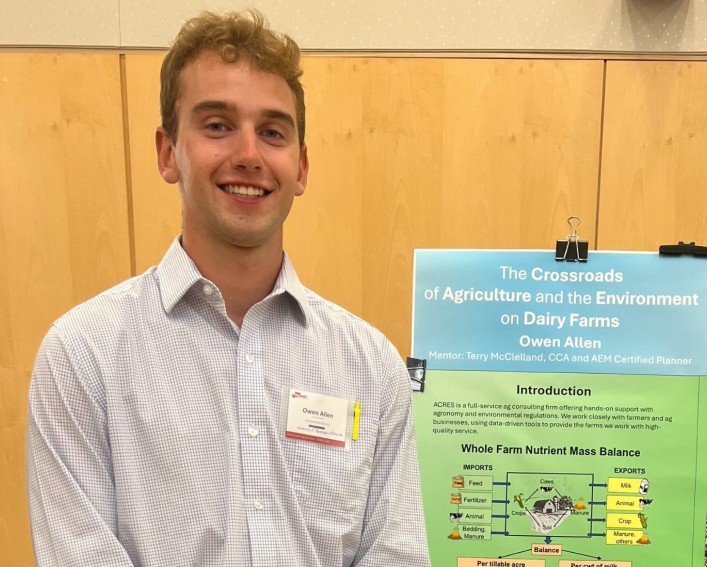
Owen Allen, University of Tennessee at Knoxville, ‘28

ACRES Intern - Whole Farm Mass Balance and greenhouse gas evaluations

Owen Allen interned at ACRES/McClelland Agronomics. Allen applied his environmental and agricultural knowledge to work with farmers and complete nutrient mass balance assessments and to evaluate their greenhouse gas emissions. Allen hoped to better his understanding of the field of agronomy. His goal is to help farmers mitigate environmental risks and adhere to environmental regulations. 

Kelly Bliss, Cornell University, ‘27

PRO-DAIRY Agricultural Engineering Intern

Kelly Bliss interned at A. Weiss Engineering. Bliss applied her engineering coursework and knowledge of the agriculture industry to civil and agricultural engineering projects. Bliss hoped to enhance her AutoCAD and Civil 3D skills while gaining a better understanding of how engineering projects are executed from start to finish to support her goal of becoming an agricultural engineer. 

Brae Dunham, Cornell University, ‘28

PRO-DAIRY Agricultural Engineering Intern

Brae Dunham interned at A. Weiss Engineering. He applied his love of agriculture to his civil engineering training by supporting the design process for a variety of engineering projects across New York. Dunham hoped to learn more about the day-to-day workload of practicing agricultural engineers, gain additional AutoCAD experience, and to ask plenty of questions. His goal was to deepen his understanding of the engineering profession.

Emilia Perez, Cornell University ’27

Dairy Environmental Systems Intern

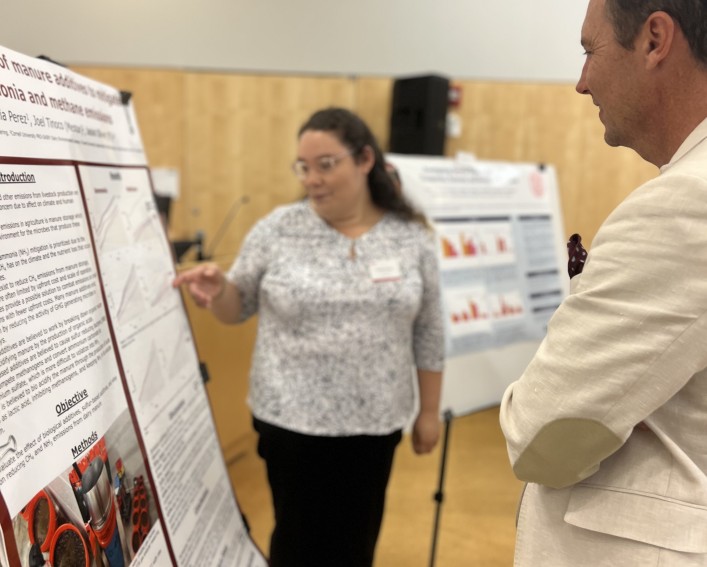
Perez was a Dairy Environmental Systems intern who applied her biological engineering knowledge and agricultural experience to assist in manure additive research. She measured the impact of additives to reduce emissions and preserve the nutrient profile of manure during storage. Perez hoped to learn more about environmental considerations in agriculture and gain research experience in the field. These skills support her future research goals to develop bioengineering solutions to challenges faced by food and agriculture industries.

Ava Sylvester, Alfred State College, '26

Western New York Crop Management Intern

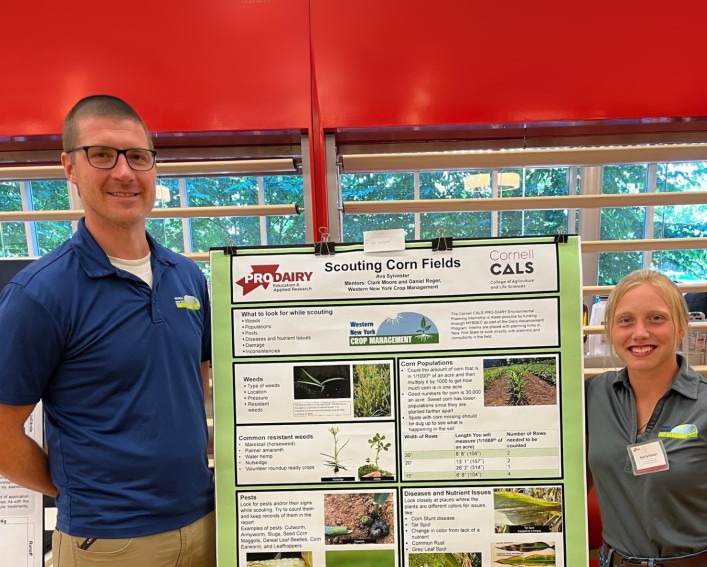
Ava Sylvester was a Western New York Crop Management intern. She applied her integrated pest management knowledge to work with farmers by scouting their fields looking for pests, diseases and nutrient problems to help them decide if corrective action needs to take places. Sylvester hoped to learn more about agronomy and plans to become an agronomist.

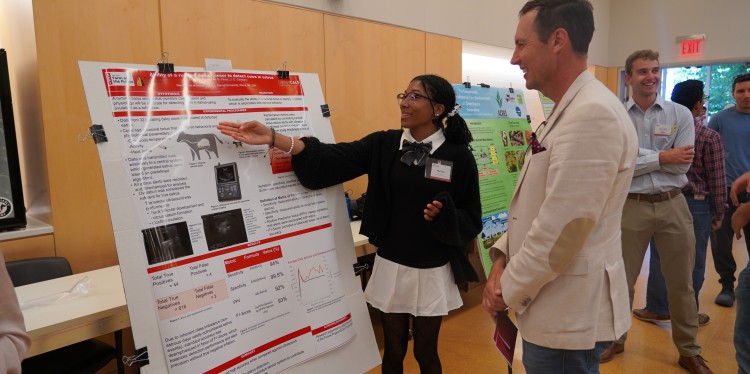
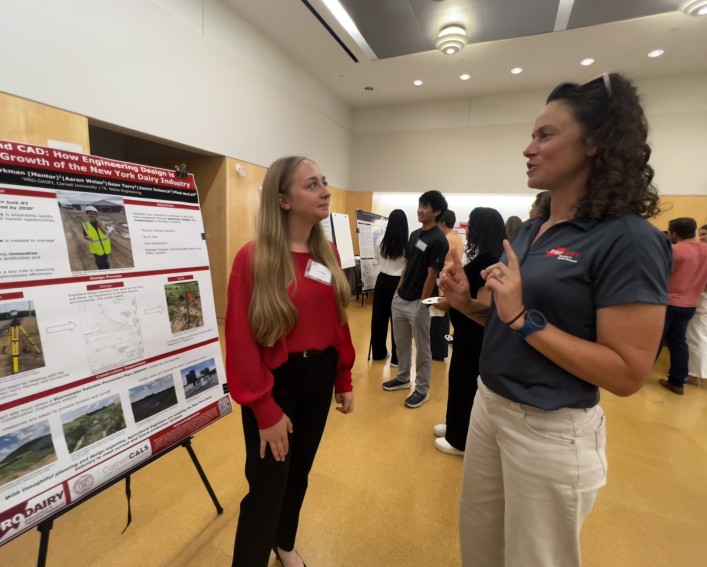
two people standing by a science poster

Career exploration and discovery

Many interns report discovering career paths they hadn't previously considered. The programs expose students to the technical and scientific aspects of modern agriculture, showing them that the field extends far beyond traditional farming. Interns can explore roles as consultants, engineers, researchers and environmental specialists.

"It really gave me clarity of what a role in agriculture looks like and to see how an ag engineer completes projects from start to finish," said Kelly Bliss, Cornell University, ‘27, 2025 agricultural engineering intern.

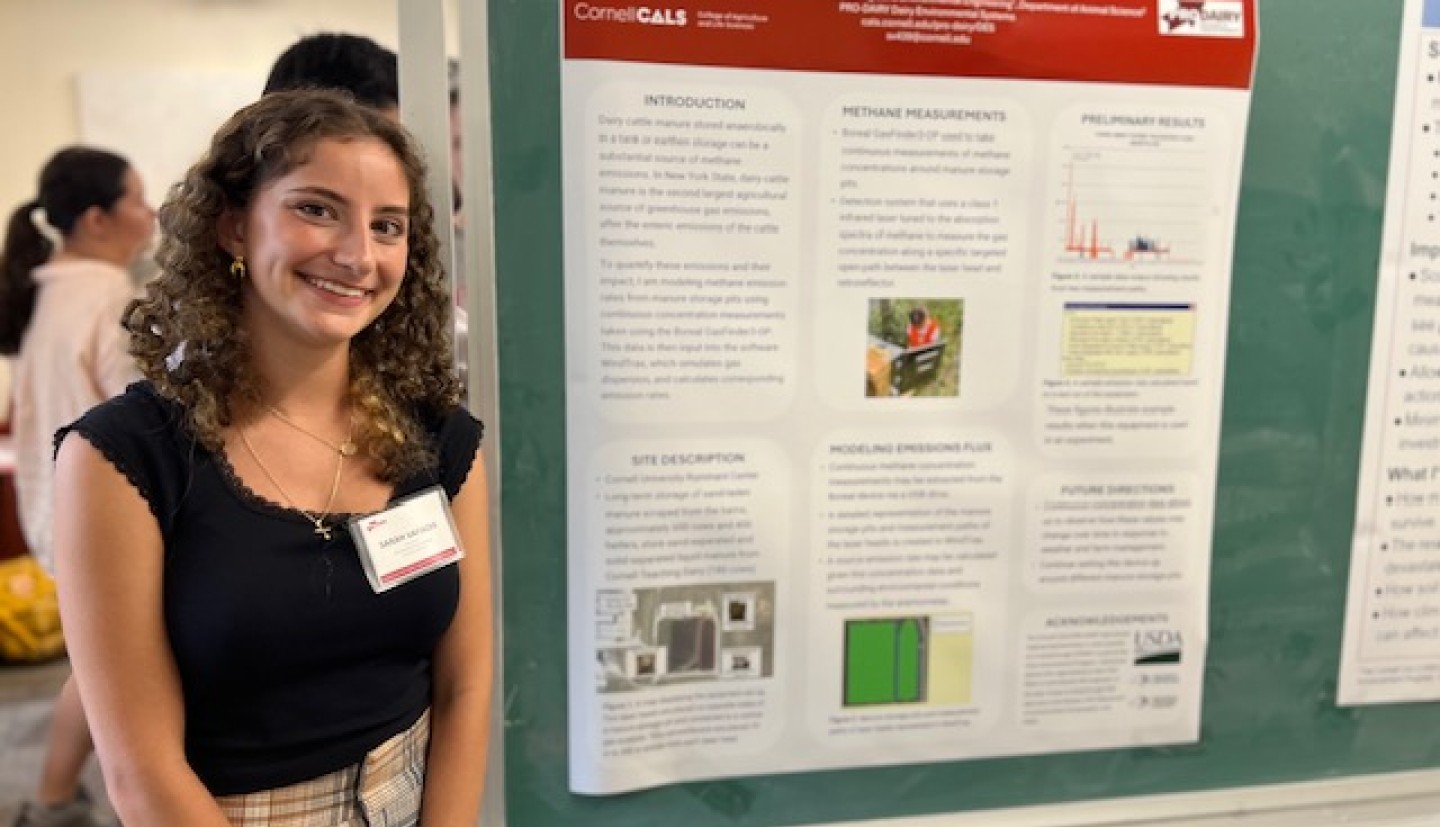
“There’s a of complexity behind the engineering systems on dairy farms that I didn't really know about. It's such a massive field with so much need for engineers, and there is a career here,” said Sarah Vafiadis, Cornell University '26, a NYC native and 2024 environmental engineering intern who completed a project on modeling methane emissions rates from manure storage pits.

Professional network development

The internship programs facilitate valuable connections with potential employers and industry professionals. Some interns have received job offers during their internships, while others have used their experiences to secure positions at engineering and planning firms after graduation.

"Just start making connections as soon as you can, because the more connections that you make with people, the better off you're going to be within your future career. Internships help you figure out what you like, what you don't like and where you fit," said Owen Allen, University of Tennessee at Knoxville, ’28, and 2025 environmental planning intern.

Skill development

Beyond technical knowledge, interns develop crucial professional skills including:

  • Communication with clients, stakeholders and the public
  • Team collaboration
  • Project management
  • Problem-solving in real-world scenarios

"I got some coding experience, and it really solidified my interest in combining biological engineering, the dairy industry and the environment. Coming into it, I didn't have a ton of experience in this field. I really enjoyed it and now I kind of want to continue as far as I can with it," said Emilia Perez, Cornell University ’27, 2025 Dairy Environmental Systems intern.

Educational impact

The hands-on experience helps students understand the practical applications of their classroom learning. "With my classes it's a lot of math, so it's been really cool getting to apply things that I've been learning and to see how they work in the world," said Vafiadis.

"You just have to make that first step to apply or talk the right person. You're going to have a lot of fun, you're going to learn a lot and it's going help you with the future,” said Brae Dunham, Cornell University, ’28, 2025 agricultural engineering intern. “The biggest challenge that I felt was to not be afraid to be to make mistakes. I'm a sophomore in college and I learned a lot by seeing what I did wrong." 

Industry perspective

For the agricultural industry, these internships serve a crucial role to develop the next generation of professionals. They help ensure qualified future job applicants who understand both the technical aspects and practical challenges of modern farming operations.

“It was definitely very exciting. I learned a lot of new skills that were important for scouting,” said Ava Sylvester, Alfred State College, '26, 2025 environmental planning intern. “It's opened my eyes of what I am getting into. There is so much new stuff to learn, and I'm really excited about this field. It's a lot of work, but it's really rewarding.

Whether students ultimately pursue careers in agriculture or not, the experience provides valuable insights and transferable skills. 

"Even if it's unfamiliar, put yourself out of your comfort zone. You never know, you may end up really enjoying it," Vafiadis said.

Through these structured internship programs, students gain more than just work experience - they develop professional confidence, industry understanding and clearer career direction while making meaningful contributions to agricultural advancement.

“I want students who don't have agricultural experience to realize there's exciting jobs here," Workman said "if you have interest and passion and a willingness to work hard and learn.” 

PRO-DAIRY’s mission is to facilitate New York State economic development by increasing the profitability and competitiveness of its dairy industry. PRO-DAIRY specialists have made a positive impact on the technical knowledge, management skills and economic strength of New York State’s dairy industry since 1988.

Keep Exploring

a group of young people stand together in front of a building

News

The New York State 4-H Livestock Ambassador Program recently offered an immersive, multi-day educational experience for youth participants, providing hands-on exposure to New York’s diverse livestock industries. The program began with a visit to...
  • Animal Science
  • Animals
Hand grabbing apple

News

Apple scab, caused by the fungus Venturia inaequalis, is one of the most economically devastating diseases facing apple growers in the Northeast. Managing it has long depended on regular fungicide applications—and for many growers, that means...
  • Cornell AgriTech
  • School of Integrative Plant Science
  • Plant Pathology and Plant-Microbe Biology Section