Back

Discover CALS

See how our current work and research is bringing new thinking and new solutions to some of today's biggest challenges.

Share
  • Center of Excellence in Food and Agriculture
  • Cornell AgriTech
The New York-based startup has its eyes set on making yaupon a morning beverage staple.

Yaupon holly is the only caffeinated plant native to the United States, yet its role as a morning pick-me-up has largely remained limited for centuries. 

But as tariffs threaten to hike the price of imported coffee and tea, yaupon appears set to wake from its centuries-long slumber. 

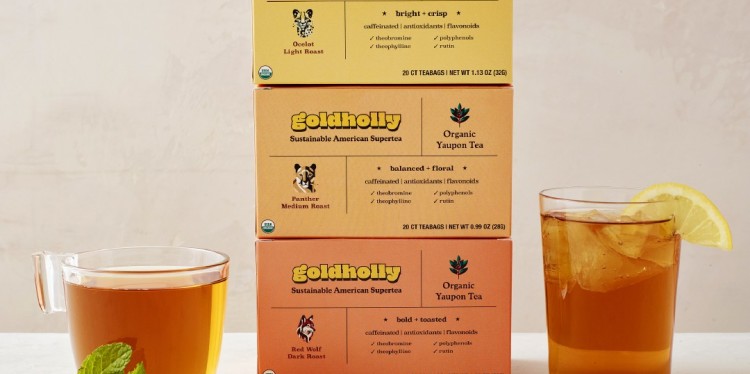
Helping lead the charge is Goldholly. Having launched its first products in April, the New York City-based startup is a new player in the emerging yaupon industry. 

Founder Liam Trotzuk first encountered yaupon at the Lady Bird Johnson Wildflower Center in Austin, Texas. Yaupon is native to the Southeastern U.S. where it has long been used by Indigenous populations. Trotzuk’s career was in aviation; he was working in network planning at JetBlue when he visited the botanical garden while on a work trip to Austin. Trotzuk said that he returned to his hotel room that night to conduct further research on yaupon. He expected to see it was a burgeoning industry. Instead, he only saw small producers who were marketing the tea to small audiences and not selling it in a form accessible to average American consumers. Trotzuk saw the untapped commercial potential. 

That was in 2021. After three years simmering on the back burner, doing further research, visiting yaupon farms and making connections in the industry, Trotzuk approached friends Jeffrey Chung and Andrew Little with cups of tea and his idea for the business. Together, in the fall of 2024, Goldholly began. 

Almost immediately, Goldholly contacted the Cornell Food Venture Center, which brought the startup company to the Center of Excellence for Food and Agriculture (CoE). CoE Business Development Specialist Alysia Ericsson guided Goldholly through packaging regulations, food safety, the logistics of working with a co-manufacturer and what Trotzuk called “many other little things that you wouldn’t think of looking into.”

“Having the CoE treat fledgling entrepreneurs seriously and giving us time and advice is a reaffirming thing that keeps us true to the course at points where we would’ve given up,” he said. 

Goldholly works with regenerative family farmers in Texas, Georgia and Florida to grow the yaupon, which is then shipped to a co-packing partner in Philadelphia. They work with Mid-Hudson Works in Poughkeepsie, a nonprofit organization that provides employment opportunities for veterans and disabled workers, for distribution and order fulfillment. 
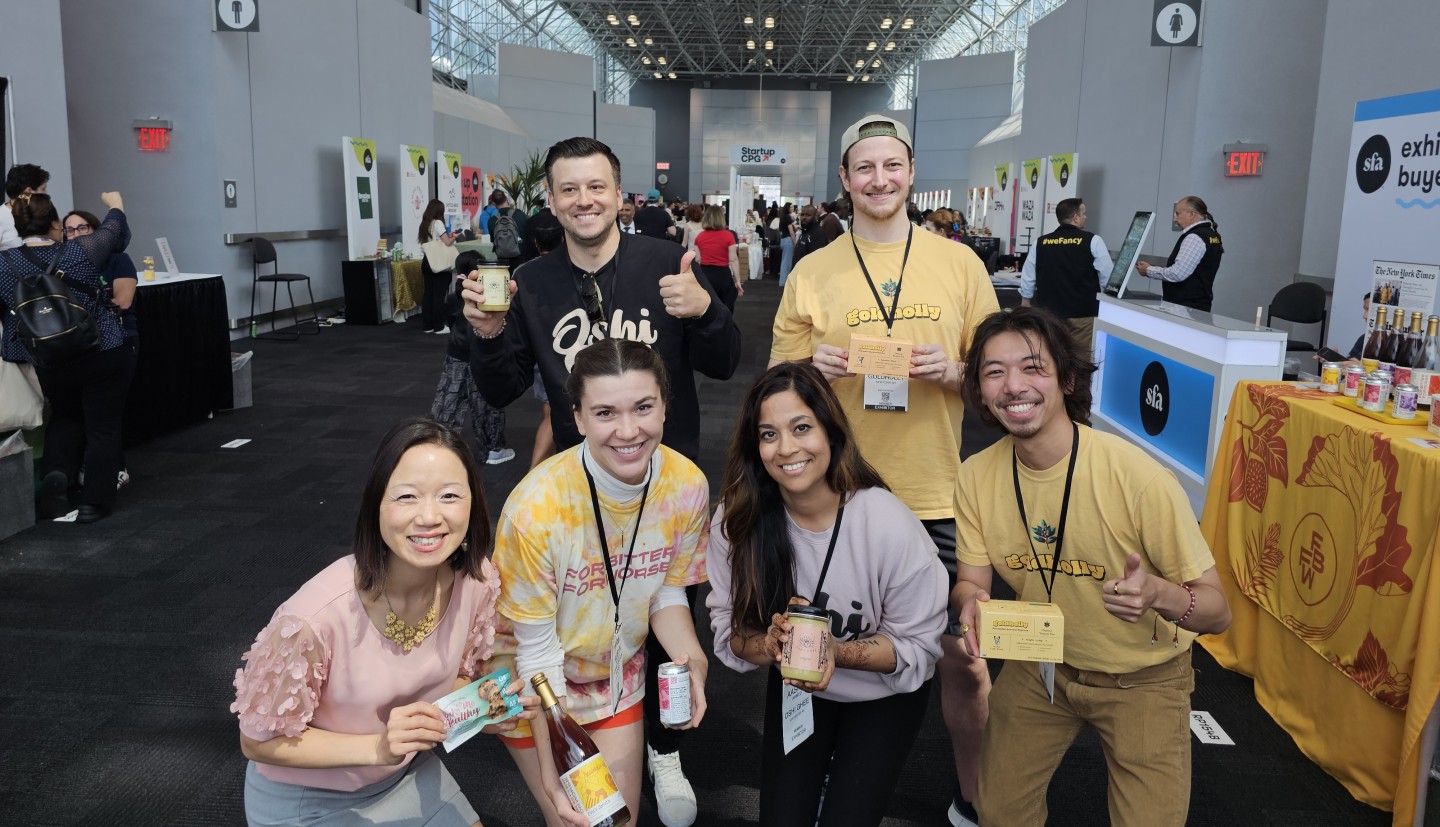
The three co-founders joined the CoE at the annual Summer Fancy Food Show in New York City this summer, where they were able to network with other food startups and entrepreneurs and pitch their vision to influential media outlets and buyers representing some of the largest retailers in the world. 

“The show was a great boost for us,” Chung said. 

Both Chung and Trotzuk said they’ve seen yaupon as an untapped market ripe for growth, even before the threat of tariffs put a larger public eye on this domestic crop. 

With about half as much caffeine as a standard cup of black tea, only 25% as much caffeine as coffee, low in tannins and high in other energy-boosting compounds like theacrine and theobromine, yaupon tea can be consumed any time of day. 

Trotzuk noted that the traditional and specialty dried tea market in the U.S. is a $4 billion industry. His initial goal is to have yaupon capture 1% of that market. One percent might not seem like much, but that’s a $40 million business. 

With the support of Cornell AgriTech and New York State, Trotzuk thinks Goldholly and other yaupon producers can hit that goal.

“New York’s ecosystem for food and beverage brands is the best. I have a hard time thinking you’ll find a better system in any other state,” Trotzuk said. “We’re really looking forward to working with them and expanding the spotlight on this incredible American plant.”

Jacob Pucci is the marketing and communications coordinator for the New York State Center of Excellence for Food and Agriculture at Cornell AgriTech. 

Keep Exploring

three woman stand together eating orange slices

Field Note

by Harley Wolfanger '28 Where does our food really come from? That question followed our group throughout our agricultural expedition to California this past January. I decided to embark on this trip because I wanted to understand how the...
  • Dairy Fellows Program
  • Animal Science
  • Agriculture
a group of young people stand together in front of a building

News

The New York State 4-H Livestock Ambassador Program recently offered an immersive, multi-day educational experience for youth participants, providing hands-on exposure to New York’s diverse livestock industries. The program began with a visit to...
  • Animal Science
  • Animals