Back

Discover CALS

See how our current work and research is bringing new thinking and new solutions to some of today's biggest challenges.

Share
  • Cornell Cooperative Extension
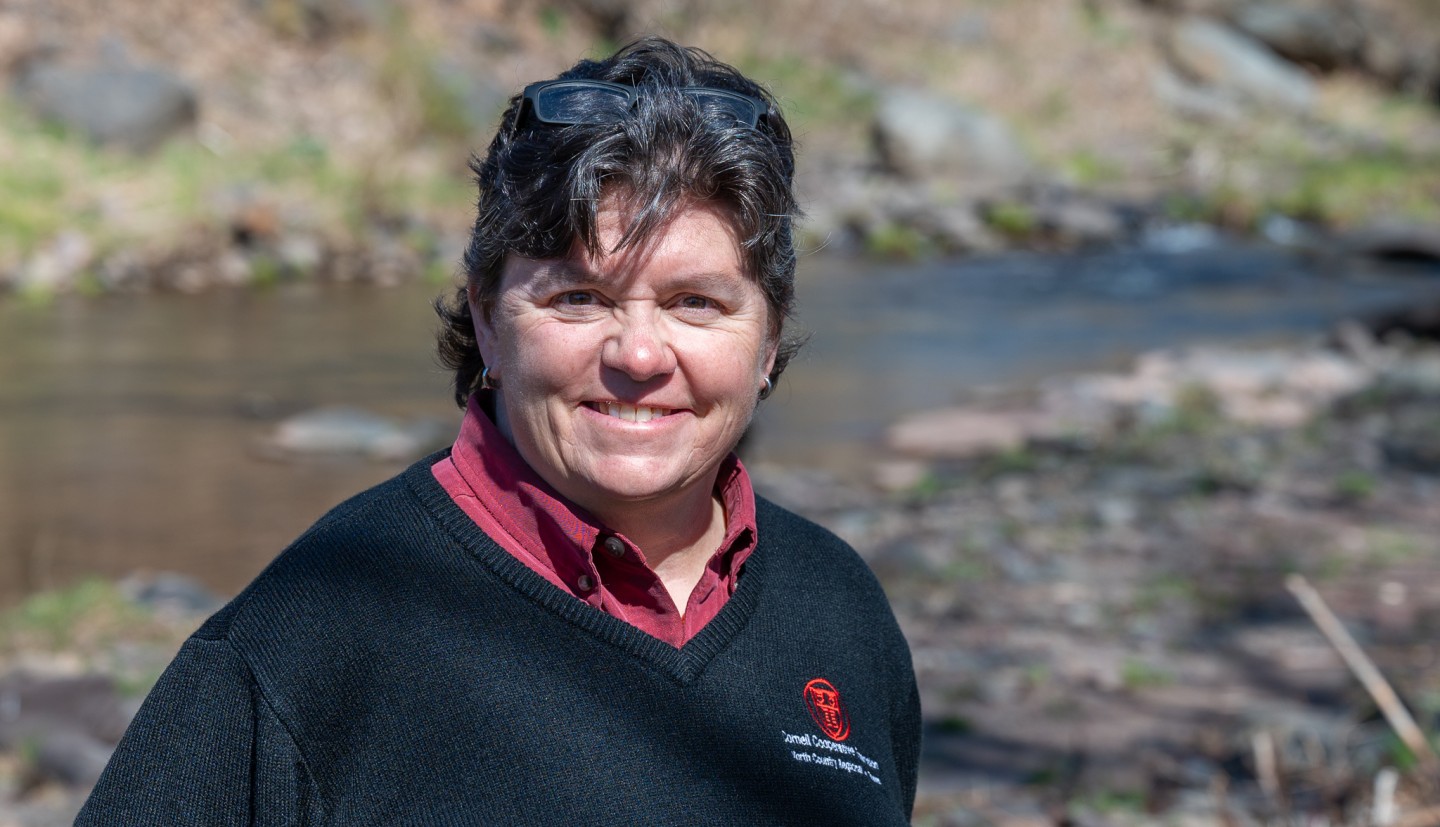
Kitty O’Neil is a statewide agricultural climate resiliency specialist for Cornell Cooperative Extension (CCE) and a leader of the Cornell Climate Smart Farming team. She also aids Quirine Ketterings’ research with Cornell’s Nutrient Management Spear Program and collaborates with the Northeast Regional Climate Center.
What inspired you to work as an agriculture climate resiliency specialist?

My journey began on a dairy farm in Cayuga County, New York. Growing up there, I didn’t realize its potential until I worked on other farms during my time at Cornell. Through various courses that involved analyzing farm records, I discovered the unique practices that differentiated our farm's high productivity and milk quality from others. This realization sparked my appreciation for agricultural science, leading me to pursue graduate studies in Dairy Ruminant Nutrition and Forage Quality, and later, Crop and Soil Sciences.

In 2013, I joined Cornell Cooperative Extension (CCE) as a field crops and soils specialist. My involvement with the Climate Smart Farming team since its inception in 2015 allowed me to explore climate resilience extensively. Now, in my current role, I can focus on these crucial issues statewide while leveraging my background in soil health and field crops.

Was there a specific moment that reinforced your passion for agriculture?

A standout experience for me was working with Quirine Ketterings, a researcher known for her practical approach to on-farm research. Collaborating with farmers in northern New York, we collect data and analyze soil compaction's impact on corn yields. It’s fulfilling to apply knowledge in real-world scenarios that genuinely aid farmers.

I vividly remember a farmer’s candid remark about my alfalfa reports: he dreaded them because they meant he had to act. It was gratifying to know my work was making a real impact, even if it wasn’t always welcomed.

What long-term impact do you hope your work with CCE will have?

I aim to help farms develop strategies to adapt to climate change. Currently, I'm involved in a project with the Northeast Climate Hub that pairs dairies with technical advisors to create adaptation plans. Working closely with one small dairy has been enlightening; each farm has unique vulnerabilities and priorities. My goal is to empower my colleagues at CCE to support multiple farms through this adaptation process effectively.

Has any book or media particularly shaped your perspective on agriculture or the environment?

Currently, I have “Cultivating Resilience” by Laura Lemnick on my desk. Although I’ve only skimmed it, I appreciate its accessible writing style, which conveys climate adaptation philosophies clearly. As someone with a scientific background, I often struggle to communicate effectively. I hope to learn from her approach and improve my own communication skills.

Do you have a favorite place in New York? Somewhere that inspires your connection with the natural world?

Living just outside the Adirondack Park, I cherish the natural beauty of the region—pine trees, lakes, and trout streams. I love outdoor activities, and even a recent bear encounter during a run added to the excitement! I also have a small backyard farm with chickens, which has taught me many practical skills, including dealing with local predators. The experience has been both challenging and rewarding.

Keep Exploring

Kwesi Joseph at a raised bed, holding a trowel

News

Kwesi Joseph, urban garden specialist with Cornell Cooperative Extension’s (CCE) Harvest New York program, turned his passion for gardening, composting, and the transformative power of healthy soil into a path to community leadership. Through...
  • Cornell Cooperative Extension
schied with salt truck

Field Note

Unlike most world-class universities, Cornell’s campus sits between two gorges, surrounded by native landscaping, meadows and carefully managed turfgrass — not lost among the buildings and asphalt of an urban environment. “Mother Nature has...
  • School of Integrative Plant Science