Back

Discover CALS

See how our current work and research is bringing new thinking and new solutions to some of today's biggest challenges.

Share
  • Agriculture
  • Soil
  • Crops
  • Field Crops
  • Digital Agriculture
  • School of Integrative Plant Science
  • Plant Pathology and Plant-Microbe Biology Section
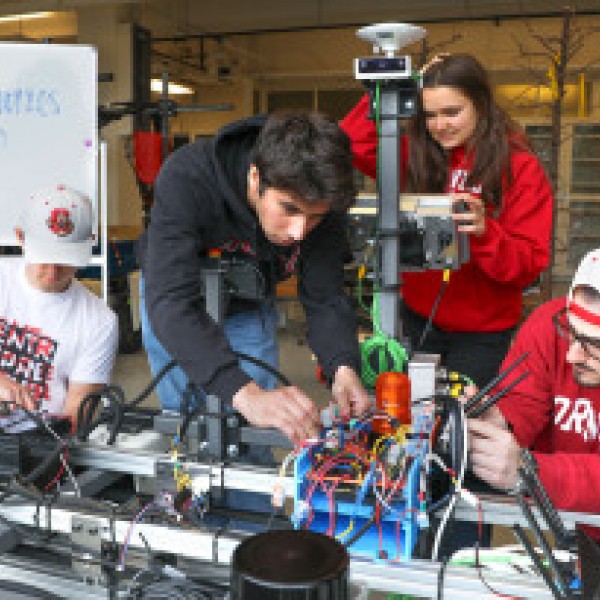
Cornell researchers discovered a new way of controlling biohybrid robots that can react to their environment better than their purely synthetic counterparts: harnessing fungal mycelia’s innate electrical signals.

Cornell researchers discovered a new way of controlling biohybrid robots that can react to their environment better than their purely synthetic counterparts: harnessing fungal mycelia’s innate electrical signals.

Keep Exploring
Charles Midega (left) and Roy Odawa display the Kontiki kiln they modified to make biochar from human feces. Credit: Rebecca Nelson

News

Cornell researchers and Kenyan partners have developed a fertilizer made from human excreta. The product improves soil health and food production, while preventing pollution in informal settlements and the aquatic environment.

  • Ashley School of Global Development and the Environment
  • Global Development Section
  • Agriculture
Edward Harbes IV planting a new apple orchard in 2014.

News

Harbes Farm on Long Island relies on a mutually beneficial collaboration with Cornell researchers, a partnership that has made the family’s three farms key destinations for Long Island agritourism.

  • Cornell AgriTech
  • Cornell Cooperative Extension
  • Cornell Integrated Pest Management