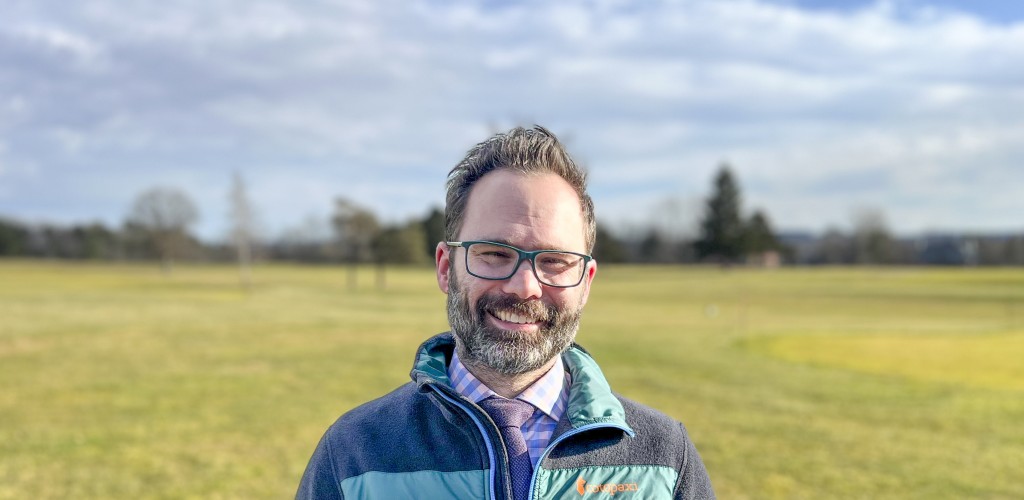
Andrew Reid Bell will join the Department of Global Development at Cornell University’s College of Agriculture and Life Sciences as the inaugural Schleifer Family Professor of Sustainability, effective July 1, 2024.
Bell's research identifies responses to human-environment dilemmas with a focus on migration and environmental sustainability. His methodology incorporates agent-based modeling tools, complemented by insights from field and behavioral experiments. With extensive fieldwork experience in regions including Bangladesh, Madagascar, Mexico, and Senegal, he seeks to understand and predict drivers of climate change and mobility.
“We won’t find the environmental solutions we are looking for unless we find people solutions first — that is, finding ways for the world to share similar options and opportunities, enjoy similar protections from harm, and be able to plan forward on similar time horizons,” said Bell.
“Being able to move to where you want or need to be is a big part of that, and understanding mobility (as one among many strategies to better livelihoods) is a key piece of figuring out the balance of urban and rural opportunities we’ll need in the future.”
Currently an associate professor in the Department of Earth & Environment at Boston University, Bell recently developed the MIDAS (Migration, Intensification, and Diversification as Adaptive Strategies) modeling framework in order to model migration as an emergent outcome among other livelihood adaptations. He has applied the model to examine US-Mexico cross-border flows as well as the impact of sea-level rise on coastal migration in Bangladesh.
In current work, Bell is incorporating the theory of capabilities and aspirations into MIDAS in order to better model the function that rural investments may have in both building rural capacity, as well as changing long-term aspirations for rural youth, with a current application to rural Senegal. This year, his fieldwork will take him to Madagascar, where he will be joined by an international team funded by the Belmont Forum to disentangle environmental and social drivers of mobility in a hazard-prone environment.
“We are thrilled that Andrew will be joining Global Development. Through his modelling work, he is telling compelling stories about migration that advance our understanding of mobility as part of an array of livelihood adaptations in some of the places most heavily impacted by climate change,” said Lori Leonard, chair and professor of global development.
“I don’t know of another institution that brings more dimensions of human-environment research and problem solving together in one place,” said Bell. “I’m very excited to be in a place where whatever aspect of people, institutions, or agricultural spaces I’m struggling to understand, somebody down the hall (or across the campus) is already thinking about it.”
Bell earned a Ph.D. in Natural Resource Management from the University of Michigan in 2010, followed by a post-doctoral fellowship at the Earth Institute at Columbia University, and positions at the International Food Policy Research Institute and New York University, before joining Boston University.