Back

Discover CALS

See how our current work and research is bringing new thinking and new solutions to some of today's biggest challenges.

Share
  • Charles H. Dyson School of Applied Economics and Management
  • Ecology and Evolutionary Biology
  • Global Development Section
  • Soil and Crop Sciences Section
  • Agriculture
  • Climate Change
  • Environment
  • Planet
  • Soil
Microbes are by far the most important factor in determining how much carbon is stored in the soil, according to a new study with implications for mitigating climate change and improving soil health for agriculture and food production.

Microbes are by far the most important factor in determining how much carbon is stored in the soil, according to a new study with implications for mitigating climate change and improving soil health for agriculture and food production.

Keep Exploring
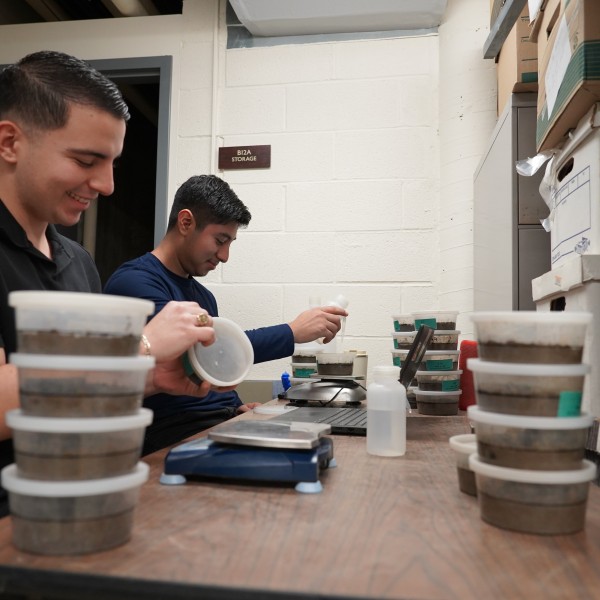
Two people work with scientific equipment on a desk.

News

On-farm research is a valuable tool for New York farmers. It happens in real-time on farm fields that are actively being cropped, producing practical results that can be applied in future growing seasons. It fosters two-way learning among...
  • Animal Science
  • Agriculture
  • Crops
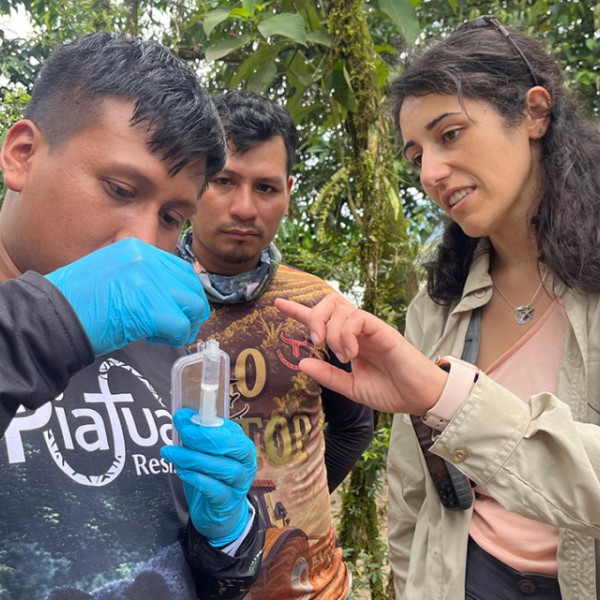
Cornell doctoral student Isabella Marie Errigo and Indigenous partners collect eDNA samples from a remote river in the Ecuadorian Amazon, helping communities assess aquatic biodiversity and ecosystem health across a range of environmental conditions.

News

A Cornell graduate student and indigenous Ecuadorian partners are sampling eDNA in Amazonian riverways to understand how gold mining and other human disturbances impact aquatic biodiversity and ecosystem health.

  • Cornell Atkinson
  • Ashley School of Global Development and the Environment
  • Biodiversity