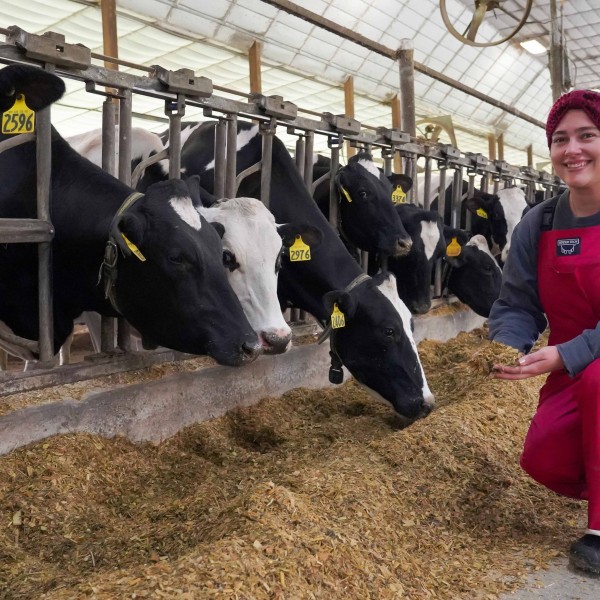
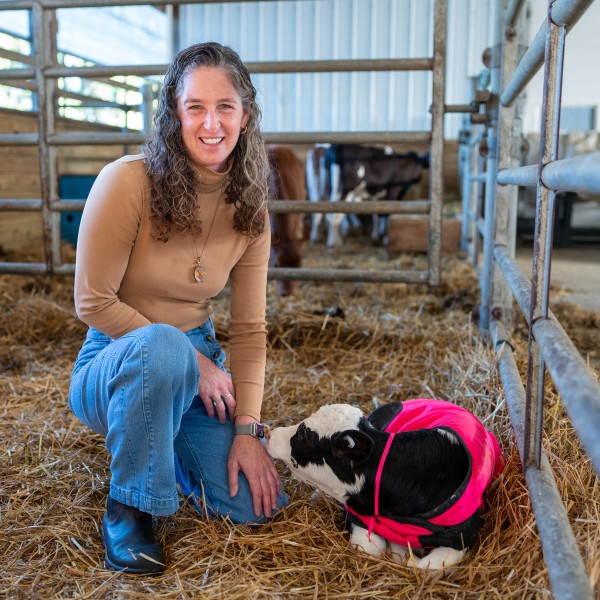
Meet Cody Kugler, agri-food innovations project manager for Cornell Global Development's new research group — Food Systems & Global Change.
Cody recently completed Cornell Global Development's MPS program where she studied sustainability in the agri-food system. Before coming to Cornell, Cody was the Smallholder Program Director at EnerGaia Ltd based in Bangkok, Thailand.
Academic background:
- BA in Economics from Lafayette College
- MPS in Global Development from Cornell University
What research are you currently working on?
I'm currently working on two key projects: Wild Futures and The Agri-food Technology Innovations Outlook (ATIO).
Historically agri-food system advances have been driven by innovations, which have caused large and often unexpected changes. This can make them difficult to predict. As a result, most predictions of the future of the agri-food system are based on models that tend to be conservative, focusing on steady increases rather than the large jumps forward based on innovations. The Wild Futures project was created with the intent of looking into those game-changing technologies or envisioning a “wild future”. Our team is building a living inventory of agri-food inventions and a toolset of methods to assess the impacts of those inventions, both the good and bad. We do this using foresight modeling and tools like backcasting to help individuals make better-informed decisions about the potential of different inventions.
ATIO is a new flagship report by FAO. I worked on the initial proposal documents for ATIO focused primarily on pre-emergent technology. There is a natural connection between the work of Wild Futures and ATIO. The Wild Futures outputs will likely be inputs into ATIO.
What most excites you about this opportunity?
This is a great opportunity to explore emerging innovations and work with a multi-disciplinary team with robust experience. This is an exciting space with the opportunity to not only dig into early-stage innovations and imagine what they could become but also look into historical ones and analyze what worked and what did not.
Innovations have been a big part of the ever-changing agrifood landscape but too often, the right questions are not being asked about innovations until it's too late, resulting in unintended consequences that might have been foreseeable. It is exciting that there is a potential for our work to help address this challenge through the tools we are developing to analyze emerging innovations and incorporate these questions earlier in the process for funders, researchers, and policymakers.
What does global development mean to you?
From my experiences, I view global development as a collaborative human-centered approach that draws on the interconnectedness of today’s world across disciplines with the ambition of improving quality of life and environmental sustainability.
Tell us about one of the most impactful experiences in your work.
The most exciting experiences are usually working face-to-face with participants. In particular, working with community members in Bangladesh and Indonesia to create recipes that incorporated spirulina into everyday foods stands out. We always faced similar aversions to the color at first, but by the end, there were often many exciting recipes that helped with our research to identify market fit.
What do you like to do when you aren’t working?
I enjoy learning about other cultures, spending time with friends, finding adventures, and eating/cooking good food.