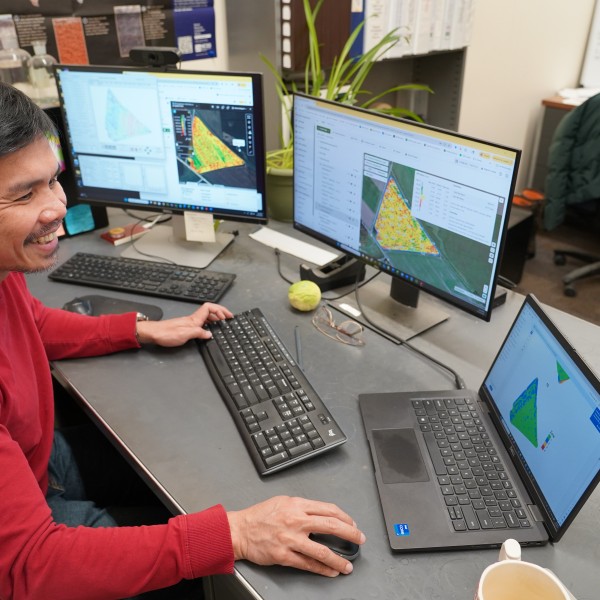
Calixto brings experience with the land-grant system and mission, from extension and research appointments in the Texas A&M University System focused on ecology and management of urban and agricultural insect pests. He received his Ph.D. in entomology from Texas A&M.
“Dr. Calixto will be a welcome addition to the NYS IPM team, as we continue to reduce risk in agriculture and communities,” Grant said. “He brings experience from both academia and industry, including pest prediction systems and invasive species management. He will help lead our efforts in protecting pollinators, pesticide risk assessment, and providing IPM tools to farms, schools and homes across the state.”
New York State Integrated Pest Management addresses pest-management issues across the state, providing research and education to individuals, businesses and institutions. The program is based at Cornell AgriTech in Geneva, New York.
“I am delighted to be joining the Integrated Pest Management team and the Cornell AgriTech family,” he said. “This is a tremendous opportunity and responsibility for me to contribute to the state of New York and the land-grant university system, to work towards the adoption of ecologically based principles and to educate the next generation of citizens on IPM practices.”
Melissa Jo Hill is communications specialist and writer with Cornell Cooperative Extension.