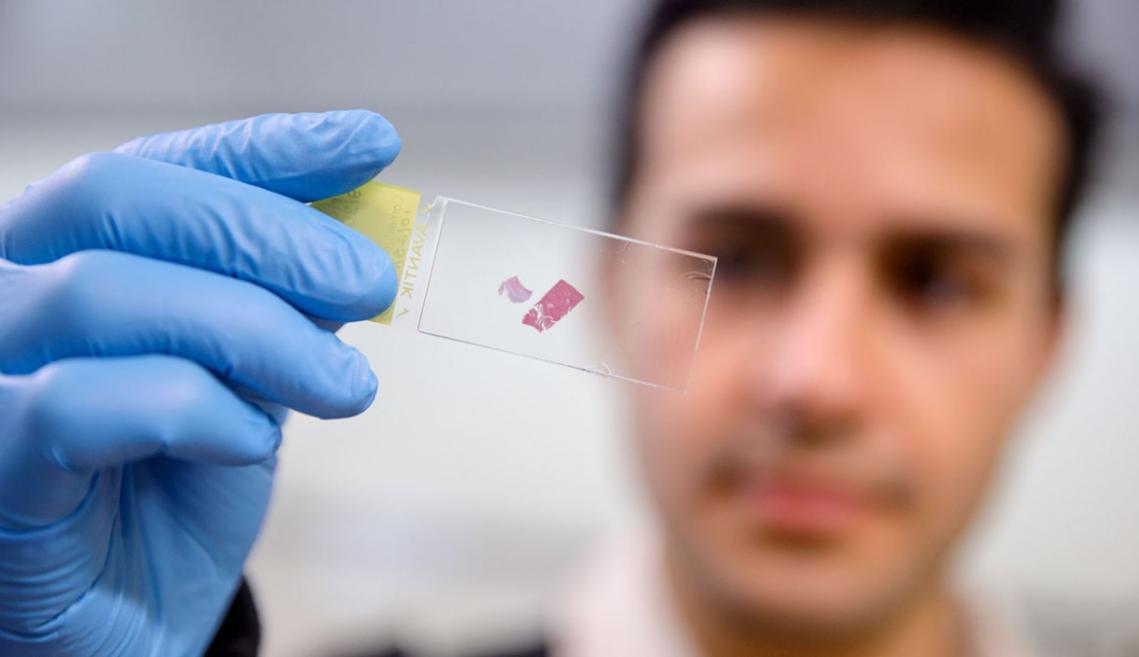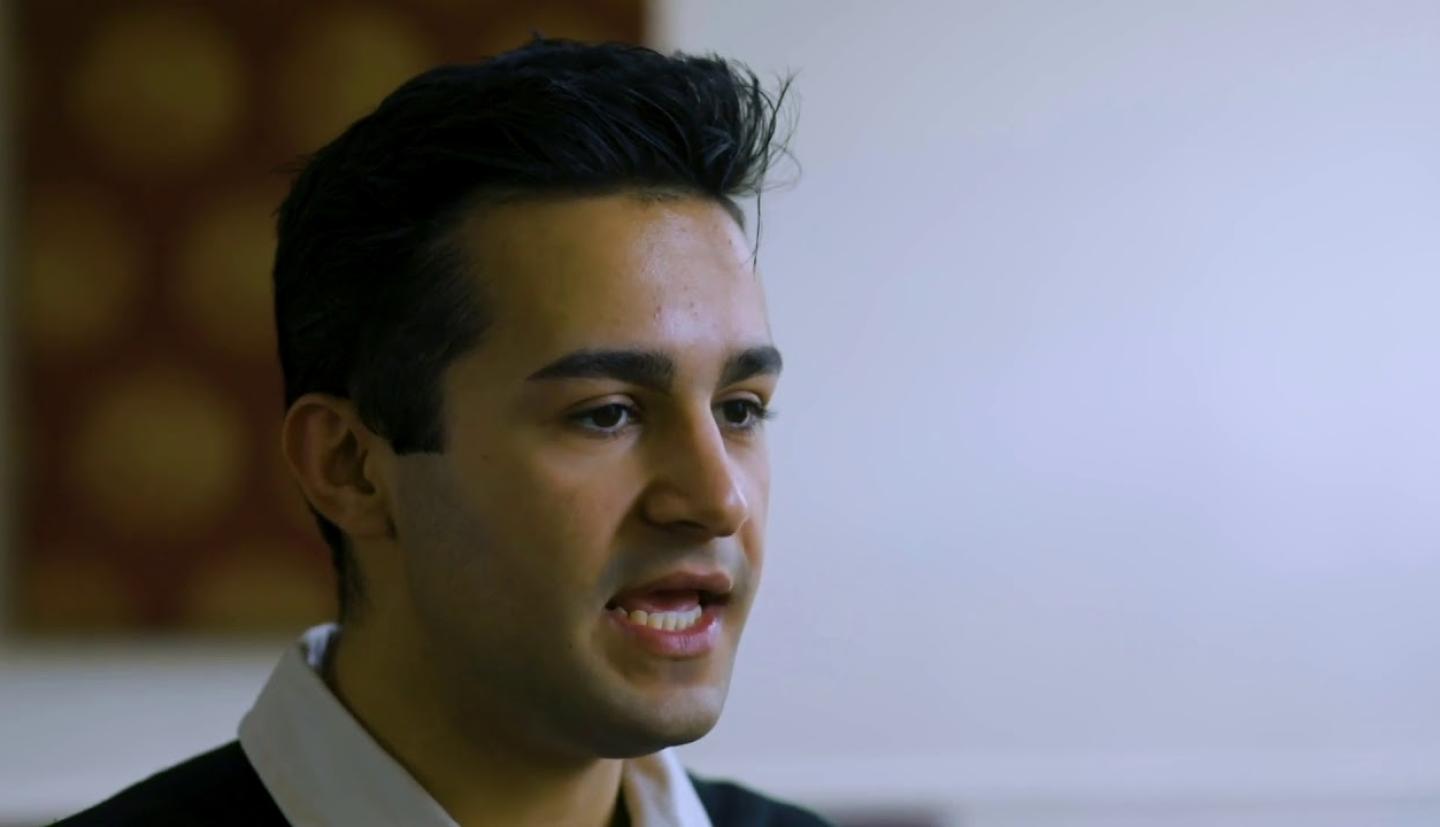
“Most of the innovation has been in trying to find new ways to administer insulin or develop new types of insulin. But at the end of the day, that’s not really a functional cure,” says Shariati, a biomedical engineering major in the College of Engineering’s Nancy E. and Peter C. Meinig School of Biomedical Engineering. “After the diagnosis, I knew I wanted to have something to do with trying to actually develop better solutions.”
For Shariati, joining the lab of Minglin Ma, associate professor in the Department of Biological and Environmental Engineering in the College of Agriculture and Life Sciences, was both empowering and illuminating. He learned firsthand what a difficult problem diabetes presents, and about the promising cutting-edge research happening at Cornell.
“Being diabetic teaches you only the very surface-level aspects of the condition; being in this lab, performing the research, gave me a better opportunity to actually understand the mechanisms behind it,” he says.
At Cornell, nearly a quarter of all undergraduates earn credit for participating in research. The university encourages undergraduate research with programs such as the Hunter R. Rawlings III Cornell Presidential Research Scholars, which provides resources for up to 200 undergraduates each year to conduct research with faculty mentors, and the Humanities Scholars Program, which provides accepted applicants with research opportunities, courses, mentorship, programming and funding.