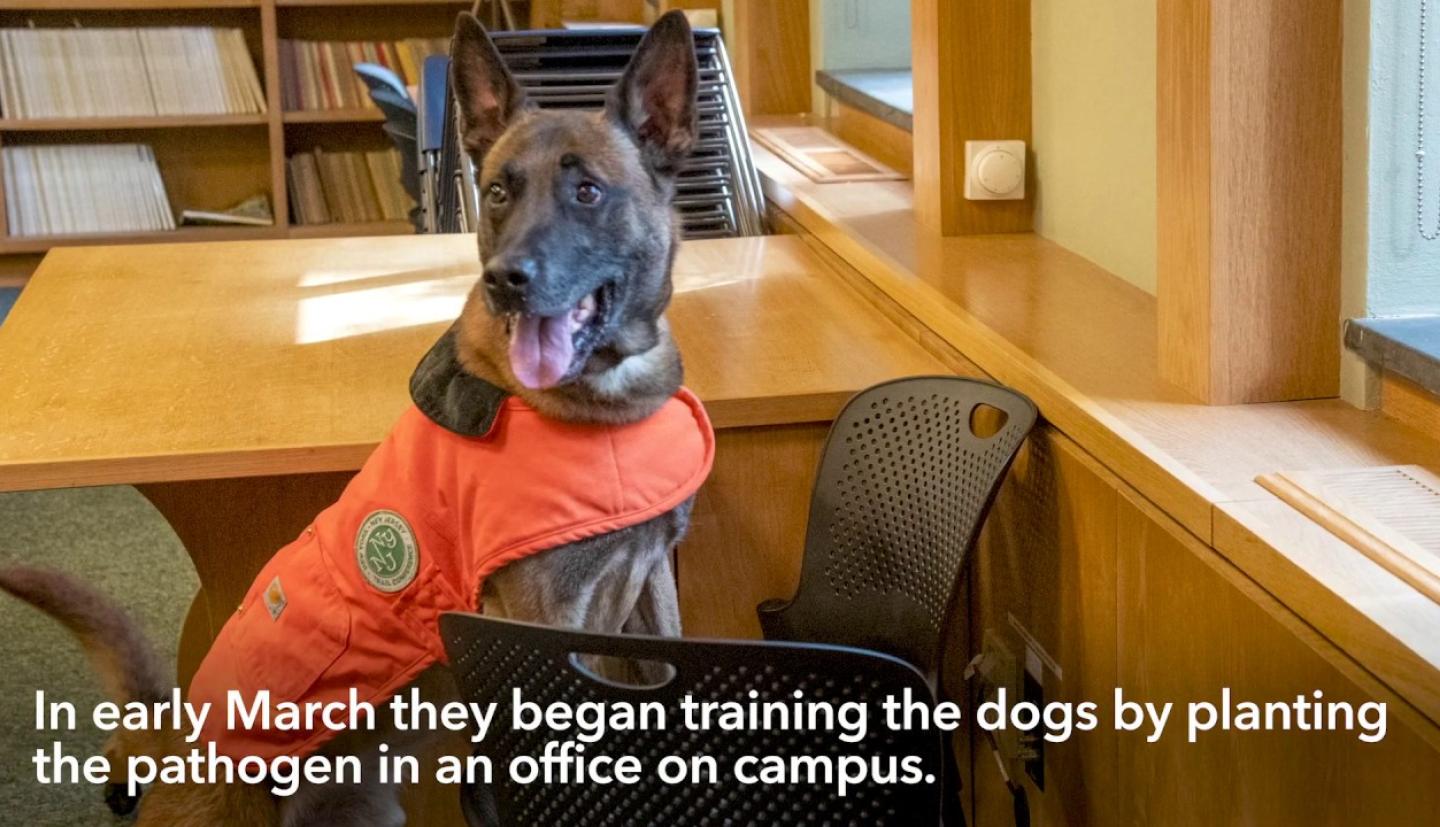
A group at the NY NJ Trial Conference, which hosts the Lower Hudson Partnership for Regional Invasive Species Management (PRISM), a partner with Cornell Cooperative Extension (CCE), started training dogs in 2018 to recognize scotch broom, an invasive shrub, and spotted lantern flies, invasive pests that feed on grapes, apples and other plant species.
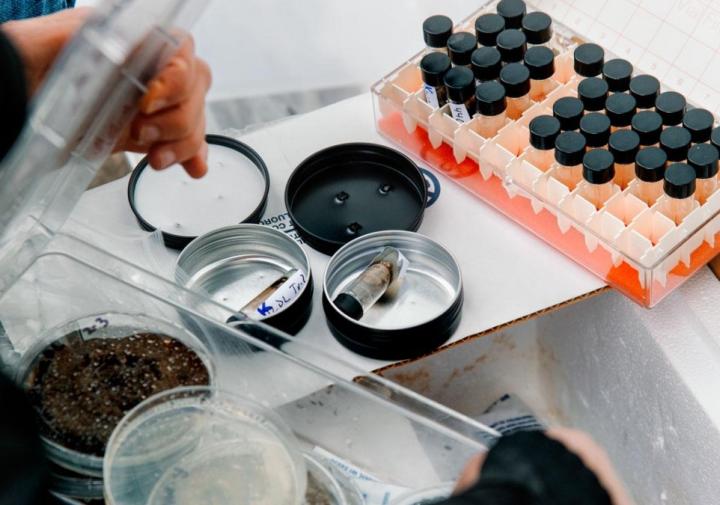
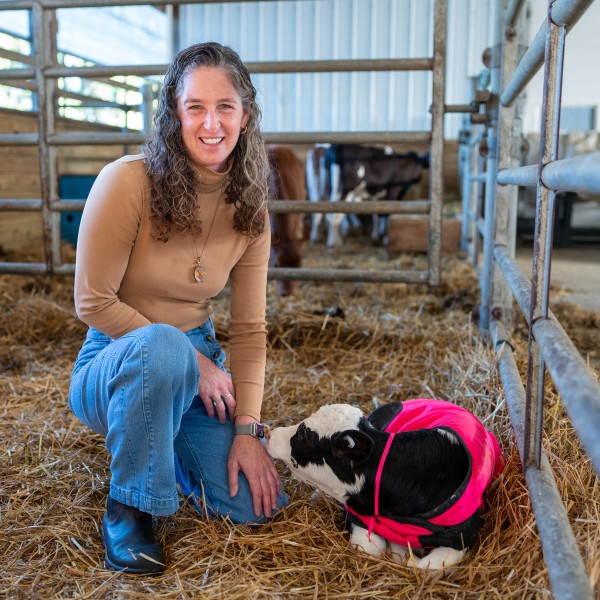
In March, Karen Snover-Clift, director of the Cornell University Plant Disease Diagnostic Clinic (CUPDDC), helped conservation dog handlers teach the dogs to recognize and seek out oak wilt, a devastating oak disease that has appeared in a few areas in New York state.
By all measures, the dogs previously proved how effective they were at locating an invasive plant and insect. Dog handlers Joshua Beese, from the Trail Conference and Aimee Hurt, a mentor from Working Dogs for Conservation, had also trained the dogs to sniff out oak wilt, a plant pathogen that can kill a tree in just three weeks and once infected, there is no cure.
“When we talk about protecting our forests and keeping out these invasive plant pathogens, our primary goal is to find them as quickly as possible because that increases our chances of having a successful eradication,” Snover-Clift said. “So I think that introducing the dogs to this program would allow us to do that more quickly and more successfully.”
In November 2018, Snover-Clift attended an Agriculture, Food & Environmental Systems In-service conference through CCE, which brought together faculty, educators and industry professionals from various agricultural fields to discuss the latest developments in research and practice. She attended a session on using dogs to identify invasive weeds and insects, presented by Working Dogs for Conservation, a Montana-based group that was training staff at the NY NJ Trail Conference-PRISM.