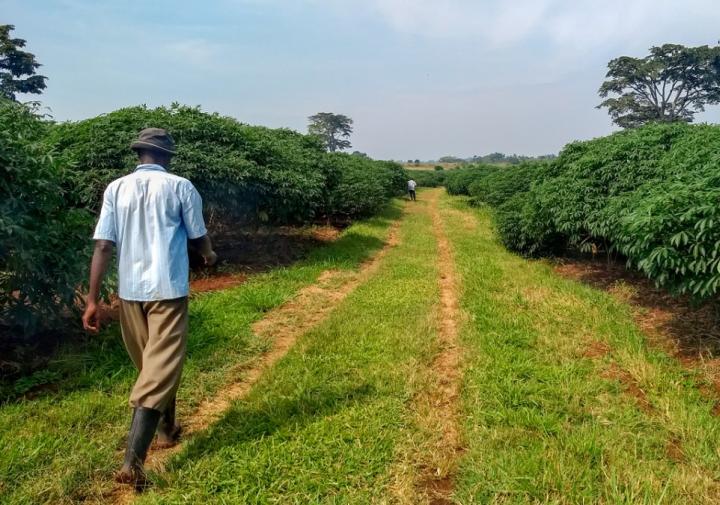
“Cassava is our daily food in Uganda,” says Ozimati, Ph.D. ’18, now a plant breeder working for a national program in his country. “It’s what we grew up with and what we still love.”
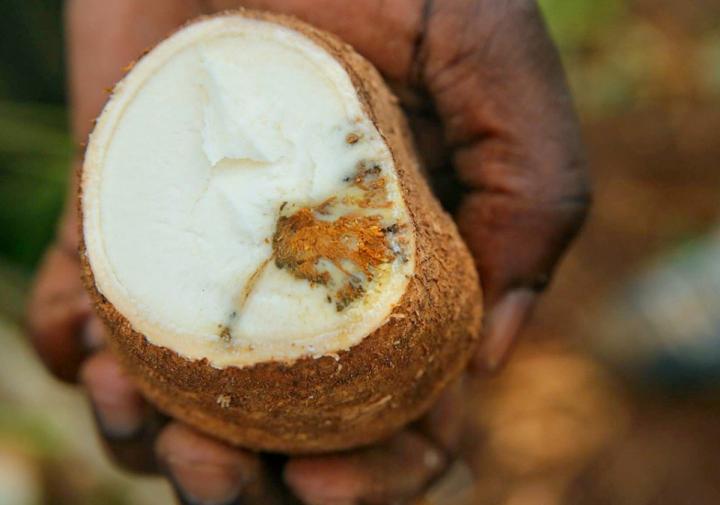
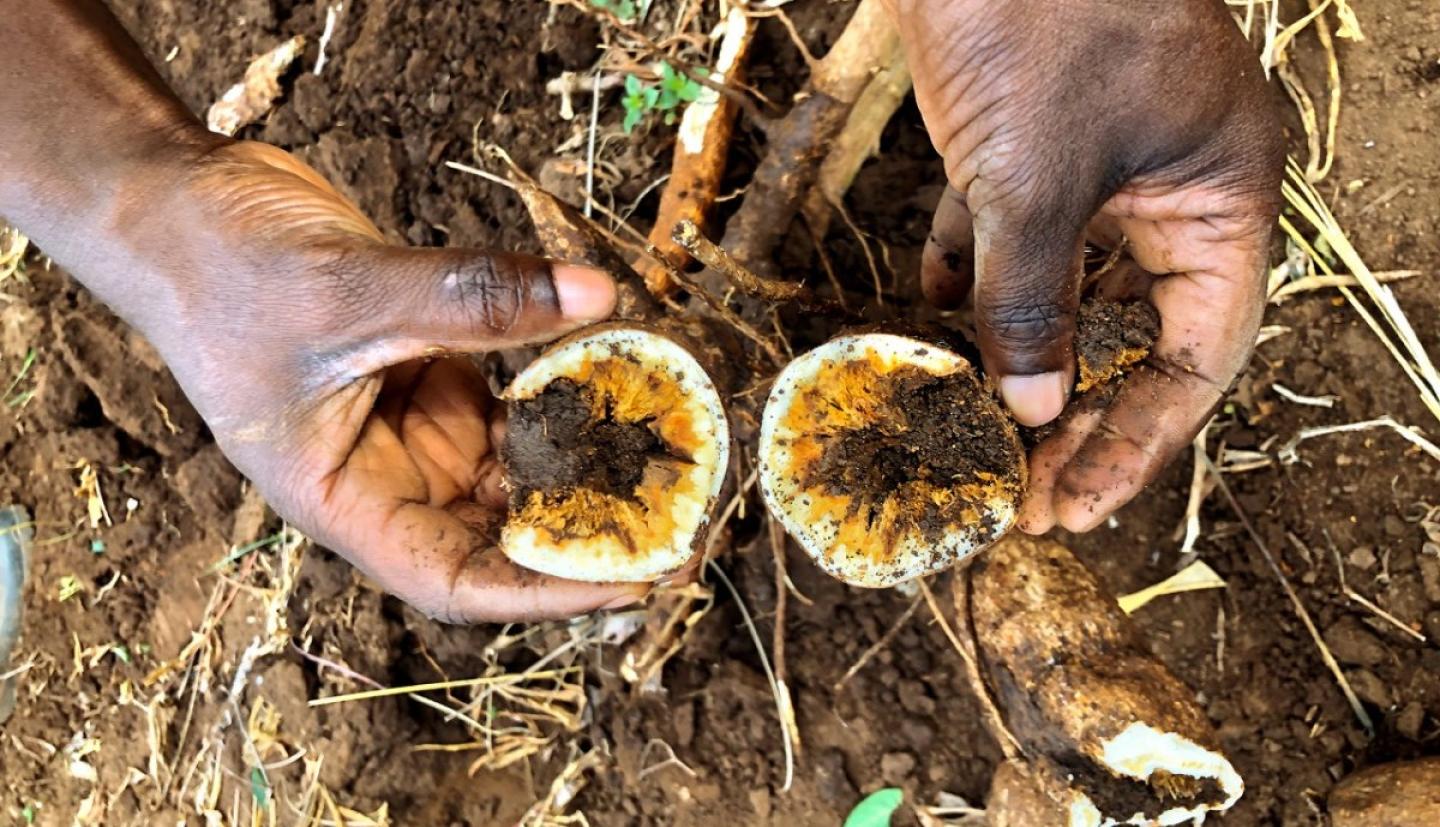
That food – and the livelihood of millions of farmers like Ozimati’s parents – face a dire threat from a disease that rots cassava from its roots. Named cassava brown streak disease for the discoloration it causes in the plant’s fleshy edible pulp, the pathogen ravaged Uganda and other countries of East Africa starting in the early 2000s, causing total yield loss in susceptible plants. From there it spread and now infects major growing portions in central and southern Africa as well as in the east, where it first emerged.
“All of the best varieties in existence at the time were wiped away by cassava brown streak disease,” Ozimati says. “You can’t grow anything when it strikes.”
For centuries cassava has served as subsistence crop critical to food security in Africa. Africa’s smallholder farmers produce about 86 million tons of cassava each year – more than half of the world’s total – and more than 500 million people in Africa consume it daily.
Ozimati and others see cassava as much more: a crop with vast commercial potential that could not only feed hundreds of millions but also create prosperous jobs and new industries in Africa.
“But if we can’t address these problems with disease resilience, then the next steps are impossible,” he warns.
At Cornell, earning his doctorate in the field of plant breeding, Ozimati steeped himself in the study of genomics as he unraveled the genetic background of varieties favored in East Africa. After finishing his doctorate he returned home and joined the National Crops Resources Research Institute, one of six research hubs in Uganda.
Now, thanks in large part to the work of the NextGen Cassava project run by Cornell, he is working at the leading edge of agricultural science, using the tools of genomic selection to breed cassava that is disease resistant and meets the consumer preferences of subsistence farmers.