By editing these genes into laboratory fruit flies using CRISPR technology, scientists have reconstructed evolution and instantly conferred – in the flies – the same toxin resistance enjoyed by monarchs.
“We experimentally went back in evolutionary time to reconstruct an event that happened naturally several times, several million years ago,” said Anurag Agrawal, professor of ecology and evolutionary biology, and co-senior author on a new paper published with University of California, Berkeley, colleagues in Nature, Oct. 2.
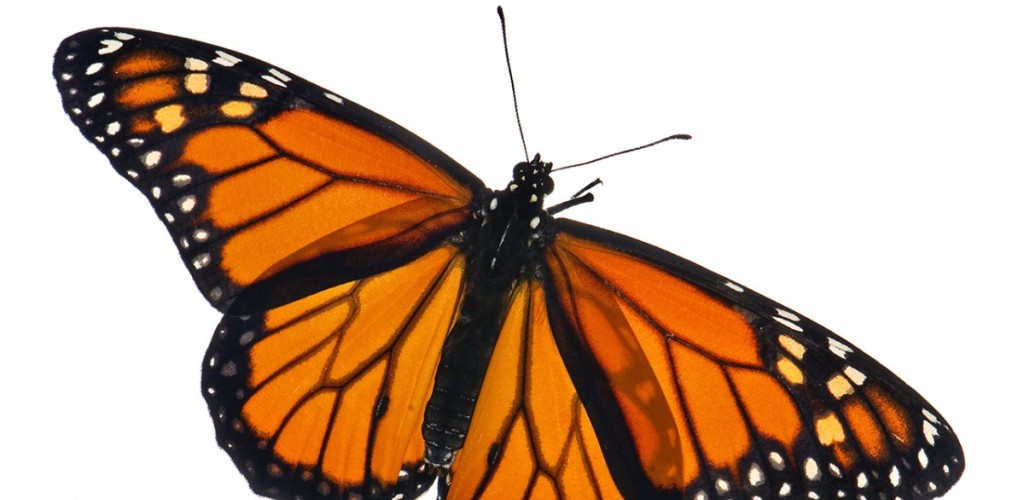
“Monarch butterflies are a beloved insect,” Agrawal said. “They only eat milkweed, and survival of their annual migration depends on sequestering this plant’s toxins.”
This new research shows how the monarch butterfly evolved resistance to a class of plant toxins and changed the nature of ecological interactions across North America, said Agrawal.
Monarch caterpillars grow up on milkweed plants, which harbor a poison called cardiac glycoside. For most other caterpillars and animals that happen to eat milkweed, the cardiac glycoside poisons them; the chemical obstructs the body’s sodium pumps, which transport life-maintaining salt across cell membranes.
Simply put, the poisonous cardiac glycosides attach to those sodium pumps, add gunk to the salt-transport mechanism and halt their function, Agrawal said. But the specific variant of the monarch’s gene prevents its sodium pump from clogging with poison, effectively granting immunity to monarchs. Most other species – particularly those that stay away from milkweed – don’t have this genetic change.
When the researchers inserted the gene into the flies in the laboratory, they became immune to cardiac glycoside.
“Life was formed once and kept branching out to the diversity we know today, and we have some genes that are more or less conserved from the beginning of time,” Agrawal said. “Our study suggests that, although there is a universal ancestor to life on Earth, small modifications were critical in specific adaptations. We now have the tools in evolutionary biology to reconstruct how organisms evolved over millions of years.”
Other contributors to the paper, “Genome Editing Retraces the Evolution of Toxin Resistance in the Monarch Butterfly,” include co-senior author Noah Whiteman, University of California, Berkeley; and lead authors Marianthi Karageorgi, University of California, Berkeley, and Simon C. Groen, New York University. Among the co-authors is Amy P. Hastings, Cornell research support specialist.
The National Science Foundation and the John Templeton Foundation funded this work.