

periodiCALS, Vol. 9, Issue 1, 2019
For more than a century, innovations developed at our New York State Agricultural Experiment Station have propelled economic development and delivered practical solutions that help farmers and businesses thrive. In August 2018, our historic scientific institution was given a new name: Cornell AgriTech.
Agriculture and food are multibillion-dollar industries in New York, and the name change underscores the value Cornell AgriTech brings to improving the health of the people, environment and economy of the state and beyond. Located 50 miles from Ithaca in Geneva at the northern end of Seneca Lake, Cornell AgriTech is home to more than 300 of our faculty, scientists, staff and graduate students working together at the leading edge of food science, entomology and plant sciences research.

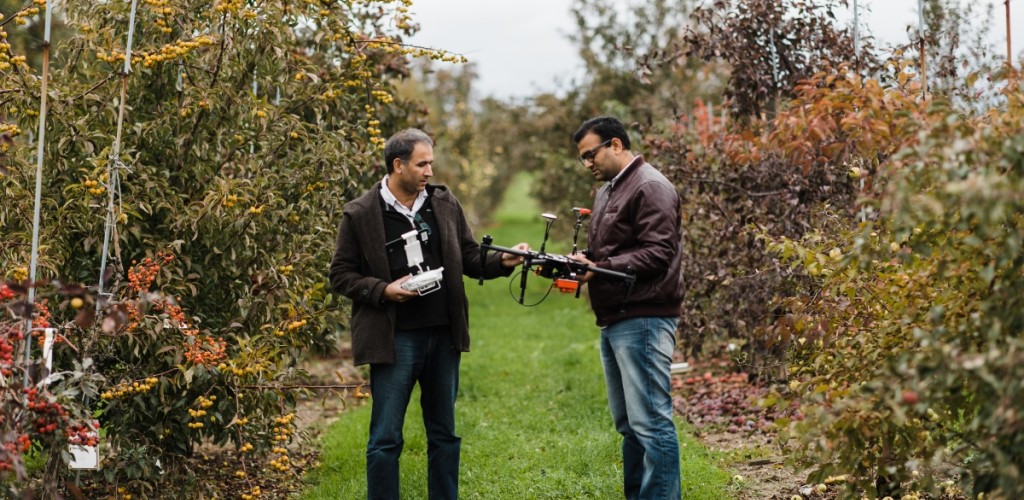
Cornell CALS scientists in Geneva have developed more than 280 new varieties of fruits and vegetables, pioneered insect attractants for pest control, and invented advanced technologies to improve crops and food safety. Today, Cornell AgriTech has expanded to more than 900 acres, including a dozen research farms, more than half a million square feet of laboratory and greenhouse space, and two associated laboratories in the Hudson Valley and Lake Erie regions.
Guided by our Land-Grant mission, the Cornell AgriTech community continues to grow and evolve, working together across disciplines to reimagine the future of food and agriculture systems.


