

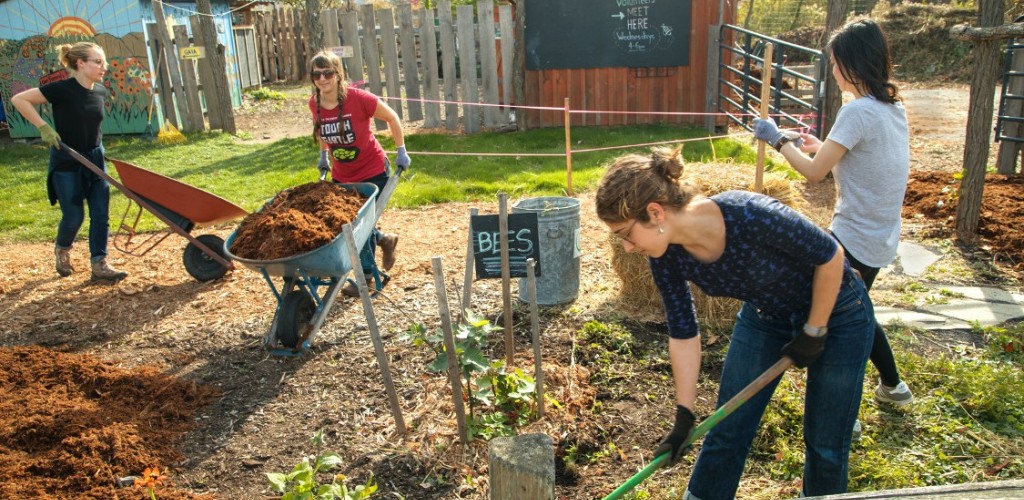
“Topophilia,” a new episode of the “What Makes Us Human” podcast series, examines what motivates people to care for Earth’s creatures and its places.
The podcast showcases the newest thinking across academic disciplines about the relationship between humans and love.
Academics use terms like biophilia (love of life) or topophilia (love of place) to talk about what motivates people, and “sense of community” to describe the human need for belonging and mattering to others, says Marianne Krasny, professor in the Department of Natural Resources and director of the Civic Ecology Lab, in the podcast. But she adds, “I am not sure any of these terms capture why civic ecology stewards ... do what they do.”
Krasny specializes in community environmental stewardship and environmental education in urban and other settings in the U.S. and internationally. Her recent books include “Communicating Climate Change” (with Anne Armstrong and Jonathan Schuldt); “Urban Environmental Education Review” (with A. Russ); and “Grassroots to Global: Broader Impacts of Civic Ecology.” She has taught multiple global online courses and was director of the National Environmental Education Training Program.
The series is produced by the College of Arts and Sciences in collaboration with the Cornell Broadcast Studios. “What Makes Us Human” podcasts are available for download on iTunes and SoundCloud and for streaming on the A&S humanities page, where text versions of the essays are also posted.


