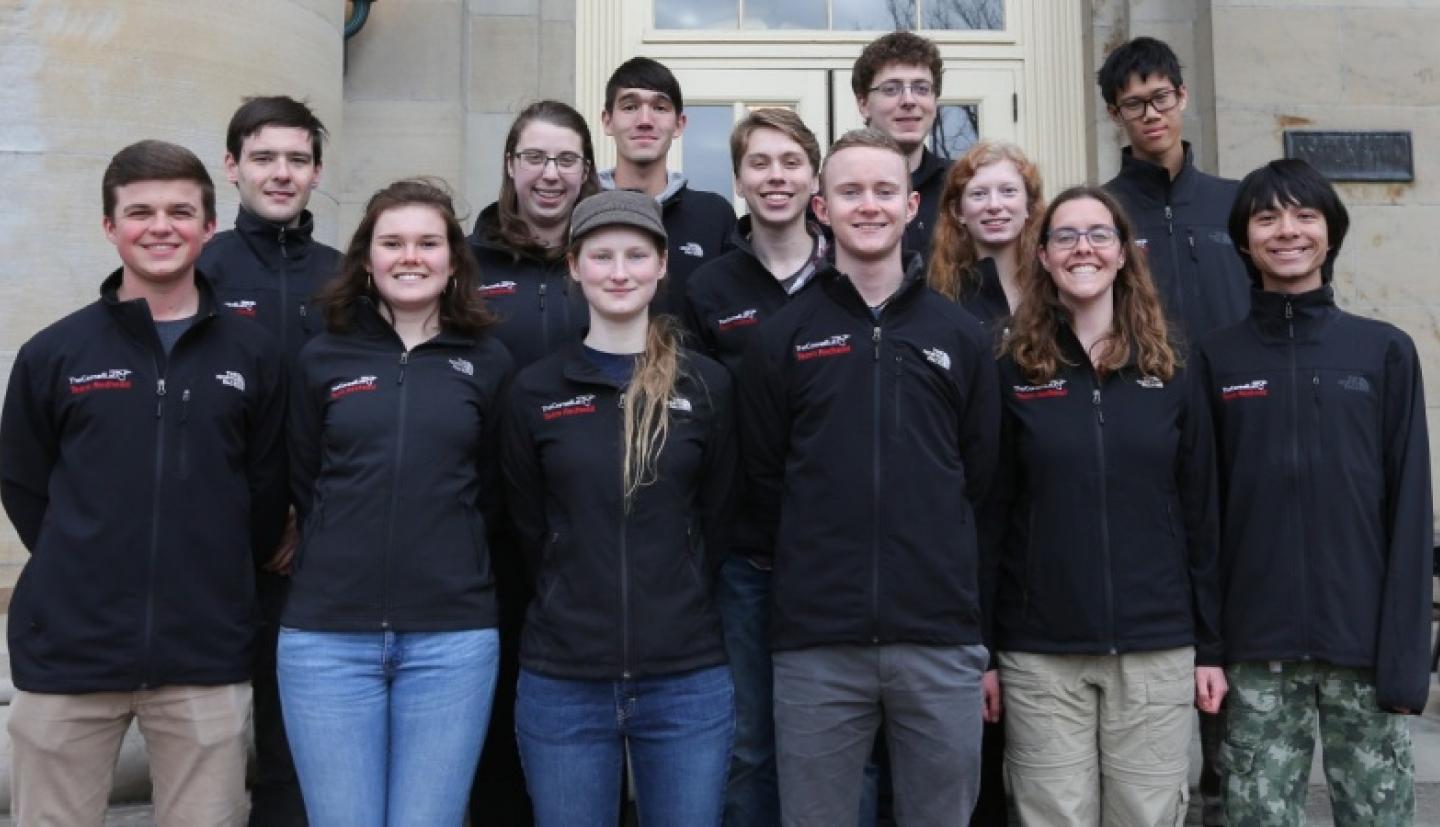
Decked out in their Cornell Lab of Ornithology team jackets, a team of 14 Cornell undergraduates, the Redheads, will participate in the 35th annual World Series of Birding May 12, in Cape May, New Jersey. In the process, they will raise funds for research and conservation.
Over 24 hours, from midnight to midnight, the students and thousands of other birders will tally the greatest number of bird species by sight or sound.
Junior Sarah Toner, co-captain of the Cape May County team, says the teams are practicing their skills before the World Series.
“One of the main ways we’re studying is by listening to bird songs and training ourselves to identify them,” Toner said. “We use mnemonics – such as ‘suzie suzie suzie sue’ for the bay-breasted warbler and ‘I’m so la-zee’ for the black-throated blue warbler. I've also started jogging to classes just to get ready for the sprints through wildlife preserves.”
The Redheads are among more than 100 undergraduates mentored by the Cornell Lab of Ornithology, receiving hands-on experience as they study and work to conserve birds and other wildlife. Support undergraduate experiences and research opportunities by making a pledge for every species the Redheads find, and follow student teams during the World Series of Birding on Facebook.