

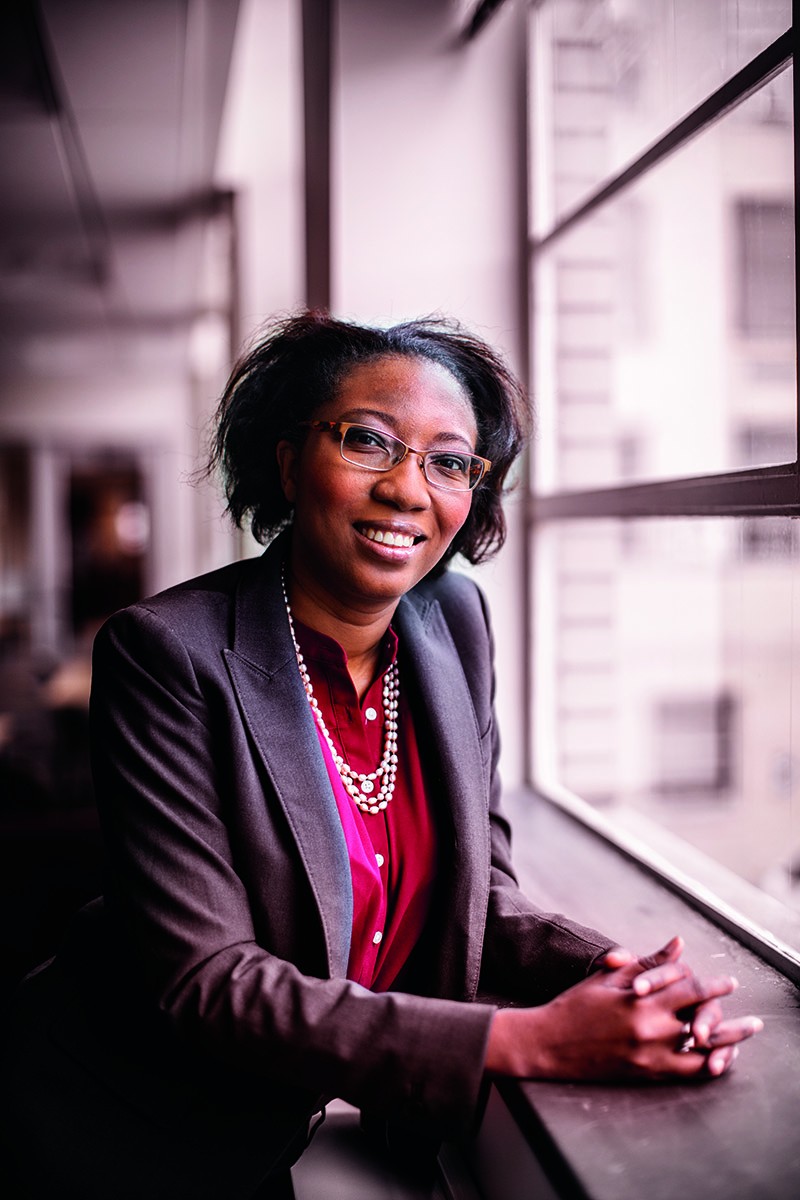
Ludmilla Aristilde
Humans have long understood the general concept of natural carbon recycling: when animal and plant wastes are applied to farm fields, the soil is more productive. Yet the underlying chemistry of that process – how natural organics are trapped, transported and cycled through plants and soils – is still largely a mystery.
Ludmilla Aristilde ’03 plans to solve it. An assistant professor of biological and environmental engineering in the College of Agriculture and Life Sciences, Aristilde works at the interface of natural and engineering systems. She seeks to understand how organic contaminants affect sensitive ecosystems, how organic chemicals are secreted by plants and microbes, how these organics are transformed into useful plant nutrients or harmful greenhouse gases, and how natural and contaminant organics move in the environment.
With a better understanding of these processes, engineers could develop technologies that trap and recycle organic waste more effectively and reduce the need for synthetic chemicals, including fertilizers. Her work has implications for problems ranging from water pollution to ecosystem damage and agricultural costs to climate change. Last year alone, Aristilde was awarded over $1 million from the National Science Foundation for multiyear research projects.
Born and raised in Haiti, Aristilde became aware of the devastating impact of deforestation and water pollution on human health during an epidemic of cholera. She first came to Cornell as an undergraduate, just three years after emigrating to the U.S., and she completed dual degrees in science of Earth systems and fine art. In 2012, she returned as a faculty member, drawn back by Cornell’s commitment to academic diversity.
“What I love about collaboration in academia is people have different perspectives on how to address a similar problem,” she says. “This process enables us to develop insights beyond our own individual capabilities; from there, we can advance the scientific field to solve the most difficult problems.”
A longer version of this story appeared in the Cornell Chronicle.


